
Last Updated on 04/08/2026 by Nicole Alba
The financial ecosystem in the Philippines has reached a historic turning point. We are witnessing a rapid, seamless transition from traditional, cash-heavy transactions to a deeply interconnected, intelligent, and digital-first environment. Based on the comprehensive insights provided in the newly released “The Philippines Fintech Report 2026,” the nation’s fintech landscape is scaling unprecedented heights, forever changing how Filipinos interact with their money.
For consumers, freelancers, and small business owners reading this on CashLoanPH, this evolution translates directly into faster daily transactions, bulletproof digital wallets, and vastly broader access to personal credit and business loans. We are moving past the experimental phase of financial technology; we have entered an era of practical, everyday utility. Let’s dive into the core drivers, data, and innovations actively powering the future of finance in the Philippines.
The Macroeconomic and Digital Landscape: A Nation Connected 🌐
To truly grasp the sheer scale and momentum of the fintech revolution, we must first look at the underlying macroeconomic and demographic shifts empowering it. The Philippines is a young, dynamic, and increasingly urbanized nation. As of 2024, the total population stood at a robust 112.7 million, with an urban population making up over 55% of the country.
What is truly remarkable is the rate of financial inclusion. By 2025, half of all adults in the country secured a formal transaction account, and a highly impressive 85% of Filipino households had at least one member with a transaction account. This is not an accident; it is the result of massive, deliberate digital infrastructure growth.
- Mobile & Internet Penetration: An astounding 90% of adults now own a mobile phone, and 89% are active, daily internet users.
- Connectivity: Population coverage for at least 3G internet connectivity reached 98.69% in 2024, ensuring that even remote, rural communities are plugged into the national digital economy.
- Economic Health: Financially, the Philippines is on a formidable trajectory. The GDP Year-over-Year growth in late 2025 ranged between 5% and 6%, carrying strong momentum into 2026. Furthermore, overall inflation was successfully managed down to 1.6%.
In this incredibly healthy economic environment, the country’s digital economy is projected to explode from USD 36 billion in 2025 to anywhere between USD 70 billion and USD 140 billion by 2030.
Digital Payments: The New Standard for Everyday Transactions 💸
Filipinos are embracing cashless transactions at a pace that has utterly shattered national targets. According to the Bangko Sentral ng Pilipinas (BSP), digital retail payments accounted for a massive 57.4% of total transaction volume by the end of 2024. By comfortably clearing the 52-54% target set under the Philippine Development Plan 2023-2028 early, the data proves a crucial point: digital payments are no longer an “alternative.” They are the primary mode of exchange.
In terms of monetary value, the numbers are equally staggering. Monthly digital payment values have reached US$ 136.0 billion, representing 59.0% of the overall retail transaction value in the country. More than half of every single peso spent in the Philippine retail economy now moves seamlessly through digital channels.
Here is a breakdown of how these digital payments are being used across the economy:
| Payment Type | Share of Volume | Total Transactions | Primary Driver |
| Person-to-Merchant (P2M) | 66.4% | 2.2 Billion | Everyday retail purchases, groceries, and e-commerce. |
| Person-to-Person (P2P) | 20.6% | 680.5 Million | Sending money to family, splitting bills, and informal trade. |
| Business-to-Supplier | 6.2% | 205.0 Million | B2B digitization, inventory purchasing, and vendor payouts. |
Interestingly, the government sector is actually leading the country’s digitalization drive by example, with an incredible 97.2% of its transaction value conducted through cash-lite channels.
The Unstoppable Rise of InstaPay and PESONet ⚡
The backbone of this massive shift relies heavily on two robust platforms: PESONet and InstaPay.
PESONet, acting as an automated clearing house for batch electronic fund transfers, hit its highest record in March 2026 with 11.05 million transactions valued at a staggering PHP 1,415.46 billion. Meanwhile, InstaPay—designed for real-time, low-value, everyday transfers—has seen a practically vertical growth trajectory. Its transaction volume exploded from around 99.4 million in March 2024 to nearly 693 million in March 2026. This near-sevenfold jump in just two years highlights an absolute public reliance on instant digital transfers.
The Sustained Growth of Card Payments 💳
While mobile e-wallets often dominate the daily headlines, traditional card payments are also seeing robust, sustained growth. Current market forecasts suggest that total card payments in the Philippines will double between 2024 and 2029. Driven by aggressive financial inclusion initiatives and low-cost Point-of-Sale (POS) acceptance solutions for merchants, the Philippine market is set to remain one of the fastest-growing card payment ecosystems in Southeast Asia.
Digital Banking: Mainstream Adoption and the Quest for Profitability 🏦
The digital banking sector in the Philippines has officially graduated from a novelty tech experiment to a mainstream, trusted financial pillar. As of late 2025, the country’s six licensed digital banks had amassed a combined PHP 119.5 billion in deposits, serving approximately 20.4 million customers nationwide.
The landscape is intensely competitive, characterized by wildly diverse business models battling for market share:
- Maya Bank: Operating via a comprehensive “super app” and integrated business ecosystem, Maya leads the pack with nearly half the market share (48.9%), holding PHP 67.7 billion in deposits from 8.2 million customers. Crucially, Maya is one of the very few digital banks to have achieved actual profitability.
- GoTyme Bank: Utilizing a unique “phygital” model—a mobile app paired with physical kiosks in retail locations—GoTyme rapidly secured PHP 43.5 billion in deposits from 9 million customers by March 2026, eyeing full profitability by 2027.
- UNO Digital Bank: Heavily focused on embedded finance, UNO successfully hit its break-even point in early 2026, holding PHP 8.8 billion in deposits from 4 million customers.
- UnionDigital Bank: This incumbent-backed model holds PHP 8.06 billion in deposits from over 1 million customers, aggressively aiming for breakeven by late 2026.
- Tonik: Pioneering high-interest savings and seamless consumer lending, Tonik serves over 3 million customers with PHP 6.6 billion in deposits.
- Overseas Filipino Bank (OFBank): A government-backed, OFW-focused institution that is currently profitable, holding PHP 3.76 billion in deposits.
Despite massive customer acquisition, scaling has not evenly translated into profitability for everyone due to intense deposit competition and elevated promotional interest rates. To stimulate the market and introduce fresh innovations, the BSP recently raised the digital bank cap from six to ten, opening the floor for four new licenses.
Transforming Lending, Cash Loans, and SME Credit 🚀
For the readers of CashLoanPH, the most impactful developments lie in how the fintech revolution is actively democratizing credit. Traditionally, accessing personal or business loans required mountains of paperwork, physical collateral, and a lengthy, spotless banking history. Today, that barrier to entry is crumbling.
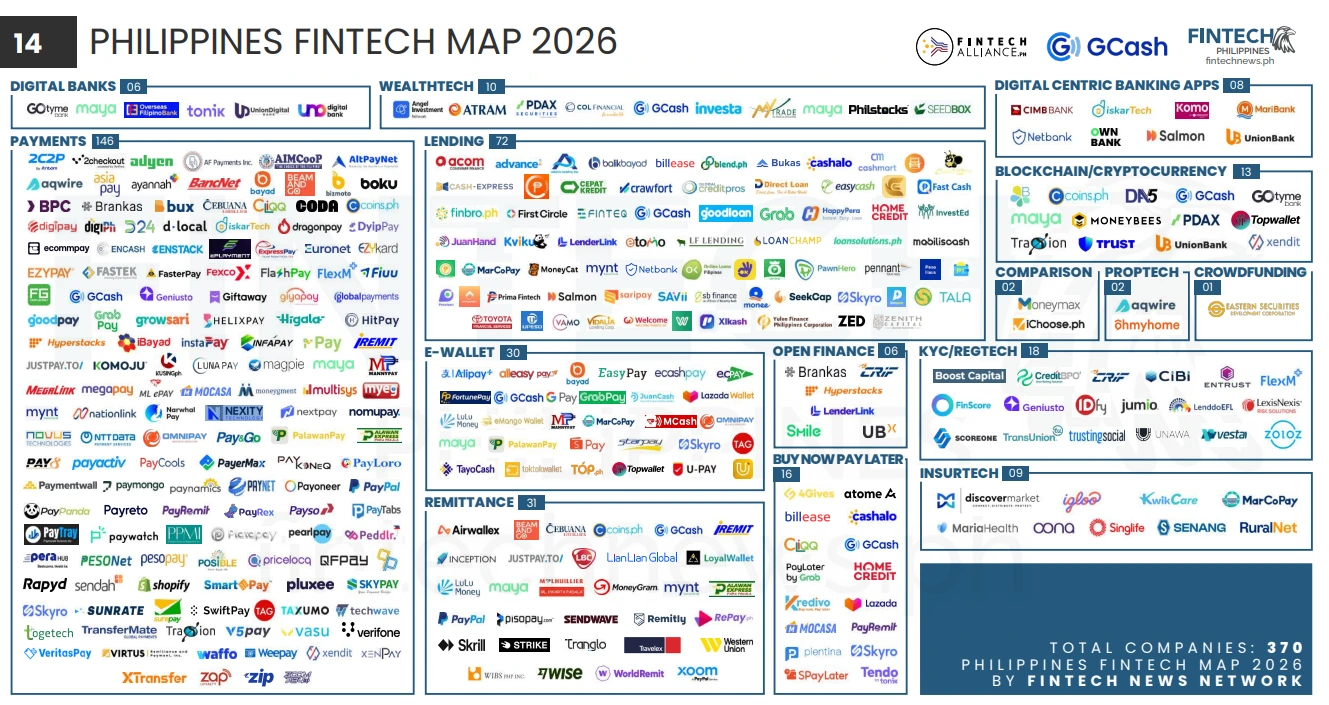
Investor confidence in lending solutions is at an all-time high. The top equity funding rounds in 2025-2026 saw massive capital injected directly into credit facilities, including ZED (US$16.5M), Tonik (US$12M), Salmon (US$6.8M), and auto-financing startup OneLot (US$3.3M).
Key Initiatives Driving Credit Access 📈
- Movable Asset Financing: In 2025, the BSP and the International Finance Corporation (IFC) launched a landmark initiative to expand credit access using movable assets. This allows individuals and small businesses to use non-real estate assets (like inventory or equipment) as valid collateral, severely easing financing constraints.
- Web-Based Credit Scoring: The BSP rolled out a web-based credit scoring system specifically for SMEs. Utilizing anonymized data from various financial institutions, this system generates highly accurate credit scores, allowing lenders to assess risk without demanding physical collateral.
- AI-Powered Lending: Artificial intelligence is entirely reshaping loan approvals. AI credit decisioning enables instant, inclusive lending by assessing risk based on alternative data sources (like utility payments or e-wallet usage behavior) rather than strict traditional banking histories.
To ensure safety alongside accessibility, the SEC has implemented strict new rules to deter predatory digital lending practices, cracking down hard on unregistered platforms, harassment in debt collection, and exorbitant interest rates.
Cryptocurrency, Stablecoins, and Real-World Utility
The Philippines isn’t just adopting traditional digital finance; it has rapidly morphed into a global hub for Web3 and virtual assets. Placing 9th in the Global Crypto Adoption Index Top 20, the country is witnessing massive grassroots demand for crypto. However, what makes the Philippine market truly unique is its aggressive shift from mere speculation to real-world utility.
The BSP currently regulates multiple Virtual Asset Service Providers (VASPs), including major players like Coins.ph, PDAX, and Maya. Key utility developments include:
- Stablecoin Utility & Remittances: Coins.ph successfully integrated stablecoin payments with QRPh, allowing users to buy physical goods using USDT and USDC via a standard QR checkout. Furthermore, stablecoin-powered remittance solutions are providing faster, massively cheaper cross-border money transfers for OFWs.
- Payroll Solutions: Innovative partnerships now allow Filipino workers and freelancers to receive stablecoin wages natively, connecting token-based payroll systems directly to licensed cash-out infrastructure.
- Wallet Integration: Giants like Grab have partnered with local exchanges to allow KYC-verified users to top up their GrabPay wallets using cryptocurrency, seamlessly bridging Web3 with daily ride-hailing and food delivery.
Open Finance and the Push for Ultimate Inclusion 🤝
True financial inclusion goes beyond just handing someone a digital wallet; it requires a systemic overhaul. The proposed Philippine Open Finance Act is a monumental step forward. This framework establishes a secure, user-consent-driven system for financial data sharing using Application Programming Interfaces (APIs). This means consumers can finally leverage their own financial data to easily shop for the best education loans, micro-savings, and credit rates across different providers.
To reach the absolute “last mile” of unbanked Filipinos, brilliant technological solutions are being deployed. For example, banks are expanding ATM networks using low-orbit satellite connectivity (like Starlink), allowing rural sari-sari stores to facilitate withdrawals and deposits in remote, mountainous communities where traditional cell towers fail.
Enhancing Consumer Trust: Regulation and Fraud Management 🛡️
As money becomes invisible and digital, regulators are fiercely building iron-clad guardrails to protect consumers from cyber threats, phishing, and scams. The Anti-Financial Account Scamming Act (AFASA) is the country’s new regulatory anchor against digital fraud.
Backed by aggressive BSP circulars, banks and e-wallets are now mandated to implement strict blacklist screening, AI bot detection, and cloud computing safeguards. Crucially, institutions now have the legal power to temporarily hold disputed funds—meaning they can freeze stolen money before a scammer can withdraw it.
In a massive win for everyday consumers, the BSP signed new regulations in 2026 to drastically lower the cost of digital payments:
- Financial institutions cannot charge small micro-merchants for receiving electronic payments.
- Digital transaction charges must remain explicitly cheaper than traditional over-the-counter banking fees.
- Recipients are legally guaranteed to receive their full transaction amounts without hidden backend deductions.
The Mynt IPO: A Milestone for Philippine Fintech 🌟
Perhaps the most glaring indicator of the Philippine market’s maturity is the monumental Initial Public Offering (IPO) of Mynt, Inc., the powerhouse parent company of GCash. Slated for the fourth quarter of 2026 on the Main Board of the Philippine Stock Exchange, this IPO is historic.
Targeting an indicative price to raise up to PHP 92.3 billion (US$ 1.51 billion), it stands as one of the largest listings in the country’s history. The numbers backing this valuation are astounding: processing PHP 17.0 trillion (US$ 277.82 billion) in gross transaction value, backed by roughly 40 million monthly active users. Because 78% of GCash users reside outside Metro Manila and 92% belong to lower-income groups, this IPO is not just a financial victory—it is a testament to the platform’s unparalleled, nationwide impact on poverty reduction and financial inclusion.
Conclusion
The findings from “The Philippines Fintech Report 2026” paint a vibrant picture of a market that has successfully transitioned from an era of unchecked, chaotic growth into a highly disciplined, mature, and deeply inclusive phase of innovation.
For the readers and borrowers of CashLoanPH, the future is incredibly bright. It means a reality where access to credit is faster, fairer, and based on your actual financial behavior, not just your collateral. It means transaction fees are strictly regulated to protect your wallet, and consumer protection is an absolute legal mandate. The Philippines is no longer just catching up to the global digital economy; in many ways, it is leading the charge.
REFERENCES