
Last Updated on 27/02/2026 by Nicole Alba
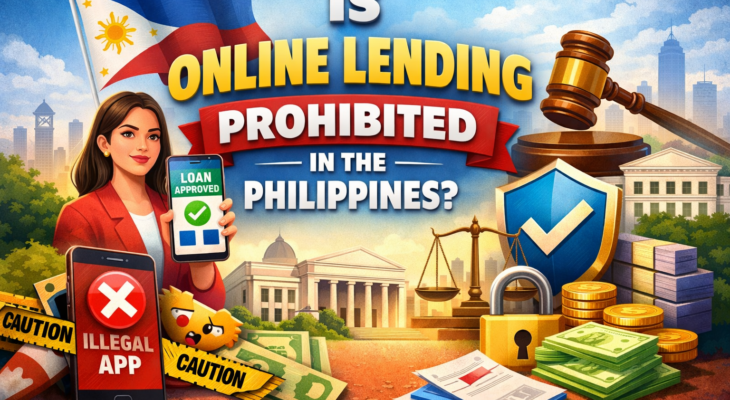
Many Filipinos have typed this question into Google at least once: “Is online lending prohibited in the Philippines?”
With viral posts about abusive collection tactics, reports of scam loan apps, and warnings from regulators, it’s understandable why people are confused. Some believe all online lending apps are illegal. Others assume everything on the app store is safe.
So what’s the real story?
The short answer: No, online lending is NOT prohibited in the Philippines. ✅
However, it is strictly regulated, and illegal operators can-and do-get shut down.
Let’s break this down clearly and honestly so you can protect yourself and make informed financial decisions.
Understanding Online Lending in the Philippines 📲
Online lending refers to borrowing money through digital platforms-usually mobile apps or websites-without visiting a physical branch.
Instead of traditional paperwork, borrowers:
- Upload valid IDs
- Take a selfie for verification
- Fill out digital forms
- Receive funds via bank transfer or e-wallet
Many legitimate lending companies in the Philippines operate online under the supervision of the Securities and Exchange Commission (SEC).
Online lending is simply a digital version of traditional lending. It is not automatically illegal.
Is Online Lending Prohibited in the Philippines? The Legal Answer ⚖️
Online lending is legal in the Philippines as long as the company:
- Is registered with the SEC
- Has a valid Certificate of Authority to Operate as a lending or financing company
- Follows consumer protection regulations
- Complies with data privacy laws under the National Privacy Commission (NPC)
If an online lender meets these requirements, it is legally allowed to operate.
What is prohibited are:
- Unregistered lending apps
- Harassment and public shaming of borrowers
- Unauthorized access to phone contacts
- Hidden fees and deceptive terms
- Charging interest beyond legal disclosures
Why Do People Think Online Lending Is Illegal? 🤔
There are three major reasons for this confusion:
1️⃣ Crackdowns on Illegal Lending Apps
In recent years, the SEC has revoked the licenses of multiple abusive and non-compliant lending companies. Some apps were removed from app stores for:
- Data privacy violations
- Harassment tactics
- Operating without proper authority
When the government announces “closure” or “revocation,” many assume all online lending is banned. That’s not true. Only illegal operators are targeted.
2️⃣ Harassment and Public Shaming Incidents 😡
Some rogue lending apps engaged in unethical practices like:
- Threatening borrowers
- Sending mass messages to contacts
- Posting borrower photos online
- Using defamatory language
These practices are illegal and punishable under Philippine law. But again, these are actions of non-compliant operators, not the entire industry.
3️⃣ Confusion Between Loan Sharks and Licensed Lenders
There’s a huge difference between:
- A registered SEC lending corporation
- An underground “5-6” operator
- A scam app pretending to be legitimate
Unfortunately, many borrowers don’t verify registration before applying.
The Role of the Securities and Exchange Commission (SEC) 🏛️
The Securities and Exchange Commission is the primary regulator of lending and financing companies in the Philippines.
To operate legally, a lending company must:
- Register as a corporation
- Obtain a Certificate of Authority
- Submit regular compliance reports
- Follow disclosure rules
- Observe fair collection standards
The SEC also releases public advisories warning consumers against specific unregistered apps.
If you’re wondering, “Is online lending prohibited in the Philippines?”, the SEC’s consistent position has been clear:
👉 Online lending is allowed-but must comply with regulations.
Data Privacy and Online Lending 🔐
Borrower data protection is governed by the Data Privacy Act, enforced by the National Privacy Commission (NPC).
Legal lenders must:
- Ask for proper consent before accessing data
- Avoid collecting unnecessary information
- Protect borrower information from leaks
- Avoid accessing contact lists without lawful basis
Unauthorized data scraping or contact harassment can result in heavy penalties.
This is one of the key reasons regulators shut down certain apps.
What Makes an Online Lending App Legal? ✅
Here’s a quick checklist:
✔ SEC Registration
You can verify a company’s registration through the SEC’s official database.
✔ Certificate of Authority
Being registered as a corporation is not enough. It must also have authority to operate as a lending or financing company.
✔ Transparent Terms
Legitimate lenders clearly disclose:
- Loan amount
- Interest rate
- Annual Percentage Rate (APR)
- Service fees
- Repayment terms
✔ Ethical Collection Practices
No threats. No shaming. No illegal contact access.
Are Interest Rates Capped? 💸
This is another area of confusion.
The Bangko Sentral ng Pilipinas (BSP) regulates banks and certain financial institutions, but lending companies under the SEC must follow transparency requirements.
While there is no universal fixed cap for all lending companies, regulators require full disclosure of effective interest rates and prohibit predatory practices.
Hidden charges and misleading computations are grounds for penalties.
What Happens If You Borrow From an Illegal App? 🚨
If you unknowingly borrow from an unregistered or abusive lending app:
- You still owe the principal amount you borrowed.
- Harassment and public shaming are illegal.
- You may report the company to the SEC and NPC.
- You should document all abusive communications.
Important: Even if a lender is illegal, debt obligations do not automatically disappear. But collection methods must follow the law.
Government Crackdowns on Illegal Online Lending 🛑
The Philippine government has intensified enforcement actions in recent years:
- Revocation of lending licenses
- App store removal coordination
- Public advisories
- Criminal charges for data privacy violations
These actions aim to clean up the industry-not eliminate online lending entirely.
Benefits of Legal Online Lending 🌟
When properly regulated, online lending provides:
✔ Financial Inclusion
Many Filipinos without traditional bank access can still borrow.
✔ Faster Processing
Applications can be approved within hours.
✔ Convenient Access
No branch visits required.
✔ Transparent Digital Records
Loan history is easier to track.
For freelancers, small business owners, and OFWs’ families, legitimate online lending fills important financial gaps.
Risks You Should Still Watch Out For ⚠️
Even legal lending comes with risks:
- High short-term interest
- Short repayment windows
- Rollover cycles
- Overborrowing
Borrow responsibly. Emergency loans should not replace long-term financial planning.
How to Check If an Online Lender Is Legal in the Philippines 🔎
Before downloading an app:
Step 1: Search the SEC Database
Verify the company name and certificate.
Step 2: Check for Official Disclosures
Look for:
- SEC registration number
- Certificate of Authority
- Clear loan computation examples
Step 3: Read App Reviews Carefully
Watch for red flags like:
- Harassment complaints
- Hidden fees
- Contact list abuse
Step 4: Review Privacy Policy
If the app asks for access to your contacts, gallery, or microphone without clear justification-be cautious.
Frequently Asked Questions (FAQs)
Is online lending prohibited in the Philippines?
No. Online lending is legal if properly registered and compliant with SEC regulations.
Can online lenders access my phone contacts?
Only with lawful consent and legitimate purpose. Unauthorized access or harassment is illegal.
What agency regulates online lending?
Primarily the Securities and Exchange Commission (SEC), with data privacy oversight from the National Privacy Commission (NPC).
Are all loan apps on the app store legal?
No. Some may operate without proper authority. Always verify registration.
Final Verdict: Is Online Lending Prohibited in the Philippines? 🏁
Let’s be clear:
Online lending is NOT prohibited in the Philippines.
It is legal, regulated, and widely used-but only when operated by properly registered and compliant companies.
The real issue is not online lending itself, but illegal and abusive operators that violate consumer protection and data privacy laws.
As a borrower, your protection comes from:
- Verifying registration
- Reading loan terms carefully
- Understanding your repayment obligations
- Reporting abusive behavior
Financial technology continues to evolve in the Philippines. When regulated properly, online lending can be a powerful tool for financial inclusion. But caution, verification, and responsible borrowing are essential.
Before applying for any loan, ask yourself:
- Is this company registered?
- Do I understand the full repayment amount?
- Can I repay on time?
If the answer is yes-and the lender is compliant-online lending remains a legal and accessible financial option in the Philippines. 🇵🇭💡


![10 Fast Cash Loan Apps Philippines in 15 Minutes [Latest Update]](https://cashloanph.com/wp-content/uploads/2023/05/fast-cash-loan-apps-philippines-cashloanph-438x246.jpg "10 Fast Cash Loan Apps Philippines in 15 Minutes [Latest Update]")