Last Updated on 12/10/2026 by Nicole Alba
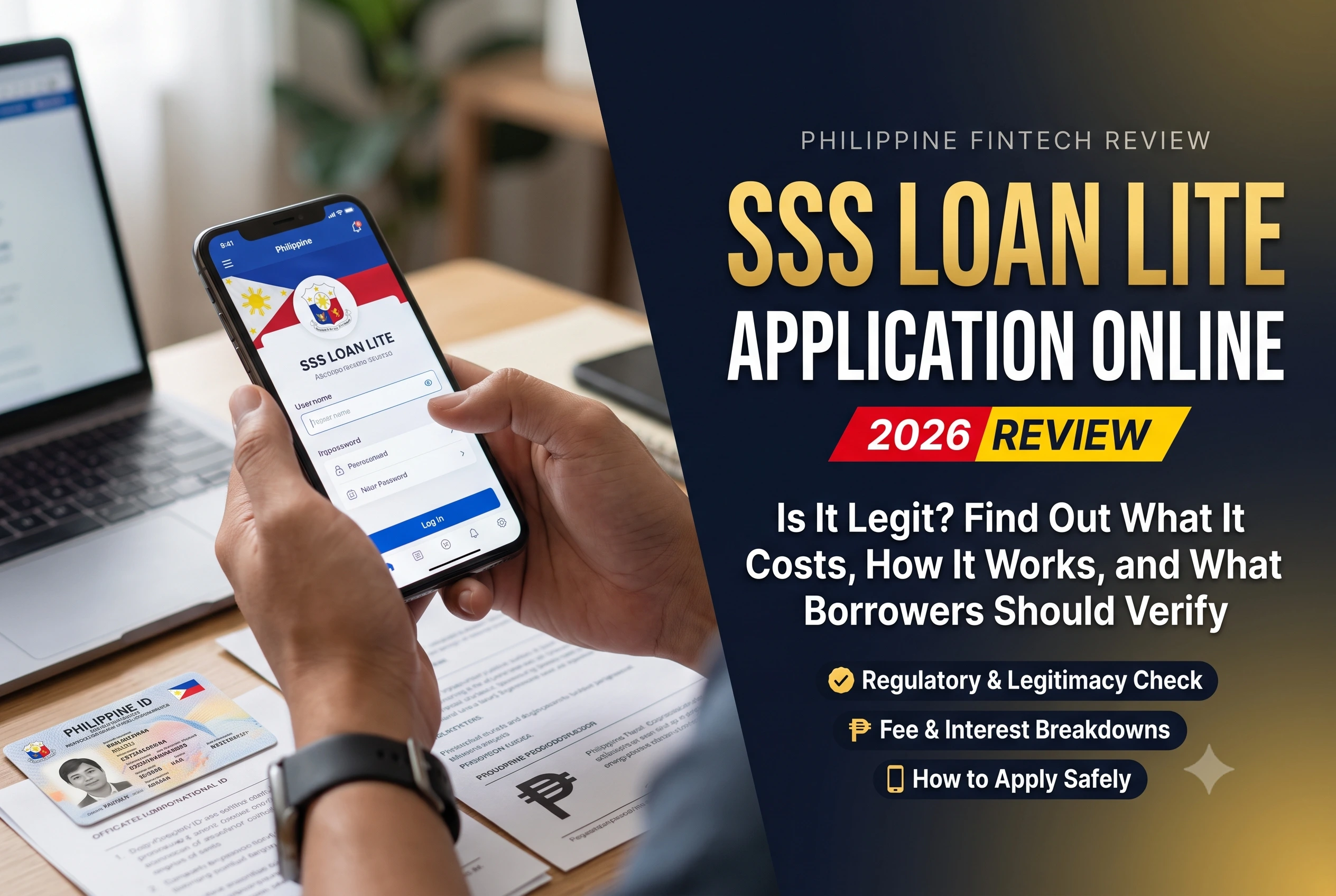
Searching for an “SSS loan lite application online” in 2026 leaves many Filipino workers facing an immediate, costly trap: distinguishing between official Social Security System (SSS) member credit programs, partner bank micro-credit facilities, and unauthorized third-party online lending platforms (OLPs) that insert “SSS” or “Lite” into their app store titles to capture search traffic. When you need quick liquidity to cover a medical bill or household shortfall, clicking on a lookalike app can expose you to steep upfront service deductions, 7-to-14-day repayment traps, and aggressive debt collection rather than the low-interest statutory benefit you expected to apply for.
This review examines what the phrase “SSS Loan Lite” actually refers to in the Philippine financial market today. Because no single, standalone official app named “SSS Loan Lite” is operated directly by the state-run Social Security System as a replacement for the standard My.SSS portal or the official SSS Mobile App, borrowers encountering this term are typically looking at one of two distinct possibilities: a smaller-principal or streamlined digital cash loan product offered through an SSS-accredited partner institution (or standard SSS short-term member credit), or an unrelated private lending app using misleading keywords. Below, we break down how to verify the exact legal entity behind your application, how official SSS short-term loan computations compare against private commercial “lite” loans, and what operational hurdles – from Disbursement Account Enrollment Module (DAEM) delays to employer certification bottlenecks – can hold up your funds.
sss.gov.ph or handing data to a private financing company.| Borrower question | Current finding | Why it matters |
| Who is the legal operator? | Official SSS loans are issued by the Social Security System (Republic Act No. 11199). Private “Loan Lite” apps are operated by SEC-registered (or unregistered) private lending/financing corporations. | Mistaking a private lending app for a government benefit can multiply your borrowing cost by more than tenfold and expose your phone contacts to third-party collectors. |
| Where do you legitimately apply? | Strictly via the official My.SSS Member Portal (member.sss.gov.ph) or the verified SSS Mobile App published by the Social Security System. |
Third-party websites or APK downloads claiming to process “SSS Loan Lite” applications for a fee are either unauthorized fixers or phishing fronts. |
| How much can you borrow? | Official 1-month SSS Salary Loans equal up to one monthly salary credit (MSC), capped by the current maximum MSC ceiling (up to ₱20,000 – ₱30,000 depending on contribution tier and 1- or 2-month eligibility). | Private “lite” cash apps often advertise ₱25,000 but restrict first-time borrowers to ₱1,000 – ₱3,000 for 7 to 30 days. |
| What is the true borrowing cost? | Official SSS Salary Loans charge a 1% upfront service fee and 10% per annum interest on a diminishing balance (roughly ₱1,111 total interest over 2 years on a ₱10,000 loan, though deducted upfront for the first two months’ pro-rated interest). | Private SEC-covered small loans (under SEC MC No. 3, s. 2022) can legally charge up to 0.5% per day effective cost (~15% per month), making them vastly more expensive. |
| How is the money disbursed? | Credited via PESONet/partner banks to a pre-enrolled DAEM (Disbursement Account Enrollment Module) bank account, e-wallet (such as Maya or GCash where active), or UMID-ATM card. | Your loan application cannot even be submitted until your bank account or e-wallet passes DAEM validation, which takes 3 to 5 banking days on its own. |
| What happens if you pay late? | Official SSS loans charge a 1% monthly penalty on underpaid/unpaid amortization and offset unpaid balances against future short-term or retirement/disability benefits. | Unlike abusive online apps, the SSS does not harass your phone contacts, though chronic default silently erodes your future statutory pension or sickness benefits. |
Is an “SSS Loan Lite” app legitimate and properly authorized in the Philippines?
No standalone government app called “SSS Loan Lite” exists. Official Social Security System loans are administered exclusively under Republic Act No. 11199 via the official My.SSS portal and the SSS Mobile App. Any separate app using “SSS Loan Lite” is a private entity that must hold a valid SEC Certificate of Authority.
When evaluating any digital platform returned under the search query “sss loan lite application online,” a Filipino borrower must immediately separate two completely different regulatory regimes in the Philippines.
Who legally operates official SSS loan channels vs. private “Lite” apps?
If you are applying for a genuine Social Security System member loan, the lender is a government-owned and controlled corporation (GOCC) operating under Republic Act No. 11199 (the Social Security Act of 2018). It is not supervised by the Securities and Exchange Commission (SEC) because it is created by legislative charter. Its only authorized self-service digital channels are:
- The official web portal at sss.gov.ph (specifically the
member.sss.gov.phlogin domain). - The official SSS Mobile App available on the Google Play Store, Apple App Store, and Huawei AppGallery, published under the developer name Social Security System.
By contrast, when borrowers search for “SSS loan lite,” they frequently encounter two other categories of financial products:
- Co-branded or Partner Bank Micro-Loans: Occasionally, Bangko Sentral ng Pilipinas (BSP)-supervised banks or e-wallets that serve as SSS disbursement partners (such as UnionBank, Maya, or DiskarTech) market small-ticket “Lite” personal loans to depositors who receive their SSS benefits or salary payouts through their accounts. In these instances, the bank or licensed digital lender is the legal creditor, not the SSS, and the loan is underwritten using your cash-flow history rather than your SSS monthly salary credits.
- Private Online Lending Platforms (OLPs) Using Deceptive Naming: Numerous commercial lending apps on Google Play or distributed via side-loaded APK links bid on keywords like “SSS loan” or name their packages with variations of “Lite Loan” to capture high-intent borrowers. For any private app to operate legally in the Philippines under Republic Act No. 9474 (Lending Company Regulation Act) or Republic Act No. 8556 (Financing Company Act), it must disclose both its SEC Company Registration Number and a separate Certificate of Authority (CA) to Operate as a Lending or Financing Company, alongside registering its specific Online Lending Platform name under SEC Memorandum Circular No. 19, Series of 2019.
Is the platform itself the lender or a third-party lead generator?
A growing hazard in 2026 search results is the rise of third-party “assistance” websites and Facebook pages offering to process an “SSS Loan Lite application online” in exchange for a processing fee or login credentials. The Social Security System has repeatedly issued public advisories warning members that online loan filing through My.SSS is free of charge (aside from the statutory 1% service fee deducted directly from approved loan proceeds). Handing your My.SSS user ID, password, and One-Time Password (OTP) to an intermediary allows scammers to replace your enrolled Disbursement Account with their own e-wallet or bank account, diverting your loan proceeds entirely.
How does the online application actually work, and who qualifies?
Applying for an official SSS short-term cash loan requires at least 36 posted monthly contributions – including six within the last 12 months – an approved Disbursement Account in the DAEM system, and timely employer certification if you are currently employed. Private “Lite” apps only require a government ID and mobile number.
Because many first-time borrowers look for a “lite” version of an SSS loan hoping to bypass contribution minimums or employer approval, it helps to examine the exact underwriting rules of the official SSS Salary Loan alongside the friction points that stop applications from going through.
Who can apply for a 1-month (smaller/lite) vs. 2-month SSS Salary Loan?
While the SSS does not label its entry-level credit tier “Loan Lite” in its charter, members commonly refer to the 1-month SSS Salary Loan as the lighter, lower-threshold option compared to the 2-month loan. According to published SSS guidelines:
- For a 1-Month Salary Loan: The member must have at least 36 posted monthly contributions, six (6) of which must be posted within the 12-month period immediately preceding the month of filing the application.
- For a 2-Month Salary Loan: The member must have at least 72 posted monthly contributions, six (6) of which must be posted within the last 12 months prior to the month of application.
- Standing and Age Requirements: The borrower must be under 65 years of age at the time of application, must be updated in the payment of any existing SSS member loans (no past-due short-term accounts), must not have been granted any final benefit (such as total permanent disability, retirement, or death benefits), and must not have been disqualified due to fraud against the SSS.
What documents and digital prerequisites are required before you can apply?
Unlike private lending apps where you upload a selfie and an ID during the loan checkout flow, the SSS online application enforces strict front-loaded account preparation. Our review of the current My.SSS application workflow shows three mandatory steps that must be completed before the loan submission screen will unlock:
- My.SSS Account Registration and Contact Verification: You must have an active My.SSS account with a verified mobile number and email address to receive transaction OTPs.
- Disbursement Account Enrollment Module (DAEM) Approval: Unless you hold an active UMID-ATM Card (enrolled with UnionBank or another participating bank) or an SSS-issued UnionBank QuickCard, you must enroll a PESONet-participating single-name bank account or supported e-wallet under the Services > Disbursement Account Enrollment Module menu. Crucially, DAEM enrollment requires uploading a clear photo of your proof of account (such as a bank statement, passbook, ATM card with your printed name and account number, or verified e-wallet profile screenshot), a valid primary government ID, and a selfie holding both. You cannot submit a loan application while your DAEM status is still “For Approval.”
- Employer Certification (For Employed Members): If your membership status is Employed, submitting the loan online does not send it straight to the SSS for payout. Instead, the system routes the request to your employer’s My.SSS employer account. Your company’s HR or payroll officer must log in and certify the loan application before the reservation expires; otherwise, the system automatically cancels the request. Self-employed, Voluntary, and Overseas Filipino Worker (OFW) members bypass employer certification entirely.
How much can you actually borrow, and why might you receive less?
An official 1-month SSS Salary Loan equals the average of your last 12 Monthly Salary Credits (MSCs), capped at the statutory MSC ceiling (up to ₱20,000 for a 1-month loan or ₱40,000 for a 2-month loan under standard caps), minus a 1% service fee, pro-rated upfront interest, and any outstanding loan balance.
Borrowers are frequently surprised when the cash deposited into their bank account is noticeably lower than the headline figure shown on their initial eligibility screen. Understanding how the principal is computed – and what gets deducted before payout – prevents budget shortfalls.
How the approved principal is calculated
In the official SSS system, your loan limit is not based on your gross take-home pay or informal income; it is strictly tied to your Monthly Salary Credit (MSC), which corresponds to the contribution bracket you or your employer paid during your last 12 posted monthly contributions.
- 1-Month Loan Principal: Equivalent to the average of the member’s latest 12 Monthly Salary Credits, rounded to the next higher monthly salary credit, or the amount applied for, whichever is lower.
- 2-Month Loan Principal: Equivalent to twice the average of the member’s latest 12 Monthly Salary Credits, rounded to the next higher MSC (up to the statutory maximum ceiling enforced by the SSS).
If you only have the minimum 36 contributions and contributed at a lower bracket during six of the last 12 months – for instance, if you transitioned from employed to voluntary status and paid the minimum voluntary contribution for several months – your 12-month average MSC will drop significantly, reducing your maximum borrowable principal.
Why net proceeds are lower than the approved loan amount
Whether you use the official SSS Salary Loan or a private commercial “Loan Lite” app, the approved principal is never identical to the net cash disbursed. However, the scale of the deduction differs drastically between the two:
- In an Official SSS Salary Loan: The SSS deducts:
- A 1% service fee based on the gross loan amount.
- Pro-rated advance interest covering the period from the date the loan is granted until the end of the month of approval, plus the full month immediately following the month of approval. Why? Because your formal 24-month amortization schedule only starts on the second month following the date of loan grant.
- Any outstanding balance from a previous short-term SSS loan (if you are applying for a loan renewal after paying at least 50% of the original principal and after at least half of the original term has elapsed).
- In a Private Commercial “Lite” App: Many private SEC-registered or unregistered apps advertising “Loan Lite” terms deduct 15% to 35% upfront as “processing fees,” “platform management fees,” or “credit assessment charges.” On a ₱3,000 private app loan, a borrower might receive only ₱2,040 in their e-wallet while remaining legally obligated to repay the full ₱3,000 within 7 or 14 days.
What does the loan really cost in pesos? (Official SSS vs. Private “Lite” App)
An official ₱10,000 SSS Salary Loan costs roughly ₱100 in upfront service fees plus approximately ₱1,111 in total interest spread over 24 months at 10% per annum on a diminishing balance. By contrast, a ₱10,000 private commercial app loan at the SEC maximum cap of 15% per month costs vastly more over the same period.
Under the Truth in Lending Act (Republic Act No. 3765) and BSP/SEC disclosure rules, every borrower has the right to see a clear Disclosure Statement showing the exact finance charges, non-finance charges, net proceeds, and effective interest rate before consummating a loan. Below is an analytical comparison of what a ₱10,000 principal loan looks like under standard official SSS Salary Loan rules versus a private commercial online lending platform operating at the maximum ceiling set by SEC Memorandum Circular No. 3, Series of 2022.
Sample Computation: ₱10,000 Official SSS Salary Loan (24-Month Term)
Assume a member is approved for a ₱10,000 1-month SSS Salary Loan on October 15, 2026 (with no prior unpaid loan balance to deduct), under the standard 10% per annum diminishing-balance interest rate and 1% service fee:
- Approved Principal: ₱10,000.00
- Less 1% Service Fee: ₱100.00
- Less Pro-Rated Upfront Interest: Because the loan is granted mid-October, the first monthly installment is not due until December 2026 (to be remitted by the end of January 2027). The SSS computes 10% per annum daily pro-rated interest for the remaining 17 days of October (approx. ₱46.58) plus the full month of November (approx. ₱83.33), totaling roughly ₱129.91 in upfront interest deduction.
- Estimated Net Cash Received (Disbursed to Bank/E-Wallet): ₱9,770.09
- Monthly Amortization (Months 1 to 24): Approximately ₱461.45 per month for 24 months (incorporating principal plus 10% annual interest calculated on a diminishing monthly principal balance).
- Total Amount Repaid Over 24 Months: ₱11,074.80 (via 24 monthly amortizations).
- Total Peso Borrowing Cost (All Interest + Service Fee): Roughly ₱1,304.71 spread across two full years (just over ₱54 per month in average cost).
(Note: In late 2025/2026, the SSS also introduced framework adjustments allowing lower annual interest rates – down to 8% per annum – for select calamity or salary loan tiers for members with clean repayment records; always check the exact Disclosure Statement generated on your My.SSS confirmation screen before clicking Submit.)
How that compares to a ₱10,000 Private “Loan Lite” App (SEC MC No. 3, s. 2022 Cap)
For unsecured general-purpose loans not exceeding ₱10,000 with a tenor of up to four (4) months issued by private lending and financing companies, SEC Memorandum Circular No. 3, Series of 2022 caps the nominal interest rate at 6% per month (~0.2% per day) and the effective interest rate (EIR) – which includes all processing, service, and platform fees – at 15% per month (~0.5% per day).
If you mistakenly borrow ₱10,000 for just 30 days from a private app using “Loan Lite” branding that charges the maximum legal SEC cap of 15% per month:
- Total Borrowing Cost for 1 Month: ₱1,500.00 (either deducted upfront so you only receive ₱8,500, or added to your 30-day bill so you repay ₱11,500).
- Cost Comparison: A single month on a private lending app (₱1,500 cost) is already more expensive than two full years of interest and fees on an official ₱10,000 SSS Salary Loan (~₱1,304.71). Worse, unregistered or non-compliant apps regularly violate SEC MC No. 3 by charging 30% to 45% over 7 to 14 days.
How fast is approval and disbursement, and what causes delays?
Once submitted online – and certified by your employer, if employed – an official SSS loan is typically processed and credited to an enrolled bank account or e-wallet within 3 to 5 banking days via PESONet. However, DAEM enrollment verification, employer delays, and bank cut-off windows can stretch total wait times to 1 – 2 weeks.
Many borrowers turn to private lending apps because they advertise “5-minute instant disbursement,” whereas official SSS loans follow structured banking batch cycles. Knowing where bottlenecks occur helps you plan your cash flow realistically.
Operational friction during DAEM and application review
Based on documented SSS member procedures and recurring borrower reports across Philippine community forums, delays rarely happen during the electronic loan calculation itself – they happen at three specific checkpoints:
- The DAEM Pre-Enrollment Bottleneck (3 – 5 Banking Days): If you have never enrolled a bank account or e-wallet in the Disbursement Account Enrollment Module, you must wait for SSS personnel to manually inspect your uploaded ID, proof of account, and selfie. Common reasons for DAEM rejection include:
- Uploading a cropped screenshot of an e-wallet or mobile banking app that hides the account number or full legal name.
- Submitting an ATM card photo that only shows the 16-digit card number on the front rather than the actual deposit account number (which banks require for PESONet transfers).
- Blurry ID details or wearing eyeglasses/face masks in the verification selfie.
- Mismatched middle names or suffixes (e.g., “Jr.”) between your SSS master file and your bank account records.
- Employer Certification Window: For employed applicants, the SSS gives your employer a strict window (typically a few working days) to log into the employer portal and click “Approve.” If your HR department only processes SSS requests once a week – or if you listed the wrong employer branch – your loan application will expire, forcing you to re-file from scratch.
- PESONet Batch Settlement Cut-Offs: Unlike InstaPay (which settles in real time 24/7), SSS loan disbursements are routed primarily through PESONet batch clearing. Transfers initiated after afternoon banking cut-off times, or on Fridays, weekends, and Philippine public holidays, will only settle on the next banking day.
How does repayment work, and what happens if you pay late?
Employed borrowers repay official SSS loans through mandatory monthly salary deductions remitted by their employer, while self-employed, voluntary, and OFW members generate a Payment Reference Number (PRN) inside My.SSS to pay via accredited banks or e-wallets. Late payments incur a 1% monthly penalty and eventual benefit offsetting.
Understanding how your loan is collected – and what the legal consequences of late payment are – protects you from both unintended delinquency and illegal harassment.
Repayment channels and PRN posting rules
- For Employed Members: Your employer is legally obligated under the Social Security Act to deduct your monthly amortization from your payroll starting on the second month after the loan is granted and remit it to the SSS using a Loan Collection List. Critical borrower checkpoint: If you resign, change employers, or go on unpaid leave before the 24-month loan is fully paid, your previous employer may deduct the remaining balance from your final pay (if authorized in company policy) or stop remitting. It remains your personal responsibility to monitor your My.SSS loan ledger and continue paying via individual Payment Reference Numbers (PRNs) while between jobs so penalties do not pile up silently.
- For Self-Employed, Voluntary, and OFW Members: You must log into the My.SSS portal or SSS Mobile App, navigate to the PRN – Loans tab, generate an active Real-Time Processing of Loans (RTPL) Payment Reference Number, and pay before the monthly due date (which falls on the last day of the calendar month following the applicable month).
- Posting Speed: Payments made using an active PRN through real-time accredited partners – such as GCash, Maya, UnionBank, or Bayad Center – typically post to your SSS loan ledger immediately or within 24 to 48 hours. Never pay an SSS loan using an expired PRN or an old manual biller slip without a PRN, as unreferenced payments require manual reconciliation at an SSS branch.
Late-payment penalties, credit reporting, and benefit offsetting
What happens if you miss payments on an official SSS loan versus a private “Loan Lite” app?
- Financial Penalties: An official SSS Salary Loan charges a 1% penalty per month on any unpaid monthly amortization until fully paid. While 1% per month (12% per annum) is modest compared to private apps that charge 1% to 5% per day in late penalties, leaving an SSS loan unpaid for five or ten years allows cumulative interest and penalties to double the original principal. (Periodically, the SSS Board of Commissioners opens a stationary Loan Penalty Condonation Program – such as the Consolidation of Past Due Short-Term Member Loans – which waives accumulated penalties and restructures principal plus interest into installment terms for delinquent members.)
- Offsetting Against Future Benefits: If a member defaults on a short-term SSS loan and fails to settle it even through restructuring, the SSS has the statutory right to deduct the unpaid principal, interest, and penalties from the member’s future short-term benefits (such as Sickness or Maternity benefits, where applicable under current circular rules) or final benefits (Retirement, Total Disability, or Death benefits).
- Credit Information Corporation (CIC) Reporting: Under Republic Act No. 9510 (Credit Information System Act), both government financial institutions and private SEC-licensed lending/financing companies submit positive and negative borrower repayment data to the Credit Information Corporation (CIC). Delinquency on either an official loan or a licensed commercial app can lower your credit standing when you later apply for a Pag-IBIG housing loan, credit card, or bank auto loan.
- No Imprisonment for Ordinary Debt: Under Article III, Section 20 of the 1987 Philippine Constitution, no person shall be imprisoned for debt. Whether you owe the SSS or a private lending app, inability to pay an ordinary civil loan is not a criminal offense – unless accompanied by independently criminal acts such as issuing bouncing checks (Batas Pambansa Blg. 22) or falsifying official identity documents to commit fraud (Estafa under the Revised Penal Code).
How is your personal data handled, and what are your privacy rights?
The official SSS Mobile App collects only the statutory membership, identity, and disbursement data required under Republic Act No. 11199 and the Data Privacy Act of 2012. It never harvests your phonebook contacts to shame you. Private lending apps demanding contact-list access violate NPC Circular No. 20-01 and SEC MC No. 18, s. 2019.
One of the sharpest differences between the official SSS digital ecosystem and rogue commercial “Loan Lite” apps lies in device permissions and debt collection conduct.
App permissions to inspect before installing any app
When you use the official SSS Mobile App, it requests standard operational permissions – such as camera access (for capturing DAEM supporting documents or facial biometric verification where enabled) and storage access (for downloading PDF confirmation slips or PRN receipts). It is bound by the Data Privacy Act of 2012 (Republic Act No. 10173) and supervised by the National Privacy Commission (NPC).
Conversely, if you download a third-party app calling itself “SSS Loan Lite” or “Lite Cash,” inspect the Android/iOS permission prompt immediately:
- Under NPC Circular No. 20-01 (Guidelines on the Processing of Personal Data for Loan-Related Transactions), online lending apps are strictly prohibited from harvesting a borrower’s phonebook/contact list, SMS messages, photo gallery, or social media contacts for debt collection or harassment.
- Furthermore, SEC Memorandum Circular No. 18, Series of 2019 makes it unlawful for any lending or financing company to engage in unfair debt collection practices – including contacting people in the borrower’s contact list who were not named as guarantors or co-makers, using profane or threatening language, publishing the borrower’s name on social media as a delinquent debtor, or making false representations that a court sheriff or police officer is on the way to arrest the borrower.
If an app refuses to proceed to the application screen unless you grant “Read Contacts” or “Read SMS” permissions, close the app and uninstall it immediately.
What are borrowers saying in 2026?
Recent user feedback on the official SSS Mobile App and My.SSS portal praises the low 10% annual interest rate and PRN convenience, while recurring complaints focus on OTP delivery delays, strict DAEM photo rejections, and slow employer certification. Reviews for third-party “Lite” loan apps frequently cite misleading fee deductions.
To separate technical app glitches from underlying loan terms, we reviewed recurring themes reported by Filipino users across Google Play Store reviews, Apple App Store listings, and local personal finance communities in 2025 – 2026.
Positive borrower experiences (Official SSS Channels)
- Transparent, Predictable Cost: Borrowers consistently highlight that the 10% per annum diminishing-balance interest rate makes the SSS Salary Loan one of the most affordable unsecured liquidity options in the country – far cheaper than credit card cash advances (typically 3% per month) or commercial e-wallet cash loans (typically 1.5% to 5%+ per month).
- Automated Payroll Deduction for Employees: Salaried workers appreciate that once the loan is disbursed, repayment happens automatically via payroll without needing to remember weekly or bi-weekly app due dates.
- Instant PRN Posting via E-Wallets: Voluntary and self-employed members note that generating a PRN inside the SSS Mobile App and paying via GCash or Maya now updates their posted loan balance much faster than historical over-the-counter bank payments.
Recurring complaints and friction points
- DAEM Photo Rejection Loops: Multiple recent reviewers expressed frustration at having their Disbursement Account Enrollment rejected two or three times over minor technicalities – such as a selfie where the account number on the ATM card was slightly out of focus, or submitting a digital bank screenshot that lacked an official bank header. Because each manual review cycle takes several banking days, a double rejection can delay a loan by two weeks.
- Peak-Day Login and OTP Timeouts: During payroll days (the 15th and 30th of the month) or immediately following major calamity declarations, users report slow page loads on
member.sss.gov.phand delayed SMS One-Time Passwords, occasionally causing sessions to time out before submission. - Confusion Over Third-Party Lookalike Apps: In forum discussions, several distressed borrowers reported clicking sponsored social media ads promising “Fast SSS Loan Lite Approval – No Employer Needed,” only to realize after disbursement that they had signed up with a private 7-day lending app that deducted 30% upfront and began messaging their references on Day 6.
What are the main advantages and disadvantages of an official SSS online loan?
Evaluating an online SSS short-term loan requires weighing its low statutory interest rate against its rigid administrative requirements and multi-day disbursement timeline.
Potential Advantages
- Statutory Low Interest Rate: At 10% per annum calculated on a diminishing principal balance (plus a one-time 1% service fee), the total peso cost is a fraction of commercial fintech microloans.
- Long 24-Month Repayment Tenor: Spreading repayment across two full years keeps monthly amortizations manageable (~₱461.45/month per ₱10,000 borrowed) rather than forcing a lump-sum repayment in 14 or 30 days.
- Strict Regulatory and Privacy Safeguards: Administered directly by a state social insurance institution with zero contact-list harvesting or abusive third-party collection tactics.
- No Collateral or External Guarantor Required: Underwriting is backed by your own accumulated Monthly Salary Credits rather than property collateral or co-makers.
Potential Drawbacks
- Not Suitable for Same-Day Emergencies: Between DAEM enrollment approval (3 – 5 banking days), employer certification, and PESONet batch clearing (3 – 5 banking days), you cannot receive funds within minutes.
- Strict Contribution Thresholds: Workers with fewer than 36 total posted contributions – or those with gaps preventing 6 posted contributions in the last 12 months – are automatically disqualified by the system.
- Employer Dependency for Salaried Staff: If your company has unremitted SSS contributions or an unresponsive HR officer who fails to certify your online request before it expires, your application will stall despite your personal contributions.
- Pension and Benefit Offsetting Risk: Leaving a loan unpaid allows 1% monthly penalties to accumulate and reduces your eventual retirement, disability, or death benefit payout.
Who should use the official SSS online loan, and who should be cautious?
Because no credit product fits every cash-flow situation, consider how the mechanics of an SSS online loan align with your exact timeline and employment status.
An official SSS Salary Loan is generally well-suited for:
- Actively contributing SSS members (36+ contributions) who have already pre-enrolled and received approval for their bank account or e-wallet in the DAEM module ahead of time.
- Borrowers managing non-instant expenses – such as upcoming tuition installments, planned medical procedures, debt consolidation of high-interest online apps, or home repairs – who can wait 3 to 5 banking days for PESONet settlement in exchange for a 24-month, low-interest repayment schedule.
- Salaried employees with responsive HR/payroll teams who promptly certify online SSS requests and accurately remit monthly payroll deductions.
You should exercise extreme caution – or pause before proceeding – if:
- You found an app called “SSS Loan Lite” via a social media ad or APK link: If the platform asks you to apply without logging into
member.sss.gov.ph, claims you do not need 36 SSS contributions, or promises 10-minute disbursement over a 7-day term, you are dealing with a private commercial lender or phishing site, not the Social Security System. - You are about to change jobs or go on extended unpaid leave: If you take out an SSS Salary Loan right before resigning, carefully check your employment contract – some employers deduct the entire remaining SSS loan balance from your final backpay, which can unexpectedly wipe out your transition funds.
- Your DAEM account is not yet approved and you need cash within 24 hours: Enrolling a bank account for the first time today means you will likely wait over a week from start to finish before seeing any cash.
Frequently Asked Questions (FAQ)
Can I cancel an SSS online loan application after submitting it?
If you are an employed member and your loan status is still awaiting employer certification, you can contact your employer’s HR or authorized SSS signatory immediately and ask them to reject/disapprove the loan request in their employer portal, or allow the certification period to expire without action so the system cancels it automatically. However, if you are a self-employed, voluntary, or OFW member – or once an employer certifies the request – the application goes directly into SSS batch processing and generally cannot be canceled online once approved for PESONet disbursement.
Can I pay off my SSS Salary Loan early, and when can I apply for a loan renewal?
Yes. You can make partial or full advance payments at any time by generating a Loans PRN inside your My.SSS account and specifying the exact amount you wish to pay. Because interest is calculated on a diminishing principal balance, paying off the loan early saves you future monthly interest charges. However, if you intend to renew the loan (borrow again), SSS rules require that you must have paid at least 50% of the original principal amount and that at least 50% of the original loan term (i.e., 12 months of a 24-month loan) must have lapsed, even if you paid the 50% balance ahead of schedule.
Why was my SSS loan approved in My.SSS, but the money is not in my GCash, Maya, or bank account yet?
An “Approved” status in My.SSS means your loan eligibility and employer certification have passed internal SSS validation, and a voucher is being generated for batch transfer. From the date of final SSS approval, allow 3 to 5 banking days (excluding weekends and holidays) for the funds to be credited via PESONet. If more than 5 banking days pass and the status shows a disbursement failure, check your My.SSS notification inbox – common culprits include an inactive bank account, an e-wallet that has reached its monthly incoming wallet limit, or a mismatch between your SSS registered name and bank account name.
What should I do if a third-party “Loan Lite” app is harassing my contacts or pretending to be affiliated with the SSS?
First, gather screenshots of the app’s profile page, loan disclosure statement, payment demands, and threatening SMS or chat messages. If the app is misrepresenting itself as an official SSS program, report it to the SSS Member Relations Department via the official usssaptayo.sss.gov.ph portal. For abusive debt collection or unauthorized contact-list harvesting by a private lending app, file a formal complaint with the SEC Enforcement and Investor Protection Department (EIPD) via their online i-Message portal (imessage.sec.gov.ph) and the National Privacy Commission (NPC) at privacy.gov.ph.
Final Borrower Decision Checklist Before You Apply
Before clicking submit on any online loan application in 2026, run through these five verification steps to protect both your cash flow and your personal identity:
- Verify the Domain and Developer Identity: Confirm that you are logged directly into
member.sss.gov.phor the official SSS Mobile App published by the Social Security System. If you are evaluating a private commercial app with “Lite” in its name, cross-check its exact corporate name and Certificate of Authority number against the SEC List of Recorded Online Lending Platforms before uploading your government ID. - Pre-Enroll Your Disbursement Account Early: Do not wait for a financial emergency to set up your DAEM account. Enroll your primary PESONet bank account or verified e-wallet now so the 3-to-5-banking-day verification window is already behind you when an urgent need arises.
- Compare Net Cash Received Against Your Actual Expense: Remember that a ₱10,000 official SSS loan yields roughly ₱9,770 after the 1% service fee and pro-rated advance interest – and if you are renewing an existing loan, the remaining unpaid balance of your prior loan will also be deducted from your payout.
- Coordinate With Your Employer Immediately (If Salaried): The moment you submit your online SSS loan, notify your HR or payroll officer with the transaction reference number so your application does not expire in their pending queue.
- Confirm Your Repayment Continuity Plan: Ensure your monthly budget can comfortably absorb the 24-month amortization – and if you plan to switch jobs or transition to voluntary status within the next two years, calendar a monthly reminder to generate your own PRN so your account never slips into the 1% monthly penalty tier.
References
- Social Security System (SSS)Organization: Republic of the Philippines – Social Security System
Resource: Salary Loan Program Guidelines, Eligibility, and Computation (Republic Act No. 11199)
- Securities and Exchange Commission (SEC) PhilippinesOrganization: Securities and Exchange Commission
Resource: Lending and Financing Companies Information – SEC Memorandum Circular No. 3, Series of 2022 (Ceiling on Interest Rates and Other Fees) & List of Recorded Online Lending Platforms
- Bangko Sentral ng Pilipinas (BSP)Organization: Bangko Sentral ng Pilipinas
Resource: Circular No. 1133, Series of 2021 – Ceiling on Interest or Finance Charges for Lending and Financing Companies and Their Online Lending Platforms
URL: https://www.bsp.gov.ph/Regulations/Issuances/2021/1133.pdf
- National Privacy Commission (NPC)Organization: Republic of the Philippines – National Privacy Commission
Resource: NPC Circular No. 20-01 – Guidelines on the Processing of Personal Data for Loan-Related Transactions
- Official Gazette of the PhilippinesOrganization: Republic of the Philippines
Resource: Republic Act No. 11199 – The Social Security Act of 2018
URL: https://www.officialgazette.gov.ph/2019/02/07/republic-act-no-11199/