Last Updated on 17/10/2026 by Nicole Alba
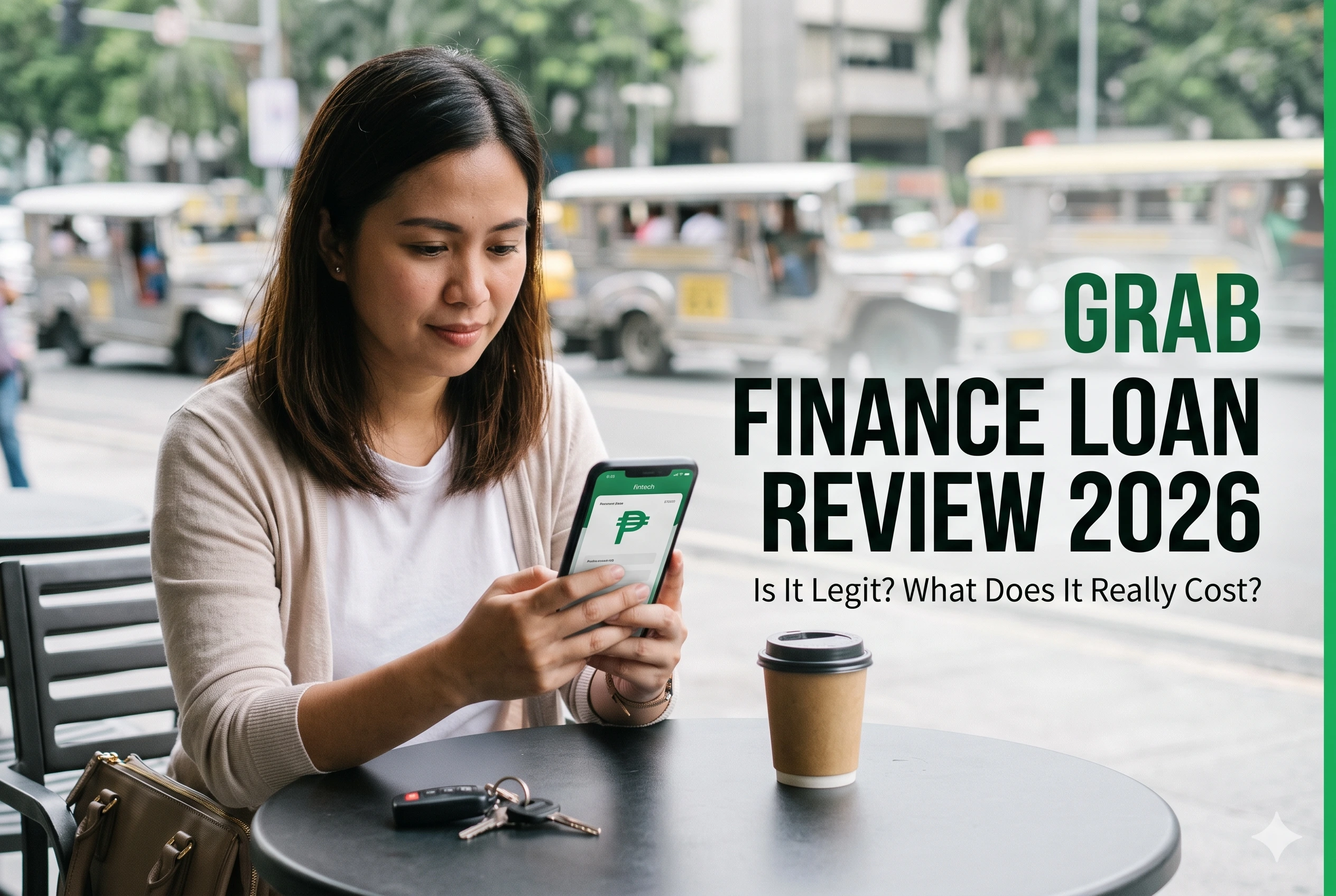
Many Filipinos already trust Grab for ride-hailing and food delivery, making the notification for an in-app “Grab Personal Loan” feel like a natural extension of a familiar service. But accepting a credit line requires a different level of scrutiny than ordering a meal. Borrowers need to know if the convenience of instant wallet funding comes with hidden processing deductions, aggressive repayment terms, or complex late fees.
This review examines the legal standing, actual costs, and regulatory compliance of the consumer lending products offered within the Grab Philippines app in 2026.
Summary:
Grab’s personal lending features are legitimate and operated through properly registered entities under the Securities and Exchange Commission (SEC) and Bangko Sentral ng Pilipinas (BSP), often in partnership with licensed banks. While the integration with the GrabPay wallet allows for immediate disbursement and automated repayment, the actual cost of borrowing can be significant once processing fees and effective interest rates are calculated. Borrowers should expect stringent data collection based on their app usage history. Before accepting any offer, verify the exact monthly deduction, the net cash disbursed, and ensure your funding source will have sufficient balance on the due date.
| Borrower question | Current finding | Why it matters |
| Who is the legal operator? | Grab Finserve Philippines, Inc. and partner banks, utilizing GPay Network Philippines, Inc. for wallet transactions. | You are dealing with formal, regulated financial institutions subject to SEC and BSP oversight. |
| How much can you borrow? | Advertised limits range from ₱10,000 to ₱500,000, though regular consumers generally see lower initial offers. | Do not assume you will qualify for the maximum limit; approvals depend heavily on your Grab app transaction history. |
| What are the deductions? | The platform typically charges an upfront processing fee (often 3% to 5%) deducted directly from the approved principal. | The money deposited into your GrabPay wallet will be lower than the loan amount you are required to repay. |
| How fast is disbursement? | Upon digital contract acceptance, funds are credited almost immediately to the user’s GrabPay wallet. | While fast, transferring those funds to an external bank may incur standard InstaPay or PESONet transfer fees. |
| What happens if you pay late? | Late payments trigger penalty fees and daily interest accumulation. Persistent default can restrict your access to basic Grab services (rides and deliveries). | Cross-service suspension means ignoring a loan could prevent you from commuting or working via the app. |
Is Grab Personal Loan legitimate and properly authorized in the Philippines?
Yes. The lending facilities inside the Grab app operate legally through Grab Finserve Philippines, Inc., a registered financing company, often working alongside licensed partner banks. Transactions pass through GPay Network Philippines, Inc., which the Bangko Sentral ng Pilipinas regulates as an Electronic Money Issuer.
Who legally operates Grab’s lending features?
Evaluating the legitimacy of a fintech app requires looking past the consumer-facing logo. “Grab” is the marketing brand, but the financial mechanics involve specific corporate entities. Grab Finserve Philippines, Inc. holds the authority to operate as a financing company under the SEC.
In some instances, Grab acts primarily as the marketing and technology platform, matching pre-qualified users with third-party banking partners (such as UnionBank or Security Bank) that actually underwrite and fund the loan. In these cases, the bank is the lender of record, and Grab is the intermediary.
Is the platform regulated by the BSP or SEC?
Both regulators are involved depending on the transaction phase. The lending entity (whether Grab Finserve or a partner bank) is subject to SEC corporate and lending regulations. The wallet receiving the funds, GrabPay, is operated by GPay Network Philippines, Inc., which holds an Electronic Money Issuer (EMI) license and is registered as an Operator of Payment System (OPS) with the BSP. This dual-layer oversight provides borrowers with formal channels for complaints.
How does the Grab Finance Loan actually work?
Grab Personal Loans are generally offered by-invitation to pre-qualified users. The system evaluates ride frequency, food orders, and GrabPay usage to determine creditworthiness, allowing many users to bypass traditional income document requirements.
Who can apply?
The application flow is not typically open to the general public to apply cold. The current app listing states that the loan feature appears for users who meet specific internal criteria. This usually means an active history of using Grab services, maintaining a verified GrabPay account (fully upgraded with a valid government ID), and exhibiting consistent spending patterns.
This model benefits freelancers and gig workers who lack formal payslips but use the app frequently. Conversely, a salaried employee with a pristine credit score may not see a loan offer if they rarely use the Grab application.
What information or documents are required?
Because the offer is targeted at existing verified users, the documentation requirement is minimal. The public application flow indicates that borrowers are generally asked to verify their identity (if not already fully verified for GrabPay), confirm their current address, and agree to the loan terms. The system relies heavily on alternative data – your behavior within the app – rather than requiring external bank statements or certificates of employment.
How much can you borrow from Grab, and what does it really cost?
Approved limits vary widely, typically ranging from ₱10,000 to ₱100,000 for standard consumer accounts. Borrowers must account for monthly interest rates that can reach up to 5%, plus upfront processing fees that reduce the actual cash received.
What limits are advertised versus actual approvals?
Marketing materials frequently highlight maximum limits of up to ₱500,000. However, available public documentation and borrower reports suggest that these upper tiers are reserved for high-volume merchants, top-tier drivers, or consumers with extensive transaction histories. A first-time consumer borrower is more likely to receive an offer between ₱10,000 and ₱30,000.
What interest and fees are disclosed?
The cost of borrowing consists of two primary components: the interest rate and the processing fee. Nominal monthly interest rates generally range from 1.5% to 5%, depending on the user’s risk profile and the specific partner funding the loan.
An upfront processing fee (commonly 3% to 5% of the requested amount) is almost always deducted before disbursement. This means the advertised loan amount is not the amount that arrives in your wallet.
Cost breakdown example
To understand the true cost of borrowing, consider a theoretical ₱20,000 loan payable over 6 months at a 3% monthly add-on interest rate, with a 3% processing fee.
- Requested Principal: ₱20,000
- Processing Fee Deduction (3%): ₱600
- Net Cash Received in GrabPay: ₱19,400
- Monthly Interest (3% of ₱20,000): ₱600
- Total Interest over 6 Months: ₱3,600
- Monthly Installment: ₱3,933.33
- Total Amount Repaid: ₱23,600
In this scenario, the borrower pays ₱23,600 but only receives ₱19,400 in usable funds. The absolute cost of the loan is ₱4,200. This highlights why looking only at the monthly payment obscures the effective cost.
How fast is Grab approval and disbursement?
Because the loan is pre-approved based on existing platform data, approval is often instantaneous upon accepting the terms. Funds are disbursed directly to the user’s GrabPay wallet, completely bypassing standard banking delays.
What can slow approval?
Friction in the application process is rare, but it occurs primarily during identity verification. If the government ID on file is expired, or if the user’s profile information does not precisely match the records held by the funding partner, manual review may be required.
When can bank settlement delay the money?
While Grab disburses instantly to GrabPay, a borrower who needs physical cash or needs to transfer the money to an external bank (like BDO or BPI) must initiate a transfer. This secondary step subjects the borrower to standard InstaPay or PESONet cut-off times, potential network downtimes, and transfer fees.
How does repayment work?
Repayment is heavily automated. The system schedules an auto-debit from the user’s GrabPay wallet or linked payment card on the specific due dates, requiring the borrower to ensure sufficient balance is available beforehand.
What payment channels are available?
The primary and required channel is the GrabPay wallet. Borrowers must cash-in to their wallet before the due date using standard methods: linked bank accounts, over-the-counter partners (like 7-Eleven or SM Business Centers), or online banking transfers.
When is a payment considered received?
A payment is considered received the moment the system successfully debits the GrabPay wallet. This is a significant advantage over external bank loans where payment posting can take 2-3 business days.
What happens if you pay late?
Missing a payment triggers a fixed late penalty fee plus the accumulation of daily interest on the overdue amount. Furthermore, Grab retains the right to suspend the user’s access to ride-hailing and food delivery services.
What charges may apply?
According to the lender’s disclosures, late payments attract an absolute penalty fee for each missed cycle, alongside standard daily interest. This accelerates the debt rapidly. If the auto-debit fails because the wallet balance is insufficient, the system will continue attempting to deduct the funds whenever new money enters the GrabPay wallet.
Can delinquency affect your credit record?
Yes. Both Grab Finserve and its partner banks submit data to the Credit Information Corporation (CIC). A late payment on a digital loan carries the same weight on your formal credit report as a late payment on a traditional bank credit card. Additionally, because the loan is tied to a super-app ecosystem, defaulting can result in a shadow ban across the platform, restricting your ability to book rides or order food.
How does Grab handle your personal data?
Applying for a loan within the app requires consenting to extensive data sharing. The platform utilizes your geolocation, purchase history, device information, and partner interaction data to assess credit risk and manage collections.
What data does the application collect?
The privacy policy states that Grab processes transaction data generated within the app. This includes how often you use the service, your average spend, your payment methods, and your location patterns.
Can the lender contact people in your phone?
Current Philippine regulatory frameworks, enforced by the National Privacy Commission (NPC), prohibit lenders from scraping phonebook contacts to harass third parties for debt collection. Grab’s privacy documentation aligns with these legal standards. The platform contacts the borrower via the registered app, email, and phone number, rather than engaging in unauthorized third-party contact.
What are borrowers saying about Grab Finance in 2026?
Anecdotal reports highlight immediate funding and zero-paperwork convenience as primary benefits. The most frequent complaints revolve around the strict auto-debit mechanism and the high cost of upfront processing deductions.
What positive patterns appear?
Several recent reviewers reported that the lack of paperwork is a major relief, particularly for freelancers who struggle to provide Income Tax Returns to traditional banks. The speed of disbursement – often within minutes of clicking accept – is consistently praised as a solution for sudden medical or utility emergencies.
What complaints appear repeatedly?
Borrowers frequently express frustration when they forget a due date, add funds to GrabPay to buy a meal, and watch the system automatically sweep the funds to cover an overdue loan payment. Other common complaints focus on the opacity of the credit limits; many users report their limits decreasing unexpectedly despite maintaining a good repayment history, likely due to algorithmic shifts in how the platform assesses their current spending behavior.
Pros and Cons
Pros:
- Requires zero physical paperwork for pre-qualified users.
- Disbursement to GrabPay is immediate, available 24/7 including weekends.
- Repayment posting is instant, eliminating anxiety over float times.
- Provides accessible credit for freelancers and gig workers with strong app histories.
Cons:
- Upfront processing fees reduce the actual cash you receive.
- Effective interest rates are higher than traditional bank personal loans.
- Cross-service suspension means defaulting impacts your ability to commute.
- Funds must be transferred out of GrabPay to external banks if physical cash is required, incurring further fees.
Who should consider this loan, and who should be cautious?
This financial product is most relevant to a borrower who faces an immediate liquidity gap, knows exactly how they will secure funds for the next due date, and already conducts a significant portion of their financial life within the Grab ecosystem. It is useful for short-term, low-value borrowing where speed is more critical than securing the lowest possible interest rate.
A borrower should be highly cautious if they require the full exact amount of the approved principal (due to the processing fee deduction). It is also unsuitable for those whose income is highly unstable. Because Grab auto-debits the wallet, a borrower living paycheck-to-paycheck might find their essential transportation funds suddenly swept to cover a loan installment.
What should you check before accepting a Grab loan?
Before tapping the final agreement button in the app, confirm the following:
- Net Proceeds: Look at the disclosure statement for the exact amount that will enter your wallet, not just the approved limit.
- Repayment Schedule: Verify the exact dates the system will pull funds. Ensure these dates align with your salary or income schedule.
- Total Repayment: Multiply the monthly installment by the tenor. Compare this total against the net cash received to understand the actual peso cost of the transaction.
- Lender Identity: Note whether the contract is with Grab Finserve or a partner bank, as this dictates who you must contact for formal restructuring or disputes.
Frequently Asked Questions (FAQ)
Can I pay off my Grab loan early?
Our review of the published terms indicates that early repayment is permitted. However, borrowers must check their specific loan contract to see if the lender applies an early termination fee or if interest is still charged on the remaining months.
Why was my loan offer suddenly withdrawn?
Because the system continuously monitors transaction behavior, a drop in app usage, late payments on other Grab features (like PayLater), or changes in partner bank risk models can cause the algorithm to revoke a pre-qualification without warning.
What happens if I delete the Grab app while I have an active loan?
Deleting the app does not erase the debt. The legal contract remains binding. The lender will continue to attempt scheduled collections, apply late fees, and eventually report the default to the Credit Information Corporation or forward the account to an accredited collection agency.
Can I borrow cash directly into my BPI or BDO account?
No. The loan is disbursed strictly into your verified GrabPay wallet. Once the funds are in GrabPay, you can initiate a standard bank transfer to your BDO, BPI, or other external bank accounts, subject to standard clearing times and transfer fees.
References
- Securities and Exchange Commission PhilippinesOrganization: Securities and Exchange Commission
Resource: List of Registered Financing Companies
- Bangko Sentral ng PilipinasOrganization: Bangko Sentral ng Pilipinas
Resource: List of Electronic Money Issuers and Operators of Payment Systems
- Grab PhilippinesOrganization: Grab
Resource: GrabPay and Grab Financial Terms of Service