Last Updated on 07/11/2026 by Nicole Alba
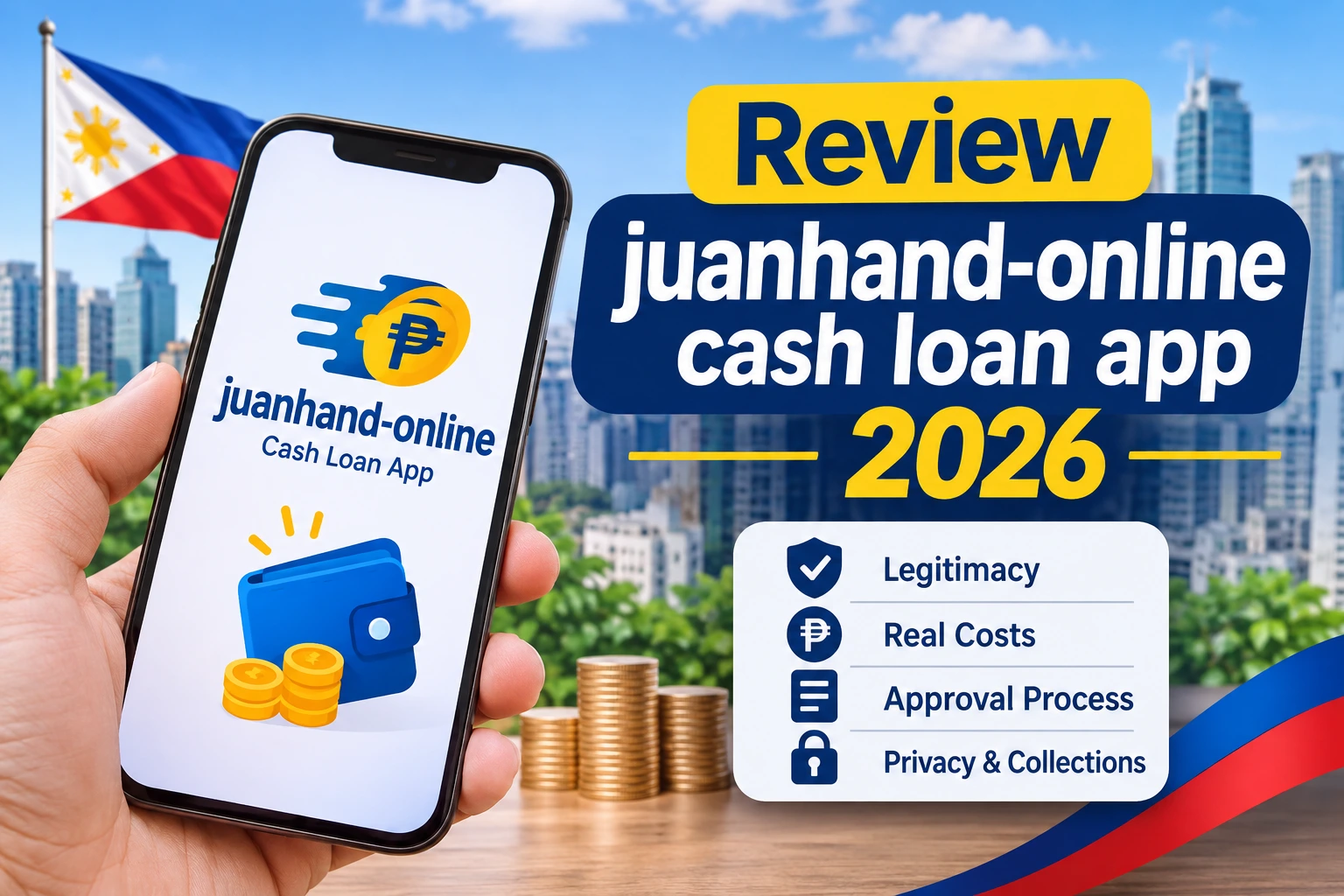
Borrowers looking for emergency cash in the Philippines face two immediate concerns: how much money they will actually receive and whether the lender will treat their personal information responsibly. JuanHand is an established digital lending platform, but its registration status, advertised interest rates, historical privacy controversy, and actual repayment costs deserve separate examination.
A registered lending company is not automatically the cheapest or safest borrowing option. The loan disclosure statement matters more than promotional claims about fast approval or low interest.
Summary
JuanHand is operated by WeFund Lending Corp., a Philippine lending company with SEC Registration No. CS201825672 and Certificate of Authority No. 2844. The Securities and Exchange Commission’s 2026 recorded online lending platform list identifies JuanHand under this company. Its official website advertises loans of up to ₱50,000 and interest rates starting at 0.025%. However, the exact borrowing cost depends on the offer presented to each applicant. Publicly available promotional information does not establish a universal repayment schedule or complete representative APR. Borrowers should examine the individual disclosure statement, net proceeds, and total repayment obligation before accepting an offer.
| Borrower question | Current finding | Why it matters |
|---|---|---|
| Is JuanHand legitimate? | Listed under WeFund Lending Corp. in the SEC’s 2026 OLP records | There is an identifiable regulated lending company behind the platform |
| Is it a digital bank? | No. It is a lending platform operated by a lending company | Different regulatory classification and services |
| How much can borrowers request? | Advertised maximum of ₱50,000 | Actual approved limits may be lower |
| What is the interest rate? | Advertised starting rate of 0.025% | The applicable rate and calculation basis must be confirmed |
| Are there processing fees? | The official website advertises zero processing fees | Verify the actual disbursement amount |
| Is borrower privacy a concern? | The platform has a documented historical NPC enforcement controversy | Current privacy practices deserve careful scrutiny |
| Is approval guaranteed? | No | Credit assessment determines eligibility and loan limits |
1. Is JuanHand Legitimate and SEC-Registered in the Philippines?
JuanHand is recorded by the Philippine SEC as an online lending platform operated by WeFund Lending Corp. The company’s registration number is CS201825672, and its Certificate of Authority number is 2844. This establishes an identifiable regulated lending company, but SEC registration should not be interpreted as a government guarantee of loan affordability or borrower satisfaction.
Official company and regulatory identity
The legal entity behind JuanHand is WeFund Lending Corp., rather than a separate digital bank.
| Verification item | Published information |
|---|---|
| App name | JuanHand |
| Legal company | WeFund Lending Corp. |
| SEC registration number | CS201825672 |
| Certificate of Authority | 2844 |
| Business classification | Lending company |
| Online lending platform | JuanHand |
| SEC OLP record number | 195 |
| Country of operation | Philippines |
| Advertised maximum loan | ₱50,000 |
The SEC’s recorded online lending platform directory, reported as updated in 2026, identifies WeFund Lending Corp. and lists JuanHand among its disclosed lending platforms. The same company is associated with the Junahand and Kidlat Peso platform names.
This distinction matters. A company registration number alone is not sufficient proof that a particular lending application is authorized. Borrowers should check both the legal entity and the specific online lending platform.
SEC verification: SEC List of Recorded Online Lending Platforms.
Is JuanHand regulated by the BSP?
JuanHand is not a digital bank or a BSP-licensed bank. Its lending operations are associated with WeFund Lending Corp., which falls under SEC regulation as a lending company.
The distinction is important:
- SEC: Regulates lending and financing companies, including their lending operations and applicable online lending platform requirements.
- BSP: Supervises banks, digital banks, and other institutions within its regulatory jurisdiction.
- NPC: Oversees personal data protection and compliance with the Data Privacy Act.
A borrower should not interpret the absence of a JuanHand bank licence as proof that the platform is illegal. Its relevant lending-company authorization is the SEC Certificate of Authority.
Does SEC registration mean JuanHand is completely safe?
No.
Registration establishes a regulatory identity. It does not guarantee that every loan offer is affordable, that every collection interaction is appropriate, or that personal information will never be mishandled.
JuanHand has a particularly important historical privacy issue. The National Privacy Commission (NPC) published an enforcement announcement identifying JuanHand among four online lending applications ordered taken down over alleged excessive collection and processing of borrowers’ personal information.
The NPC identified WeFund Lending Corporation as JuanHand’s operator and described concerns involving access to contacts, social media information, calendar data, and other sensitive device information.
The announcement also stated that the order would remain effective until lifted. The public materials reviewed for this article do not establish the final disposition of that historical order. The current appearance of JuanHand on Google Play is not, by itself, proof that the NPC formally lifted it.
This is a material distinction when assessing the platform’s privacy history.
2. JuanHand Loan Amount, Interest Rates, and Repayment Costs
JuanHand’s Google Play disclosure advertises loans from ₱2,000 to ₱50,000, repayment periods of 91–180 days, a maximum APR of 30%, and zero transaction fees. However, its worked example also includes a 10% service fee. Borrowers must account for that fee when calculating the actual cost of borrowing.
How much can you borrow?
JuanHand advertises the following loan limits on its Google Play listing:
| Loan feature | Published information |
|---|---|
| Minimum loan amount | ₱2,000 |
| Maximum loan amount | ₱50,000 |
| Minimum repayment period | 91 days |
| Maximum repayment period | 180 days |
| Maximum advertised APR | 30% |
| Transaction fee | ₱0 |
| Advertised application requirement | One valid ID and registered mobile number |
The ₱50,000 ceiling is a maximum advertised limit, not a guaranteed first-loan approval.
The actual amount depends on the applicant’s credit assessment and the offer generated by the platform.
There is also a difference between the Google Play loan disclosure and the JuanHand website’s promotional borrowing interface. The website displays a calculator with a broader amount and term range, while directing users to the app for final repayment details.
For a financial decision, the approved loan agreement and disclosure statement take precedence over promotional website figures.
Understanding JuanHand’s advertised interest rate
JuanHand’s official product information promotes an interest rate starting at 0.025%.
That figure should not be treated as the guaranteed rate for every borrower. The Google Play disclosure provides a separate maximum APR of 30%, while its illustrative calculation uses a 12% interest rate.
These figures describe different pricing information and should not be confused.
| Advertised pricing item | Published figure |
|---|---|
| Promotional starting interest rate | 0.025% |
| Illustrative interest rate | 12% |
| Maximum advertised APR | 30% |
| Example service fee | 10% |
| Transaction fee | 0 |
The available promotional materials do not clearly establish that the 0.025% starting rate applies to every loan, every repayment period, or every approved borrower.
Ask for the applicable annual percentage rate, service fee, and total repayment amount before accepting an offer.
JuanHand real loan cost calculation
The Google Play listing provides a worked example involving a ₱10,000 loan over 91 days.
Its published example uses a 12% annual interest rate and a 10% service fee.
Example: ₱10,000 loan over 91 days
| Cost component | Calculation | Amount |
|---|---|---|
| Principal | Original loan | ₱10,000.00 |
| Interest | ₱10,000 × 12% ÷ 365 × 91 | ₱299.18 |
| Service fee | ₱10,000 × 10% | ₱1,000.00 |
| Transaction fee | Published amount | ₱0.00 |
| Total repayment | Principal + interest + service fee | ₱11,299.18 |
The Google Play example reports approximately ₱299.17 in interest and ₱11,299.17 in total repayment. The one-cent difference above reflects rounding.
The calculation shows why borrowers should not evaluate an online loan using its advertised interest rate alone.
A 12% annual interest rate may appear inexpensive, but adding a 10% service fee materially increases the borrowing cost.
How much money does the borrower actually receive?
Based on the published example, the service fee is added to the repayment calculation rather than shown as a deduction from the original disbursement.
Therefore:
Net Proceeds = Approved Principal − Upfront Deductions
Using the published example:
Net Proceeds = ₱10,000 − ₱0 = ₱10,000
Total Repayment = ₱10,000 + ₱299.17 + ₱1,000
Total Repayment = ₱11,299.17
Total Borrowing Cost = ₱11,299.17 − ₱10,000
Total Borrowing Cost = ₱1,299.17
The published example does not establish that every borrower will receive the same fee structure. The individual disclosure statement must confirm whether the service fee is collected separately, added to installments, or deducted before disbursement.
Is JuanHand’s maximum APR the same as its total borrowing cost?
Not necessarily.
APR is an annualized pricing measure. A service fee can also affect the effective cost of credit, even when the lender advertises a zero transaction fee.
For a borrower, the most useful comparison is:
- Amount approved.
- Amount actually received.
- Total finance charges.
- Number of installments.
- Amount per installment.
- Total repayment.
- Effective annualized borrowing cost.
A loan with a relatively low nominal interest rate can still be expensive if additional fees are substantial.
The Google Play listing should therefore be read together with the actual loan disclosure statement, not in isolation.
Are there hidden fees or additional charges?
JuanHand advertises zero transaction fees and states on its official website that it does not charge processing fees. However, its Google Play loan illustration includes a 10% service fee.
These are different fee categories.
| Fee category | Available evidence |
|---|---|
| Processing fee | Official website advertises zero |
| Transaction fee | Google Play lists ₱0 |
| Service fee | 10% in the published example |
| Late payment fee | The public promotional disclosure does not specify a complete applicable penalty schedule |
| Collection fee | The complete amount and triggering conditions require confirmation in the individual agreement |
| Documentary stamp tax | Confirm whether applicable and how it is reflected in the disclosure statement |
A zero processing fee does not mean a zero-cost loan.
Before accepting an offer, check whether the service fee is already included in the total repayment figure. Do not assume that an additional charge is illegal simply because it is not called interest; applicable finance charges must be properly disclosed.
What happens if you miss a repayment?
The public Google Play example does not provide a complete schedule of late-payment charges.
The service agreement refers to outstanding principal, interest, overdue interest, collection fees, and service charges. However, borrowers should not assume that every possible charge listed in a general agreement automatically applies to their particular loan.
Request written clarification of:
- The exact overdue interest rate.
- Whether penalties are calculated on outstanding principal or overdue installments.
- Whether collection fees apply.
- Whether additional charges accumulate over time.
- The maximum amount payable under the agreement.
The absence of a verified late-payment schedule makes it difficult to calculate the worst-case cost of borrowing from publicly available promotional information.
3. JuanHand Loan Requirements and Approval Process
JuanHand advertises a relatively simple application process requiring a registered mobile number and one valid ID. The company states that approval can take as little as five minutes, but this is a promotional processing claim, not a guaranteed approval time. Loan limits and eligibility depend on the lender’s credit assessment.
Basic application requirements
According to JuanHand’s published product information, applicants should prepare:
| Requirement | Published information |
|---|---|
| Mobile number | Active registered mobile number |
| Identification | At least one valid ID |
| Personal information | Information required for identity verification |
| Credit assessment | Required |
| Loan agreement | Acceptance of applicable terms and disclosure |
| Disbursement method | A supported payment destination |
The exact acceptable ID list and additional eligibility requirements should be confirmed inside the official application.
How the JuanHand application process works
Step 1: Account registration
Applicants register using an active mobile number and provide the information requested by the platform.
Step 2: Identity verification
The applicant submits an acceptable identification document and completes the lender’s verification requirements.
Step 3: Credit assessment
JuanHand evaluates the application and determines whether the applicant qualifies for a loan.
Step 4: Loan offer
Approved applicants receive a loan offer. They should examine the principal, interest, service fee, repayment schedule, and total amount due.
Step 5: Disbursement
Once the applicant accepts the loan agreement, the approved funds are transferred through a supported disbursement method.
Step 6: Repayment
Borrowers can access repayment options through the JuanHand application.
Does JuanHand guarantee approval within five minutes?
No.
JuanHand advertises approval as fast as five minutes, but the actual processing time may depend on identity verification, credit assessment, application completeness, and payment processing.
An applicant should not make financial commitments based on the assumption that an application will be approved immediately.
Can first-time borrowers get ₱50,000?
The advertised ₱50,000 limit does not establish that first-time applicants can receive that amount.
The approved credit limit is determined by the lender. Borrowers should treat the maximum advertised amount as a ceiling rather than an entitlement.
The platform also describes a credit-limit review process that may consider repayment history and additional supporting documents.
For someone without an established repayment history with JuanHand, the actual initial offer may be considerably lower than the advertised maximum.
4. JuanHand Privacy Policy and Data Security
JuanHand’s historical privacy controversy is documented in a formal National Privacy Commission investigation. The NPC lifted its temporary ban in 2022 after the company made changes, but the Commission also found previous data-processing lapses that violated the Data Privacy Act. Its current privacy notice describes extensive data collection, while explicitly stating that the company does not access borrowers’ contact lists or contact third parties for debt collection.
What happened between JuanHand and the National Privacy Commission?
The privacy issue is one of the most significant factors in assessing JuanHand.
The NPC initiated an investigation after concerns about excessive access to personal information through online lending applications.
Its investigation into WeFund Lending Corp. identified problems involving the earlier version of JuanHand’s application.
The findings included:
- Access to borrowers’ phone contact lists.
- Collection of information from contacts.
- Access to calendar information.
- The ability to modify calendar events.
- Access to location information.
- Concerns about inadequate privacy disclosures.
- Contract provisions allowing the publication of delinquent borrowers’ personal information.
These were not simply unverified online allegations. They formed part of an official NPC investigation.
The NPC ordered a temporary ban on JuanHand’s application, requiring it to be taken down and certain personal-data processing activities to stop.
Was JuanHand’s NPC ban lifted?
Yes.
The official NPC decision provides an important update that should not be overlooked.
The Commission issued a resolution lifting the temporary ban. The decision explains that JuanHand subsequently revised its application, including removing access to users’ calendar information, location, contact lists, and social networking profiles.
However, lifting the temporary ban did not mean that the earlier privacy violations were erased.
The NPC decision found that JuanHand had committed lapses violating Section 25 of the Data Privacy Act. It also concluded that those lapses were insufficient to warrant a recommendation for prosecution of the company’s responsible officers and directors.
This is a more accurate regulatory picture than either describing JuanHand as permanently banned or claiming that it has never experienced privacy enforcement problems.
National Privacy Commission+1
What information does JuanHand collect today?
JuanHand’s published privacy notice identifies several categories of information that may be collected.
| Information category | Examples disclosed in the privacy notice |
|---|---|
| Identity information | Name, government ID information, biometric information |
| Contact information | Mobile number, email address, character references |
| Financial information | Financial data and creditworthiness information |
| Device information | Device model, operating system, device identifiers |
| Communication information | SMS metadata and microphone/audio recordings |
| Location information | Approximate location |
| Professional information | Profession and employment-related information |
| Personal background | Age, marital status, educational attainment |
| Technical information | IP address, network information, telecommunications usage |
The privacy notice also identifies TrustDecision SDK as a technology used for fraud-risk identification.
This is a substantial amount of personal information.
Some collection is understandable for identity verification, fraud prevention, and credit assessment. However, borrowers should evaluate whether each permission is necessary for the service being provided.
Does JuanHand access your phone contacts?
Its current published privacy notice explicitly states:
- It will not access or collect the phone’s contact list.
- It will not collect WhatsApp contacts or social media friends lists.
- It will not contact family, friends, employers, or other third parties for debt collection.
This is an important improvement compared with the practices examined in the historical NPC investigation.
However, the current policy still describes collecting character-reference information and sharing personal data with authorized service providers and collection agencies.
Borrowers should distinguish between providing selected references and granting an application unrestricted access to an entire contact list.
If the app requests unnecessary permissions, ask why they are needed before granting access.
Can JuanHand share your personal information?
Yes, subject to its privacy notice and applicable legal requirements.
The current policy identifies several potential recipients:
- Affiliates and associated companies.
- Contractors and service providers.
- Credit bureaus and credit-reporting agencies.
- Financial service providers.
- Authorized collection agencies.
- Regulatory authorities and government agencies.
- Certain business partners.
The policy also describes possible international transfers of personal information for processing and storage.
This does not mean every borrower’s information is automatically disclosed to every listed organization. It means the policy provides for processing and disclosure in specified circumstances.
Can borrowers withdraw their consent?
The privacy notice provides a mechanism for objecting to certain personal-data processing activities.
It identifies the Data Protection Officer as the contact point for requests and privacy-related concerns.
Official privacy contact:
– Email: [email protected]
The policy also warns that restricting certain data processing may affect application processing or creditworthiness assessment.
Borrowers should retain copies of their privacy requests and any responses received.
5. JuanHand Debt Collection Practices and Borrower Protection
JuanHand’s current privacy notice prohibits accessing borrowers’ contact lists and contacting family members, friends, or employers for debt collection. It permits direct repayment communications and the use of authorized third-party collection agencies. Borrowers should retain evidence of any communication that appears abusive, misleading, or inconsistent with these commitments.
Does JuanHand harass borrowers or contact their relatives?
The current published policy explicitly prohibits contacting third parties through WhatsApp or other platforms for debt collection.
It also states that collection communications should be directed to the borrower through authorized channels.
This is a positive policy commitment.
However, a written policy cannot establish that every collection interaction will always comply with the stated rules.
The historical NPC investigation is relevant because it demonstrates why borrowers should examine actual application permissions and privacy practices rather than relying entirely on promotional assurances.
What collection practices should borrowers watch for?
The following conduct should raise concerns:
| Collection behavior | Borrower protection |
|---|---|
| Threatening messages | Preserve screenshots and communication records |
| Public shaming | Document the publication and report it |
| Contacting unrelated third parties | Keep evidence of calls or messages |
| Threats of arrest without a valid legal basis | Seek legal assistance |
| Demands for payment through personal accounts | Verify through official channels |
| Requests for OTPs | Never disclose verification codes |
| Threats involving family members | Preserve the messages and report the conduct |
Debt collection does not give a lender unlimited authority over a borrower’s private life.
A legitimate unpaid debt remains a financial obligation. It does not automatically authorize intimidation, public humiliation, or unauthorized disclosure of personal information.
What should borrowers do if they experience abusive collection?
Borrowers should take practical steps:
- Save screenshots, text messages, emails, and call records.
- Record the date, time, and identity of the person communicating.
- Contact JuanHand through its official customer service channels.
- Submit a complaint to the SEC if the issue involves lending practices or collection conduct.
- Contact the NPC if personal information has been improperly accessed, disclosed, or processed.
For privacy-related complaints, borrowers can consult the National Privacy Commission.
Official website: https://privacy.gov.ph/
For lending-related concerns, the SEC identifies its Financial and Lending Companies complaints email:
Official JuanHand customer service
JuanHand publishes the following contact details:
| Contact channel | Published information |
|---|---|
| [email protected] | |
| Landline | (02) 889-1-HAND |
| Alternative landline | (02) 889-1-4263 |
| Globe / TM | 0917-147-3472 |
| Smart / TNT | 0919-056-1355 |
| Website | https://www.juanhand.com/ |
The company states that its customer service operates seven days a week.
Borrowers should independently verify contact information through the official website before sending sensitive documents or making payments.
6. JuanHand Advantages and Disadvantages
JuanHand’s strongest verified advantages are its identifiable SEC-regulated operator, advertised loan ceiling of ₱50,000, published zero transaction fee, and relatively straightforward application requirements. Its main disadvantages are the additional service fee in its loan illustration, incomplete public information about late charges, and documented historical privacy violations.
Advantages of JuanHand
1. Identifiable SEC-regulated lending company
JuanHand operates under WeFund Lending Corp., which appears in the SEC’s recorded online lending platform directory.
This gives borrowers a specific legal entity to verify and contact.
2. Loan amounts up to ₱50,000
The platform advertises a maximum loan amount of ₱50,000, which may accommodate certain short-term financial needs.
Actual approval depends on credit assessment.
3. Relatively simple application requirements
The published application process identifies one valid ID and an active mobile number as basic requirements.
This may reduce the initial documentation burden compared with lenders requiring extensive paperwork.
4. Published loan pricing example
JuanHand’s Google Play listing provides a worked example showing the interest calculation, service fee, and total repayment.
This allows prospective borrowers to understand that the service fee contributes materially to the cost.
5. Current privacy policy prohibits contact-list harvesting
The current privacy notice explicitly states that JuanHand does not access borrowers’ phone contact lists or contact unrelated third parties for collection.
This is a meaningful policy improvement over the practices identified in the historical NPC investigation.
Disadvantages of JuanHand
1. The 10% service fee increases borrowing costs
The illustrative 10% service fee adds ₱1,000 to a ₱10,000 loan.
Borrowers must include this charge when comparing JuanHand with competing lenders.
2. Promotional interest rates can be misleading
The advertised starting interest rate of 0.025% does not establish the actual price offered to every applicant.
Borrowers need the specific rate and complete disclosure statement.
3. Public late-payment information is incomplete
The promotional disclosure does not establish a complete late-payment penalty schedule.
This makes it difficult to calculate the full financial exposure if a borrower misses installments.
4. Historical privacy violations remain relevant
The NPC investigation identified previous data-processing lapses by WeFund Lending Corp.
Although the temporary ban was lifted and changes were made, borrowers should still scrutinize application permissions and privacy disclosures.
5. Maximum advertised credit is not guaranteed
The ₱50,000 ceiling should not be interpreted as an amount available to every new applicant.
Actual approval and credit limits are determined by the lender.
JuanHand pros and cons at a glance
| Advantages | Disadvantages |
|---|---|
| SEC-recorded lending platform | 10% service fee in published example |
| Loans advertised up to ₱50,000 | Maximum limit is not guaranteed |
| One valid ID advertised as a basic requirement | Additional verification may be required |
| Zero published transaction fee | Other finance charges still apply |
| Current policy prohibits contact-list access | Historical NPC privacy enforcement |
| Published repayment illustration | Incomplete public late-fee schedule |
7. JuanHand vs. Other Online Loan Options in the Philippines
JuanHand should be compared with other SEC-recorded lending platforms using the actual total repayment amount, not advertised maximum loan limits. Different lenders use different pricing structures, repayment periods, and eligibility requirements. No competitor can be declared cheaper without comparing equivalent loan amounts and repayment terms.
What should borrowers compare?
| Comparison factor | Why it matters |
|---|---|
| SEC registration | Identifies the legally authorized lending company |
| Recorded lending platform | Helps verify the specific app |
| Interest rate | Determines the interest component |
| Service fee | Can materially increase borrowing costs |
| Net proceeds | Shows how much cash actually reaches the borrower |
| Repayment period | Determines how quickly the debt must be repaid |
| Total repayment | Reveals the actual peso obligation |
| Late-payment charges | Shows the financial consequences of missed installments |
| Privacy policy | Establishes how personal information may be processed |
| Collection policy | Helps assess borrower protections |
Is JuanHand better than other loan applications?
That depends on the specific offer.
For example, a competitor offering a higher nominal interest rate may still have a lower total repayment obligation if it does not impose an equivalent service fee.
Conversely, a platform advertising zero processing fees may impose other charges.
The correct comparison is:
Total Borrowing Cost = Total Repayment − Net Proceeds
Borrowers should compare the result across equivalent loan amounts and repayment periods.
A ₱10,000 loan repayable over three months should not be compared directly with a ₱10,000 loan repayable over six months without accounting for the different duration and payment structure.
JuanHand’s published example provides a useful starting point, but it does not establish that the platform is the cheapest option in the Philippine market.
8. Is JuanHand Worth Using in 2026? Final Borrower Decision Framework
JuanHand has a verifiable SEC-recorded lending identity and publishes its loan pricing structure, but its service fee and historical privacy enforcement deserve careful consideration. It may be worth evaluating when the borrower receives a clear written offer, understands the full repayment obligation, and can comfortably afford the installments without taking another loan.
The decision should depend on three financial questions.
First: Can you afford the repayment schedule?
A loan should not be accepted simply because the application is approved.
Calculate the amount that remains available after essential expenses, including:
- Food and household necessities.
- Rent or mortgage payments.
- Electricity and water.
- Transportation.
- School expenses.
- Existing debt obligations.
- Emergency savings.
If the installment requires borrowing from another lender, the proposed loan is not financially sustainable.
Second: Is the total borrowing cost reasonable?
Use the disclosure statement to calculate:
Total Borrowing Cost = Total Repayment − Net Proceeds
For the published ₱10,000 illustration:
| Item | Amount |
|---|---|
| Net proceeds, assuming no upfront deductions | ₱10,000.00 |
| Total repayment | ₱11,299.17 |
| Total borrowing cost | ₱1,299.17 |
The borrower should consider whether the financial emergency justifies paying that additional amount.
Third: Are you comfortable with the privacy arrangements?
JuanHand’s historical NPC case is a legitimate reason to read its current privacy policy carefully.
The lifting of the temporary ban and the company’s subsequent changes are relevant. So are the documented earlier violations.
Do not grant unnecessary device permissions. Do not provide OTPs. Do not pay individuals claiming to represent the lender without independently verifying their identity.
Final assessment
JuanHand is not an unidentified lending application operating without a disclosed legal entity. Its operator, WeFund Lending Corp., is recorded by the SEC, and the application publishes basic loan information.
However, regulatory registration should never replace financial due diligence.
For borrowers with stable income and a clearly defined repayment source, JuanHand may be considered after reviewing the actual offer. For borrowers already struggling with several outstanding debts, an additional high-cost loan could make their financial situation worse.
The practical decision is straightforward: borrow only when the net amount received, total repayment, repayment dates, and privacy conditions are acceptable in writing. If any of those details remain unclear, do not accept the offer.
References
The following official sources and published product disclosures were consulted for this review.
Securities and Exchange Commission (SEC) Philippines
1. SEC List of Recorded Online Lending Platforms: https://www.sec.gov.ph/lending-companies-and-financing-companies-2/list-of-recorded-online-lending-platforms/
2. SEC Lending and Financing Companies Advisories: https://www.sec.gov.ph/lending-companies-and-financing-companies-2/advisories-and-notices/
3. SEC Memorandum Circular No. 20, Series of 2026: https://www.sec.gov.ph/mc-2026/sec-mc-no-20-series-of-2026/
National Privacy Commission (NPC)
4. Privacy Commission Orders Immediate Takedown of Four Online Lending Apps: https://privacy.gov.ph/privacy-commission-orders-immediate-takedown-of-four-online-lending-apps/
5. NPC Decision: In re WeFund Lending Corporation (JuanHand) and Its Responsible Officers: https://privacy.gov.ph/wp-content/uploads/2024/05/NPC-SS-21-006-2022.05.16-In-re-Wefund-Lending-Corporation-Decision-FinalP.pdf
6. JuanHand Privacy Notice: https://privacy.juanhand.com/html/privacy.html
JuanHand Official Sources
7. JuanHand Official Website: https://www.juanhand.com/
8. JuanHand Product Features: https://www.juanhand.com/about/product-features/
9. JuanHand Service Agreement: https://privacy.juanhand.com/html/user-agreement.html
10. JuanHand Frequently Asked Questions: https://www.juanhand.com/faq/
Google Play
11. JuanHand – Online Cash Loan App: https://play.google.com/store/apps/details?id=com.juanhand.fast.cash.peso.loan.app
Editorial disclosure: This article analyzes publicly available regulatory records, company disclosures, privacy documentation, and published application information. It does not represent a personal loan application, independent penetration test, or verification of an individual borrower’s loan offer. Loan terms and regulatory records may change. Readers should verify the latest documents before entering into a financial agreement.