Last Updated on 25/05/2026 by Nicole Alba
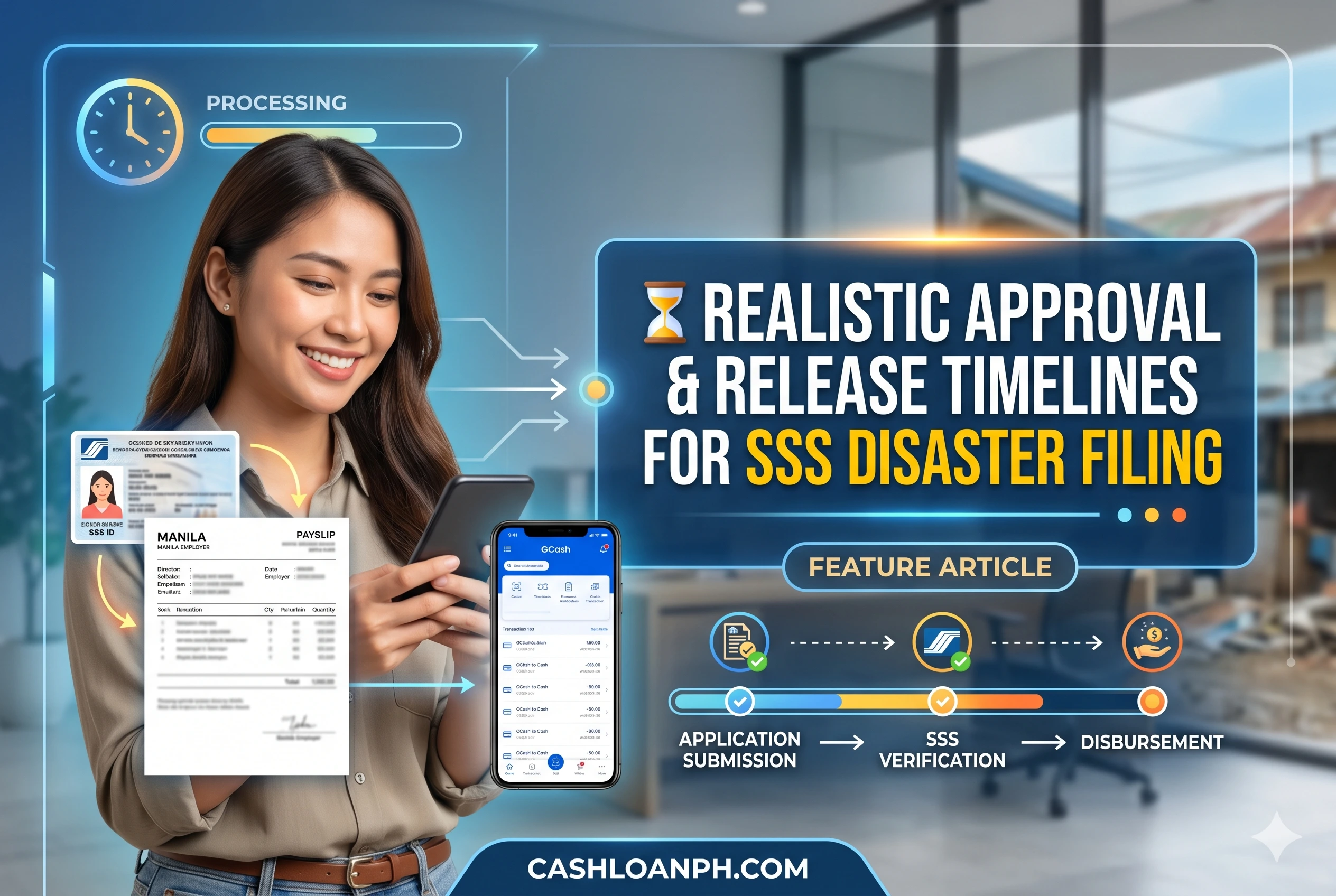
When calamities strike in the Philippines, many members immediately file for assistance through the Social Security System emergency loan program. One of the biggest concerns after submitting an application is simple but stressful: “How long will the processing actually take?”
The answer depends on more than just SSS approval speed. Employer certification queues, disbursement account verification, banking cut-off schedules, disaster-related filing surges, and batch payout behavior all affect the final release timeline. During high-volume periods such as typhoon aftermaths, applications that normally move quickly may slow down because thousands of members are entering the system simultaneously.
Many borrowers repeatedly refresh their My.SSS account status every few hours. In reality, some delays are operational rather than problematic. Knowing how the process actually works helps reduce unnecessary anxiety and prevents premature follow-ups that may not accelerate approval at all.
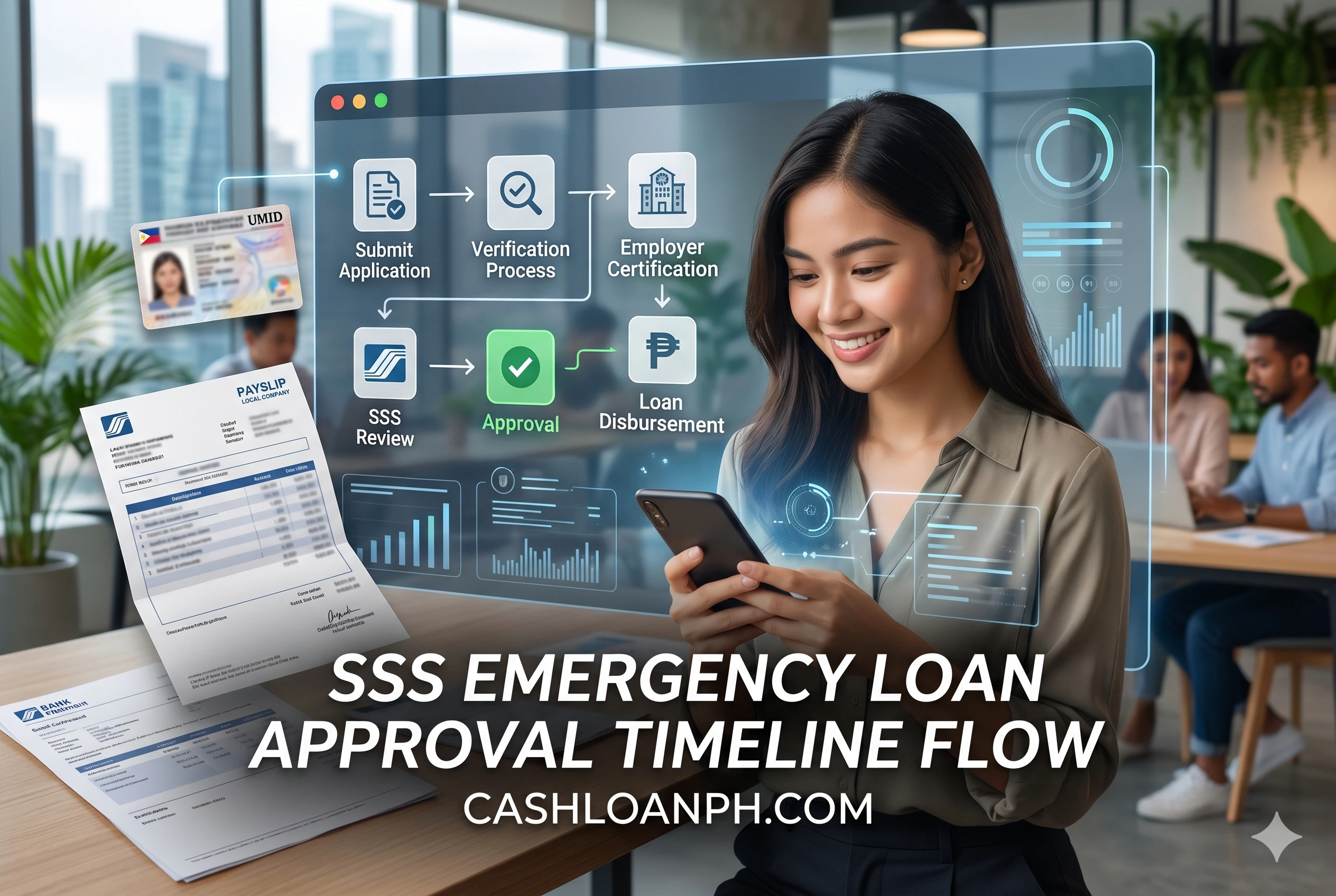
The typical sss emergency loan processing time ranges from a few working days to several weeks depending on employer certification speed, SSS system volume, bank validation, and disaster-period congestion. Applications usually move through several stages: submission, employer certification, SSS evaluation, disbursement account verification, approval, and batch release. During typhoon or calamity filing waves, processing bottlenecks often occur because of queue congestion and bank clearing delays. Most waiting periods are caused by pending employer action or payout validation rather than outright rejection. Members can reduce delays by ensuring their bank or e-wallet details are accurate, monitoring official status updates properly, and avoiding duplicate applications or repeated unnecessary follow-ups.
Why SSS Emergency Loan Processing Times Vary So Much 📱
Many borrowers expect all applications to move at the same speed. That rarely happens during actual disaster-response periods.
The emergency loan system behaves differently depending on filing volume, employer participation, and payout infrastructure capacity.
Disaster Filing Waves Create Massive Queue Congestion
After major typhoons, floods, volcanic eruptions, or calamity declarations, filing traffic increases dramatically within a short period.
This creates:
- Heavy login traffic inside My.SSS
- Delayed employer certification queues
- Slower validation checks
- Larger batch disbursement cycles
- Temporary processing bottlenecks
Applications submitted during the first 24–72 hours of a calamity announcement often encounter the heaviest congestion because members rush to file immediately.
In many borrower discussions online, people compare timelines without realizing they submitted during entirely different traffic conditions. Someone filing on Day 1 of a typhoon assistance period may wait longer than someone who files a week later after queues stabilize.
Employer Certification Is Often the Biggest Delay
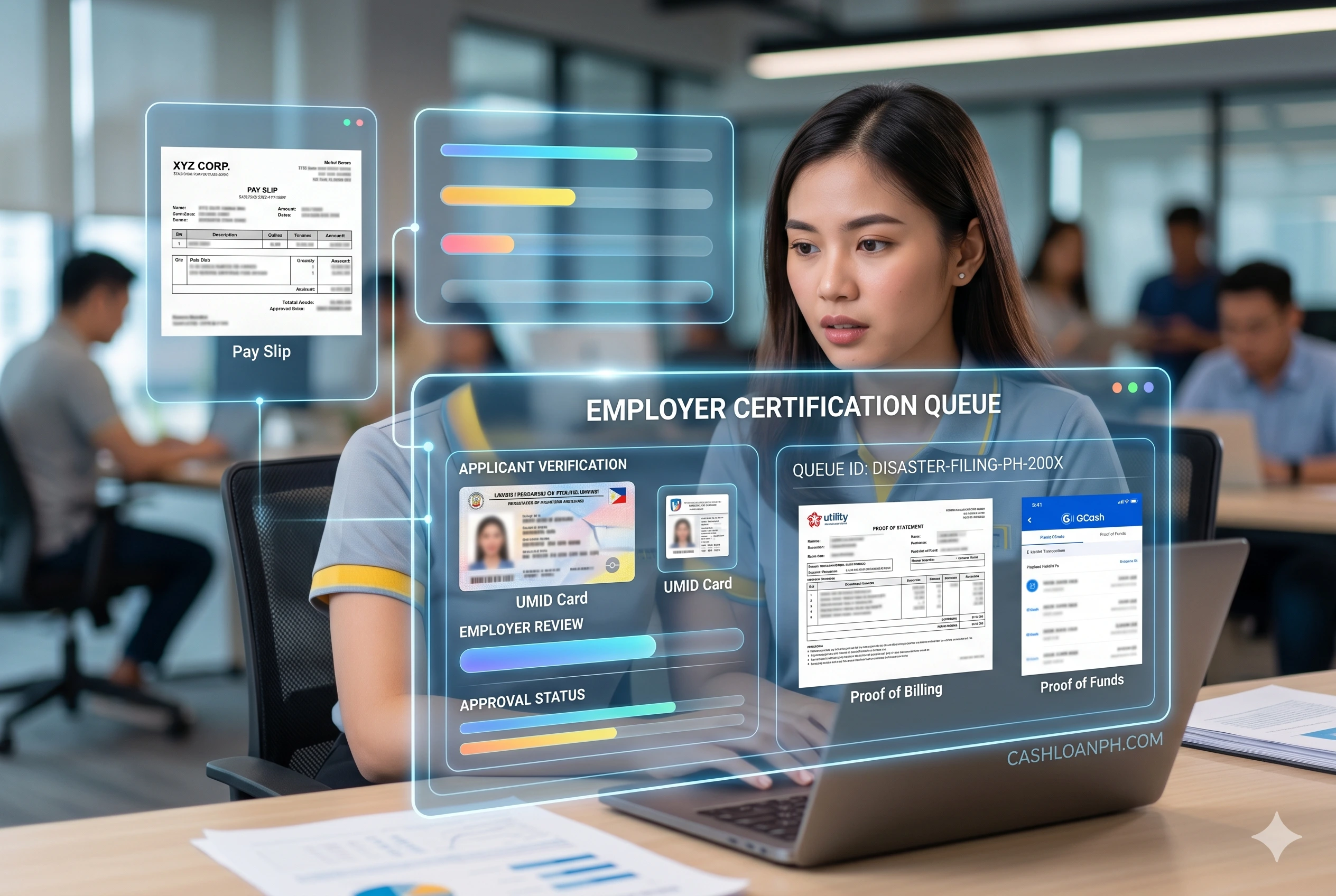
For employed members, SSS cannot fully process the emergency loan until the employer certifies the application electronically.
This means even if:
- Your documents are correct
- Your membership is active
- Your disbursement account is valid
…the application can still remain pending because the employer has not yet acted.
This is one reason many members search for explanations about why emergency loans get delayed during large-scale calamity periods. Internal HR approval queues sometimes move slower than the SSS system itself.
Employers handling hundreds or thousands of employee applications may certify loans in batches rather than individually throughout the day.
Typical SSS Emergency Loan Timeline From Submission to Release
Below is a realistic processing flow based on commonly observed borrower experiences and operational behaviors.
| Stage | Typical Timeline | What Happens |
|---|---|---|
| Application submission | Same day | Member submits through My.SSS |
| Employer certification | 1–7 working days | Employer validates and certifies |
| SSS evaluation | 1–5 working days | Eligibility and account checks |
| Disbursement validation | 1–3 working days | Bank/e-wallet verification |
| Loan approval | Same day after validation | Status changes to approved |
| Fund release | 1–5 banking days | Batch disbursement sent |
During major calamity surges, total timelines may stretch beyond these averages.
The most important thing borrowers should know is this:
A pending status does not automatically mean there is a problem.
In many cases, the application is simply waiting inside a queue.
What Each SSS Loan Status Usually Means
Borrowers often panic because the My.SSS portal does not always provide detailed explanations.
Here is what common statuses generally indicate operationally.
Application Submitted
This means:
- Your application entered the system
- Initial filing was successful
- The queue process has started
At this stage, SSS may still perform:
- Contribution verification
- Membership checks
- Disbursement account matching
- Fraud screening
This status alone does not confirm approval.
Pending Employer Certification
This is one of the most common waiting stages for employed members.
It means:
- SSS is waiting for employer action
- HR or payroll has not finalized certification
- Your application cannot fully move forward yet
Large companies often process certifications in batches at specific times of the day.
Members working in:
- BPOs
- Manufacturing
- Retail chains
- Government contractors
- Logistics firms
…may experience longer waits during nationwide calamity filing periods because of high employee participation.
Approved
Approval usually means:
- Eligibility checks passed
- Contribution requirements were validated
- The payout account passed basic verification
- The application is ready for release scheduling
However, approval does not always mean funds are instantly available.
There may still be:
- Batch payout scheduling
- Banking cut-offs
- Clearing periods
- Weekend delays
Disbursed or Check Generated
This indicates:
- Funds were released to the selected account
- Processing has moved outside the SSS system
- Banking settlement timelines now apply
Actual reflection time depends on:
- Bank infrastructure
- E-wallet processing speed
- Weekend timing
- National holidays
How Bank Validation Affects Release Timing 💳
One overlooked cause of delays is payout verification.
SSS increasingly relies on digital disbursement systems for:
- Bank transfers
- E-wallet payouts
- UMID-linked accounts
- PESONet-compatible banking rails
This makes accurate account enrollment critical.
Problems involving disbursement account verification frequently delay otherwise approved applications.
Common Validation Problems
Minor mismatches can trigger review queues:
- Incorrect account numbers
- Name formatting inconsistencies
- Closed accounts
- Dormant accounts
- Unsupported account types
- Unverified e-wallet ownership
Even capitalization differences between bank records and SSS membership information may trigger manual review in some cases.
E-Wallets and Digital Banks May Behave Differently
Borrowers using:
- Digital banks
- Mobile-first financial apps
- E-wallet ecosystems
…sometimes receive funds faster because these platforms operate with automated clearing flows.
However, this is not guaranteed.
Certain digital disbursement channels occasionally experience:
- Maintenance periods
- Batch receiving schedules
- Anti-fraud review queues
- Temporary inbound transfer congestion
The Philippine fintech ecosystem has become increasingly mobile-first, but payout speed still depends on backend reconciliation systems.
Are Weekends and Holidays Counted?
Usually, SSS processing focuses on working days.
That means:
- Saturdays
- Sundays
- Philippine holidays
…often do not count as active processing periods for:
- Employer certification
- Manual reviews
- Batch approvals
- Banking settlements
However, online application submission itself remains available most of the time.
A member who files Friday evening may not see movement until Monday or Tuesday because:
- HR offices may be closed
- Banks are not processing settlements
- Approval teams may operate on reduced staffing
This is especially noticeable during long holiday weekends combined with calamity filing periods.
Why Some Members Receive Funds Faster Than Others ⚡
Borrowers often compare timelines online and assume something is wrong when another applicant gets approved earlier.
In reality, processing differences are common.
Employed vs Self-Employed Members
Employed applicants may wait longer because employer certification adds another processing layer.
Self-employed members sometimes move faster because:
- No employer certification is needed
- Verification is more direct
- Queue dependencies are reduced
However, self-employed and freelance members may still face:
- Contribution consistency checks
- Identity verification reviews
- Disbursement validation scrutiny
Payroll Size Can Affect Queue Speed
Employees from smaller companies sometimes receive certification faster because:
- Fewer applications exist internally
- HR teams process smaller batches
- Approval queues are shorter
Large corporations may require multiple approval layers before certification is transmitted electronically.
Filing Timing Matters
Applications filed during:
- First-day surges
- Public announcement periods
- Viral social media filing waves
…usually encounter heavier congestion.
Borrowers who submit during off-peak periods may experience smoother processing.
Realistic Waiting Expectations During Calamity Seasons
A common borrower mistake is assuming all delays indicate rejection.
Operationally, this is often inaccurate.
Normal Waiting Patterns During High-Volume Filing
During major disaster assistance periods:
- 3–10 working days may still be considered normal
- Employer queues become overloaded
- Bank validations accumulate
- Batch release timing becomes inconsistent
Many members repeatedly refresh status pages or send daily follow-ups even while the application remains inside ordinary processing windows.
When Delays Become Worth Investigating
It may be reasonable to follow up when:
- Employer certification remains untouched for an extended period
- Status has not changed for unusually long durations
- Disbursement details appear incorrect
- Bank enrollment validation repeatedly fails
Before escalating concerns, members should first verify their status carefully inside official SSS channels.
Checking multiple unofficial Facebook posts or YouTube comments often increases anxiety because borrower timelines vary widely.
Practical Ways to Avoid Processing Delays ✔️
Borrowers cannot fully control queue congestion, but they can reduce preventable delays.
Double-Check Your Disbursement Details
Before filing:
- Confirm account numbers carefully
- Ensure account names match SSS records
- Avoid using inactive accounts
- Verify e-wallet ownership status
This reduces the chance of payout validation delays.
Monitor Employer Certification Politely
For employed members:
- Coordinate respectfully with HR
- Avoid sending repeated hourly follow-ups
- Confirm the employer received the electronic notification
Aggressive repeated follow-ups rarely accelerate batch certification behavior.
Avoid Duplicate Applications
Submitting multiple applications can:
- Trigger confusion
- Create duplicate queue entries
- Delay validation
- Increase review time
File once and monitor the status patiently.
Ensure Eligibility Before Filing
Many delays happen because members submit incomplete or ineligible applications during panic filing periods.
Reviewing the official sss emergency loan requirements beforehand helps reduce avoidable processing interruptions.
What Borrowers Commonly Misinterpret About Pending Statuses
A pending status often causes emotional stress because borrowers assume the system stopped working.
Operationally, several hidden processes may still be happening.
Internal Queue Assignment
Applications may wait for:
- Batch review scheduling
- Employer response windows
- Fraud detection checks
- Banking synchronization
This activity is not always visible inside the borrower interface.
Batch Disbursement Behavior
SSS and partner financial systems often process releases in groups rather than continuously.
This means:
- Two approved applicants may receive payouts hours or days apart
- Evening approvals may settle next banking day
- Weekends may delay actual reflection
Borrowers frequently assume approval guarantees immediate crediting, but banking infrastructure timing still matters.
The Role of Fraud Prevention and Verification Systems 🔒
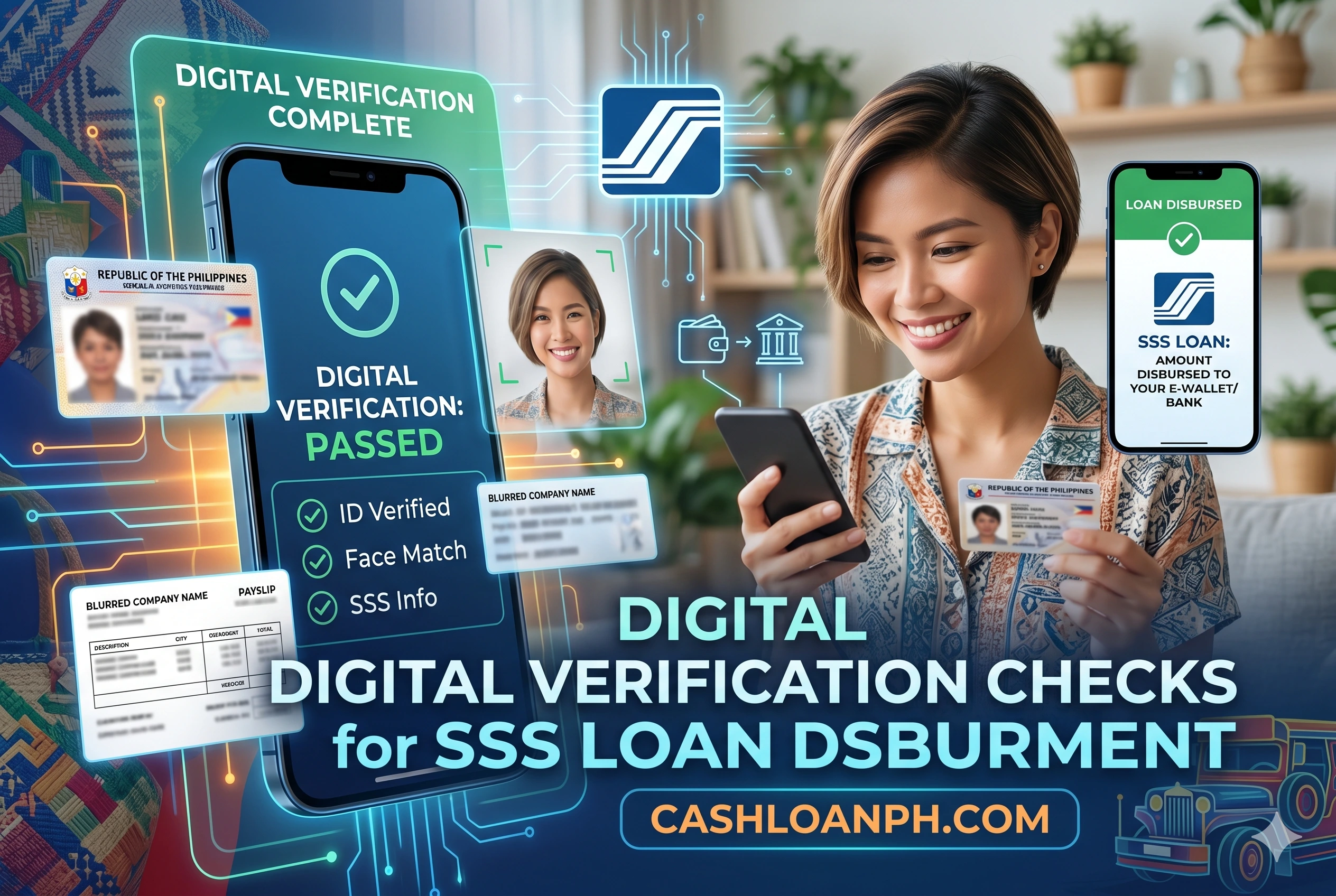
Modern Philippine financial systems increasingly rely on:
- OTP verification
- Device fingerprinting
- Identity consistency checks
- Facial verification
- Digital onboarding security
Emergency loan systems are designed to release funds quickly, but they also need protection against:
- Account takeovers
- Synthetic identities
- Mismatched disbursement accounts
- Fraudulent payout redirection
Because of this, some applications enter secondary verification flows even if the borrower is legitimate.
These checks may slightly increase processing time but help protect members from financial fraud.
The broader Philippine fintech ecosystem now prioritizes stronger identity verification standards aligned with digital financial security expectations promoted by regulators such as the Bangko Sentral ng Pilipinas.
How to Follow Up Properly Without Slowing the Process
Borrowers often think repeated escalation speeds things up.
In practice, excessive follow-ups can create confusion, especially when the application is still within normal processing ranges.
Best Follow-Up Timing
Reasonable follow-up behavior includes:
- Checking status once or twice daily
- Waiting several working days before escalating
- Coordinating with employer HR calmly
- Verifying bank details first
What Information to Prepare
If contacting support:
- SS number
- Transaction reference number
- Filing date
- Current application status
- Disbursement account details
Providing organized information helps support teams identify the issue faster.
Frequently Asked Questions About SSS Emergency Loan Processing Time
How long does SSS emergency loan approval usually take?
During ordinary filing periods, approval may happen within several working days. During major calamity periods with heavy application traffic, processing may extend to multiple weeks depending on employer certification, system congestion, and bank validation queues.
Why is my SSS emergency loan still pending?
Pending statuses commonly occur because:
- Employer certification is incomplete
- Bank validation is ongoing
- Applications are waiting inside batch processing queues
- Disaster-period filing volumes are unusually high
Pending does not automatically mean rejection.
Does employer approval delay the release?
Yes. For employed members, employer certification is one of the most common bottlenecks. SSS cannot fully continue processing until the employer validates the application electronically.
Do weekends count in processing time?
Generally, active processing and banking settlements mainly occur on working days. Applications submitted before weekends or holidays may experience slower movement until offices reopen.
Can approved loans still take time before funds arrive?
Yes. Approval does not always mean instant payout. Batch disbursement scheduling and bank clearing processes may still delay actual crediting.
Conclusion
The real sss emergency loan processing time depends on multiple moving parts rather than a single approval clock. Employer certification queues, bank validation systems, disaster-related filing surges, and batch disbursement behavior all affect how quickly funds reach borrowers.
For many applicants, waiting is emotionally stressful because emergency loans are often tied to urgent recovery needs after calamities. Still, a pending status does not automatically indicate rejection or failure. In high-volume periods, ordinary queue congestion is common across both SSS systems and banking networks.
Borrowers can reduce avoidable delays by ensuring their disbursement details are accurate, coordinating properly with employers, filing only once, and monitoring official updates responsibly. Patience combined with correct follow-up behavior is often more effective than repeated status refreshing or unnecessary escalation.