Last Updated on 18/03/2026 by Nicole Alba
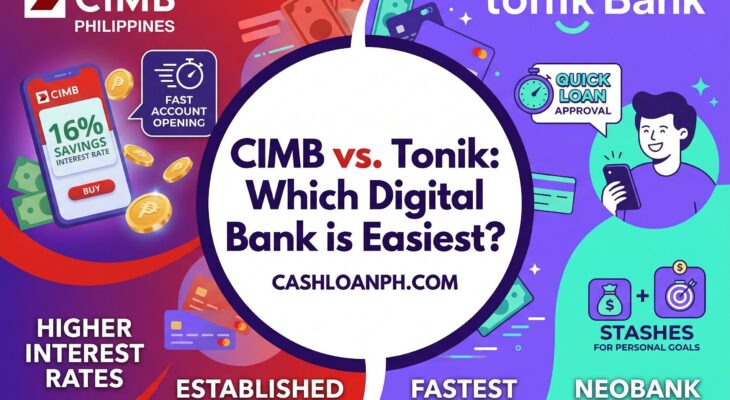
Digital banking in the Philippines has exploded in popularity-and for good reason. With zero branches, fast onboarding, and high interest rates, platforms like CIMB Bank Philippines and Tonik Digital Bank are redefining how Filipinos save and borrow money.
But here’s the real question: Which digital bank is easiest to use in 2026? 🤔
This in-depth guide compares CIMB vs. Tonik across ease of account opening, usability, features, and real-life convenience-so you can pick the best one for your financial lifestyle.
CIMB vs. Tonik: Quick Overview ⚡
Before diving deep, here’s a snapshot:
| Feature | CIMB | Tonik |
|---|---|---|
| Account Opening | Very easy (via GCash) | Easy (standalone app) |
| Minimum Balance | None | None |
| Interest Rates | ~2.5%-2.6% base, promos up to ~7%+ | ~1%-4% savings, up to 6% TD |
| App Simplicity | Simple but basic | Modern, feature-rich |
| Best For | Beginners, GCash users | Goal savers, higher returns |
👉 Both are BSP-regulated and PDIC-insured (up to ₱500,000), making them safe options.
Ease of Account Opening 🚀
CIMB: Fastest for GCash Users ⚡
Opening a CIMB account is incredibly easy-especially if you already use GCash.
Why it’s easy:
- No paperwork
- Fully integrated with GCash (GSave feature)
- Approval in minutes
- Minimal verification steps
You can literally open an account in under 5 minutes if your GCash is verified.
👉 This makes CIMB one of the most beginner-friendly digital banks in the Philippines.
Tonik: Easy but Slightly Longer 🧾
Tonik also offers a fully digital onboarding process, but it’s done through its standalone app.
What to expect:
- ID upload + selfie verification
- App-based onboarding (no external integration)
- Takes around 5-10 minutes
Tonik is still easy-but not as instant as CIMB via GCash.
🏆 Winner (Ease of Opening): CIMB
If “fast and effortless” is your priority, CIMB wins hands down.
App Experience & User Interface 📲
CIMB App: Simple but Basic
CIMB’s app is functional and straightforward:
- Clean dashboard
- Easy transfers (InstaPay, PESONet)
- Minimal design
However:
- Some users find it too basic
- Limited personalization features
Tonik App: Modern and Interactive ✨
Tonik stands out with its vibrant, intuitive design:
- Gamified savings features
- Visual goal tracking
- “Stash” system for budgeting
Tonik feels more like a fintech app than a traditional bank.
🏆 Winner (User Experience): Tonik
If you prefer a modern, engaging interface, Tonik is clearly easier to enjoy and navigate.
Savings Features: Which Is More Convenient? 💰
CIMB: Straightforward Savings
CIMB keeps things simple:
- UpSave & GSave accounts
- No minimum balance
- Free transfers
- Promo-based high interest rates
Typical base rates hover around 2.5%-2.6%, but promos can boost earnings significantly.
👉 Best for: People who want zero complexity.
Tonik: Smart Savings Tools 🧠
Tonik introduces innovative features like:
🔹 Stashes
- Separate savings “buckets”
- Earn around 4%-4.5% interest
- Great for budgeting goals
🔹 Time Deposits
- Up to 6% per year
- Flexible multiple accounts
👉 Tonik is ideal if you want your bank to help you manage money smarter.
🏆 Winner (Convenience): Depends on You
- Prefer simplicity → CIMB ✅
- Want structured saving → Tonik ✅
Loans & Credit Features 💸
CIMB: Strong Credit Ecosystem
CIMB offers:
- Personal loans up to ₱1 million
- REVI Credit (credit line)
- Integration with GCash credit features
👉 Easier for users already in the GCash ecosystem.
Tonik: Flexible Loan Options
Tonik provides:
- Quick loans (₱5,000-₱50,000)
- Big loans up to ₱2.5 million
- Shop installment financing
👉 Slightly more versatile loan products.
🏆 Winner (Ease of Borrowing): CIMB (for beginners)
Because of GCash integration, CIMB is easier to access for first-time borrowers.
Interest Rates Comparison 📈
Let’s talk about what really matters-your money growth.
CIMB Rates (2026)
- Base: ~2.5%-2.6%
- Promo: up to ~7%+
Tonik Rates (2026)
- Savings: ~1%-4%
- Stashes: ~4%-4.5%
- Time Deposits: up to 6%
🏆 Winner (Returns): Tonik
Tonik generally offers more consistent high returns, while CIMB relies heavily on promos.
Fees, Transfers, and Accessibility 💳
CIMB Advantages
- Free bank transfers (InstaPay/PESONet)
- Easy cash-in via GCash
- Widely accessible ecosystem
Tonik Advantages
- Free transfers (limited conditions)
- Multiple cash-in partners (7-Eleven, remittance centers)
- Physical debit card available
🏆 Winner (Ease of Access): CIMB
Because of its integration with GCash, CIMB is simply more accessible daily.
Security & Trust 🔐
Both banks are:
- Regulated by Bangko Sentral ng Pilipinas (BSP)
- Insured by PDIC up to ₱500,000
Security Features Include:
- Biometric login
- OTP verification
- Real-time alerts
- Fraud monitoring systems
👉 Both are equally safe for everyday banking.
Real User Insights 💬
From community feedback:
- Many users highlight CIMB’s convenience due to its seamless GCash integration
- Others prefer Tonik for its higher interest rates and structured savings tools
👉 In short:
- CIMB = convenience
- Tonik = better savings tools
Final Verdict: Which Digital Bank Is Easiest? 🏁
🥇 CIMB is Easiest Overall
✔ Fastest account setup
✔ Seamless GCash integration
✔ Beginner-friendly
👉 Best for: First-time users, everyday transactions
🥈 Tonik is Easiest for Smart Saving
✔ Intuitive app
✔ Goal-based features
✔ Higher consistent interest
👉 Best for: Savers, planners, long-term goals
So, Which Should You Choose? 🤔
Choose CIMB if you want:
- Instant setup
- Simple banking
- GCash convenience
Choose Tonik if you want:
- Higher savings growth
- Better money organization
- A modern banking experience
Pro Tip 💡
Many Filipinos actually use both:
- CIMB for daily transactions
- Tonik for savings goals
👉 This strategy maximizes convenience AND returns.
Conclusion 🎯
When it comes to ease of use, CIMB takes the crown thanks to its ultra-fast onboarding and seamless integration with GCash. However, Tonik isn’t far behind-it offers a richer, more engaging experience that makes saving easier in the long run.
Ultimately, the “easiest” bank depends on your goal:
- Speed & simplicity → CIMB
- Structure & growth → Tonik
Whichever you choose, both digital banks are excellent tools for building smarter financial habits in 2026. 🚀