Last Updated on 25/05/2026 by Nicole Alba
When the Philippine government declares a calamity, many members immediately search for financial relief through the emergency loan programs offered by the Social Security System. However, one of the biggest reasons applications fail is simple: applicants assume they qualify without checking the actual eligibility logic used by SSS systems.
Unlike ordinary lending products, SSS emergency loan eligibility depends on several interconnected factors at the same time – contribution history, employer reporting behavior, member category, active account status, geographic tagging, existing loan balances, and even whether a municipality was officially included in the disaster declaration.
Many rejected applicants are not financially disqualified. They are system-disqualified.
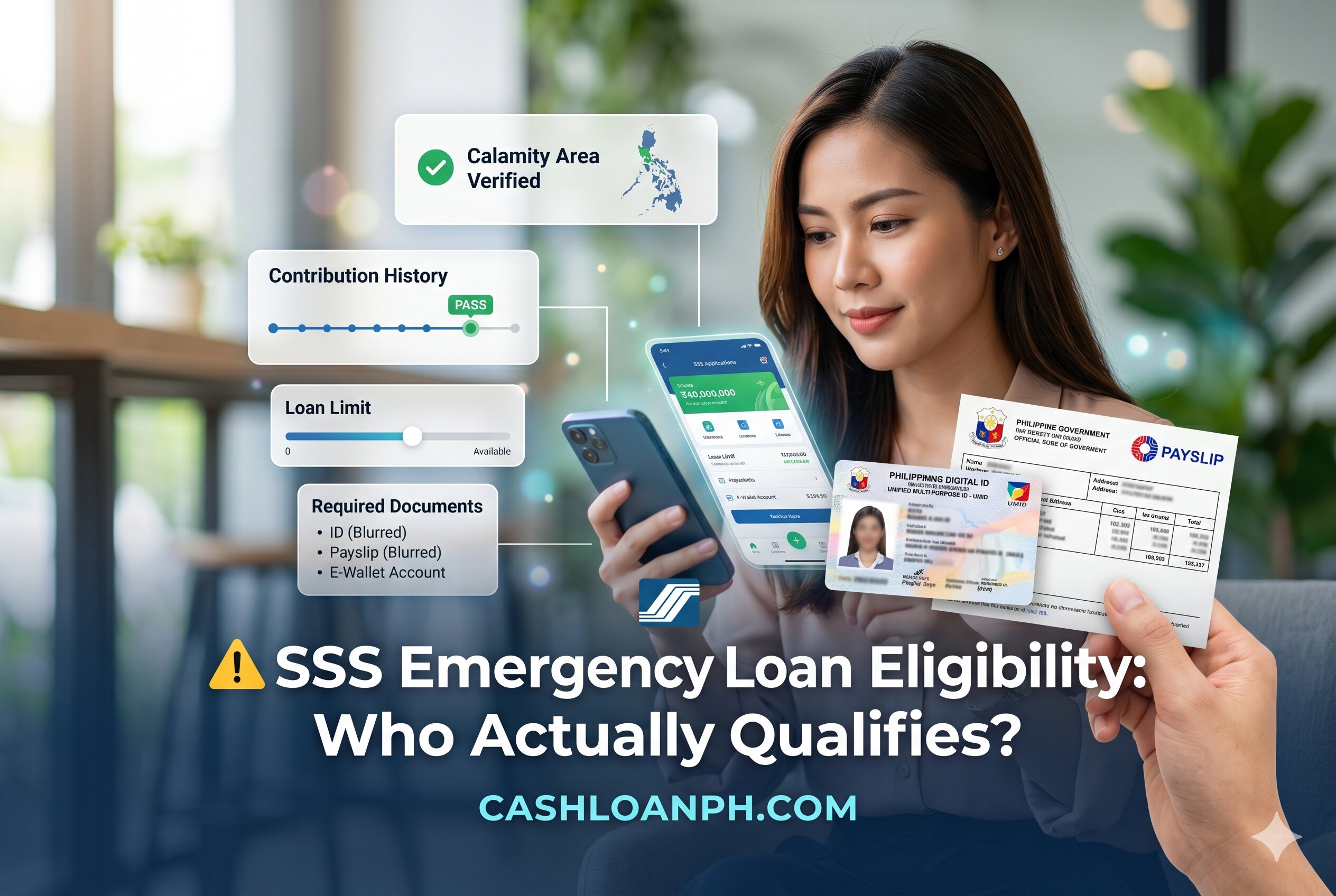
SSS emergency loan eligibility is determined through multiple verification layers, not just membership status. To qualify, members typically need posted contributions within the required period, an active and valid SSS record, residence or employment within officially declared calamity zones, and no conflicting loan restrictions or final benefit claims. Employed, voluntary, self-employed, and OFW members may qualify differently depending on contribution recency and account activity. Delayed employer remittances, municipality exclusions, overlapping salary loans, or inactive member records can all trigger disqualification even when applicants believe they are eligible. Conducting a self-check before filing helps reduce rejected applications and processing delays.
Why SSS Emergency Loan Eligibility Confuses Many Applicants
Most borrowers expect the process to work like a normal consumer loan. In reality, SSS emergency loan programs operate more like a government-administered disaster assistance system with automated qualification filters.
That distinction matters.
The platform checks whether a member belongs to an approved risk category tied to an officially declared calamity area. The system also validates contribution behavior because SSS programs rely on active member participation, not merely account existence.
This explains why two members living in the same city can receive different results during application.
One may qualify immediately while another gets flagged because:
- Contributions were not posted on time
- The employer failed to remit recent payments
- The municipality was excluded from the official declaration
- The member has an overlapping loan balance
- The member already filed for final benefits
- The account status became inactive after employment transfer
These operational details are rarely explained clearly on basic FAQ pages.
The Core Qualification Logic Behind SSS Emergency Loan Programs
The System Checks Membership Activity, Not Just Registration
Having an SSS number alone does not establish eligibility.
The system evaluates:
- Contribution posting history
- Current member classification
- Existing loan obligations
- Active employer records
- Benefit claim status
- Calamity-zone tagging
- Identity verification consistency
Members who created online accounts years ago but stopped contributing often assume they remain eligible indefinitely. That is not how SSS emergency relief programs work.
The emergency loan structure prioritizes active contributing members because the system is designed around social insurance participation.
Geographic Qualification Is Mandatory 🚩
One of the most misunderstood rules involves calamity-zone validation.
Applicants generally need:
- Residence within an officially declared calamity area, OR
- Employment within an affected location recognized by SSS bulletins
This means being “near” an affected area is usually insufficient.
If a typhoon impacts an entire province but only specific municipalities receive official declarations, members outside those municipalities may fail the geographic validation stage even if they experienced similar damage.
This creates confusion during large-scale disasters.
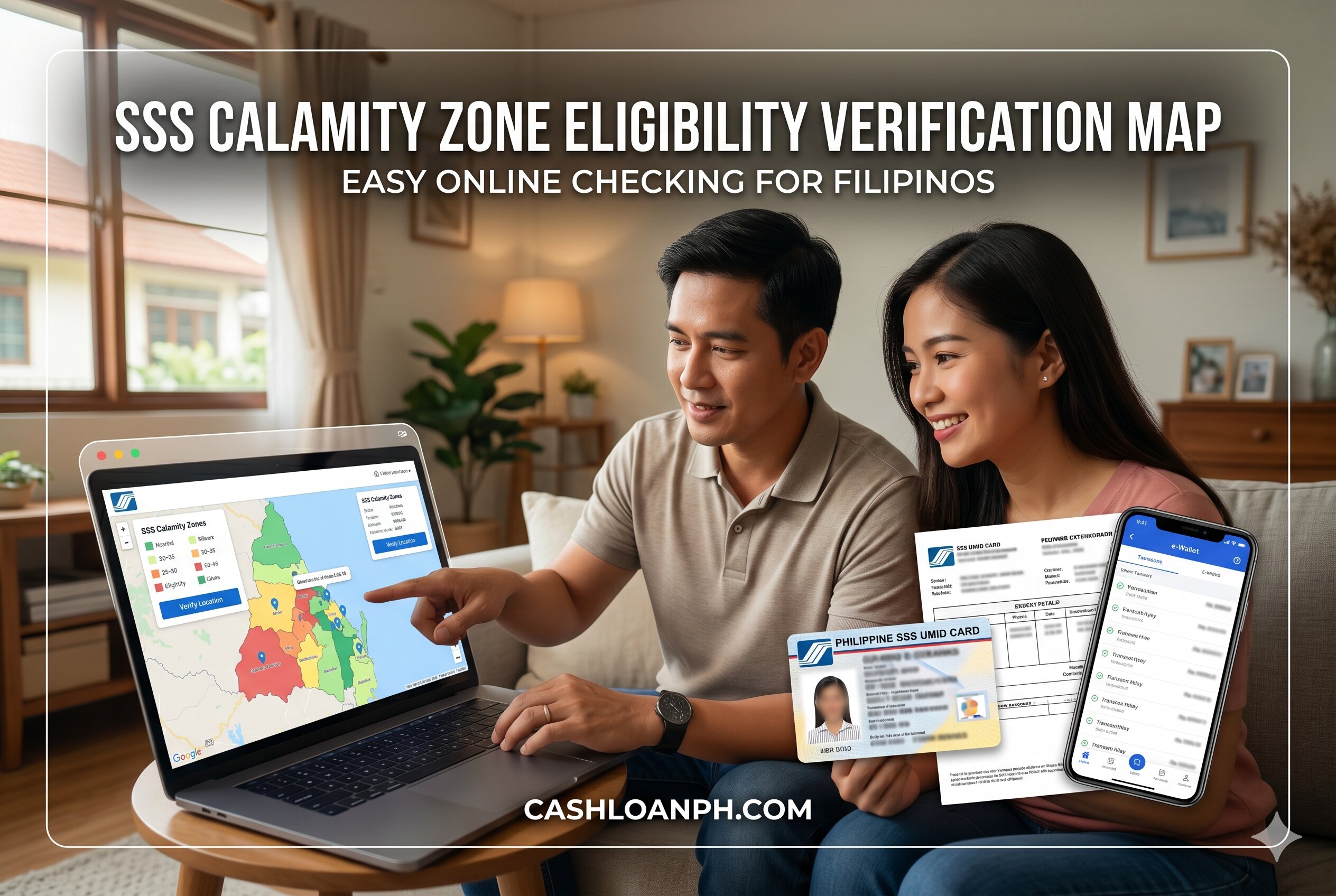
SSS Calamity Zone Eligibility Verification Map
(SSS emergency loan eligibility check based on official calamity declaration areas in the Philippines)
Minimum Contribution Rules That Frequently Trigger Rejections
Many rejected applications originate from contribution-related issues rather than geographic disqualification.
Contribution Count Requirements Matter
Emergency loan programs often require:
- A minimum number of posted monthly contributions
- Recent contribution activity before the filing period
- Properly credited payments inside the SSS system
This overlaps closely with the logic discussed in sss emergency loan requirements because contribution eligibility forms the foundation of most approval decisions.
However, the real issue is not only contribution quantity.
Timing matters equally.
Late Posting Can Temporarily Disqualify Applicants
A common problem occurs when:
- Employers remit late
- Payment gateways delay posting
- OFW payments remain pending
- Voluntary contributions were recently submitted but not yet reflected
From the borrower’s perspective, payment already happened.
From the system perspective, the contribution may still appear “unposted.”
That gap can trigger automatic ineligibility.
This is especially common during high-volume disaster filing periods when payment reconciliation queues become congested.
Members Who Recently Changed Employers Face Additional Validation
Transferred employees often encounter mismatched records because:
- Old employers have not finalized remittance reports
- New employers have not yet linked contributions correctly
- Employment records overlap temporarily
In these cases, the member may appear “inactive” inside automated loan validation systems even while actively employed.
This is one reason SSS personnel sometimes advise applicants to wait for contribution updates before filing.
Which Types of Members Can Qualify?
Employed Members
Employed members are usually the largest applicant group during calamity loan periods.
Eligibility depends heavily on:
- Employer remittance compliance
- Current employment tagging
- Contribution continuity
- Existing loan standing
Even if an employee consistently receives payroll deductions, delayed employer remittance reporting can still create eligibility problems.
This becomes especially frustrating because the employee may have no direct control over reporting delays.
Voluntary Members
A major FAQ during disaster periods is:
Are Voluntary Members Eligible?
Yes, voluntary members may qualify if they satisfy the active contribution conditions and other program rules.
However, voluntary members experience stricter scrutiny in some cases because:
- Contribution gaps are easier to identify
- Irregular payment patterns may trigger inactivity flags
- Recently resumed contributions may not immediately restore eligibility
Applicants who shifted from employed to voluntary status should verify whether their member classification updated correctly before filing.
Self-Employed Members
Self-employed members are eligible if:
- Their records remain active
- Contributions meet posting requirements
- No account conflicts exist
However, freelancers, online sellers, delivery riders, and gig workers sometimes encounter classification inconsistencies.
For example:
- A member may continue paying contributions but still remain tagged under an outdated employment category
- Income declarations may not match updated records
- Mobile-app payment references may post later than expected
These operational mismatches can affect emergency loan screening results.
OFWs and Overseas Members
OFWs frequently encounter delayed posting issues because overseas payments may pass through multiple financial channels before reaching SSS systems.
This creates problems during limited filing windows.
An OFW may technically qualify based on payment history but still fail temporary system validation if recent contributions remain pending.
Applicants should avoid assuming that payment confirmation automatically equals posted contribution status.
Existing Salary Loan Restrictions That Affect Eligibility
Another overlooked disqualification factor involves overlapping obligations.
Existing Loan Balances Can Trigger Restrictions
Depending on the active emergency loan program, members may face limitations if they:
- Have delinquent salary loans
- Possess restructured balances
- Missed scheduled amortizations
- Exceeded allowable loan overlap thresholds
This relates closely to existing salary loan restrictions, which often become stricter during special calamity filing periods.
Some members wrongly believe emergency loans override ordinary repayment rules.
In practice, SSS systems still evaluate account risk and repayment standing before approval.
Members With Final Benefit Claims Usually Become Ineligible
Applicants nearing retirement sometimes fail eligibility checks because:
- Retirement claims are ongoing
- Permanent disability claims were filed
- Final benefit processing has started
Once final benefit processing begins, borrowing privileges may become restricted because the account enters benefit-settlement stages.
Quick Self-Assessment Checklist ✅
Before applying, members should verify all of the following:
| Eligibility Factor | What To Check |
|---|---|
| Active Membership | Contributions are still active and visible |
| Contribution Count | Minimum required posted contributions met |
| Recent Posting | Latest payments reflected in account |
| Calamity Area | Residence or workplace included in official declaration |
| Loan Standing | No severe delinquency or conflicting balances |
| Member Classification | Correctly tagged as employed, voluntary, self-employed, or OFW |
| Benefit Status | No final claim processing underway |
| Account Consistency | Personal records and employment data updated |
This simple review can prevent unnecessary rejected applications.
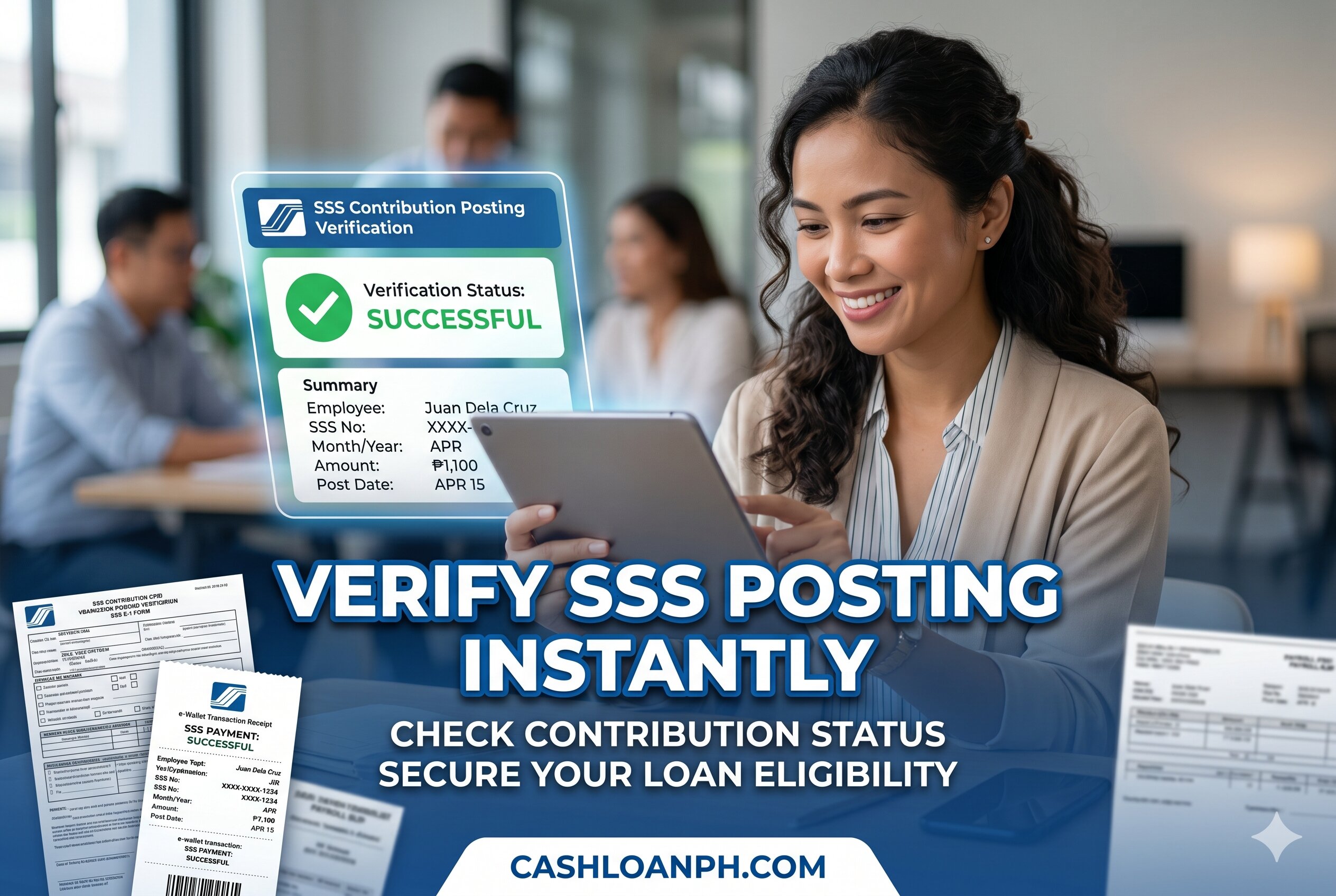
SSS Contribution Posting Verification Screen
(Checking SSS contribution posting status before emergency loan application)
Why Municipality-Level Declarations Matter More Than Province-Level News
News Reports and Official Bulletins Are Different
Many applicants rely on television reports or social media announcements saying a province was heavily affected by flooding or typhoons.
However, SSS qualification systems rely on:
- Official government declarations
- Published calamity bulletins
- Municipality-level tagging
- Approved filing advisories
This distinction is critical.
A city may appear severely affected in public coverage but remain excluded from the official SSS calamity reference list.
Applicants Outside Declared Areas Usually Cannot Proceed
Can Members Outside Calamity Areas Apply?
In most cases, no.
The emergency loan exists specifically for officially recognized disaster areas. Members outside declared locations generally fail geographic verification even if they experience indirect economic hardship.
This is one of the strictest qualification filters inside the system.
Why Contribution Gaps Create High Rejection Rates
Short Contribution Interruptions Can Have Long Effects
Many workers stop contributions temporarily after:
- Job resignations
- Freelance transitions
- Overseas deployment
- Small-business slowdowns
Later, during calamity periods, they attempt to resume payments immediately before filing.
The problem:
recent contribution resumption does not always instantly restore loan eligibility.
The system evaluates consistency and historical activity patterns.
Dormant Accounts Often Require Updating
Some inactive accounts require:
- Record consolidation
- Employment history corrections
- Reactivation validation
- Personal information updates
Members who ignore these issues until disaster periods may struggle because filing windows are often time-limited.
How Digital Verification Systems Evaluate Applicants
Modern SSS verification systems increasingly rely on automated cross-checking.
Automated Validation Checks Include:
- Identity matching
- Duplicate account detection
- Contribution consistency review
- Employer reporting reconciliation
- Loan overlap assessment
- Fraud pattern monitoring
- Geographic eligibility confirmation
This reflects broader Philippine fintech verification trends aligned with digital onboarding and fraud prevention practices.
Even government-linked lending systems now prioritize:
- KYC consistency
- Digital record integrity
- Behavioral anomaly detection
Mobile Payments and E-Wallets Still Require Posting Confirmation
Members using:
- GCash
- Maya
- Online banking
- Payment kiosks
should remember that payment acknowledgment differs from finalized posting.
Temporary delays during heavy disaster filing periods remain common.
This explains why some users receive:
- “No qualifying contributions”
- “Member not eligible”
- “Loan application cannot proceed”
despite recent payments.
Common Disqualification Triggers ⚠️
Administrative Disqualifiers
Applicants may fail because:
- Records contain mismatched birthdates
- Multiple CRNs exist
- Employer data remains incomplete
- Membership classification conflicts exist
Contribution-Related Disqualifiers
Applicants may fail because:
- Contributions are insufficient
- Recent months remain unposted
- Payment gaps exceed allowable thresholds
- Employer remittance delays persist
Geographic Disqualifiers
Applicants may fail because:
- Municipality excluded from declaration
- Address records outdated
- Workplace outside approved zones
- Filing period already expired
Loan-Standing Disqualifiers
Applicants may fail because:
- Existing loans became delinquent
- Restructured accounts remain unresolved
- Final benefits processing started
- Prior obligations exceeded thresholds
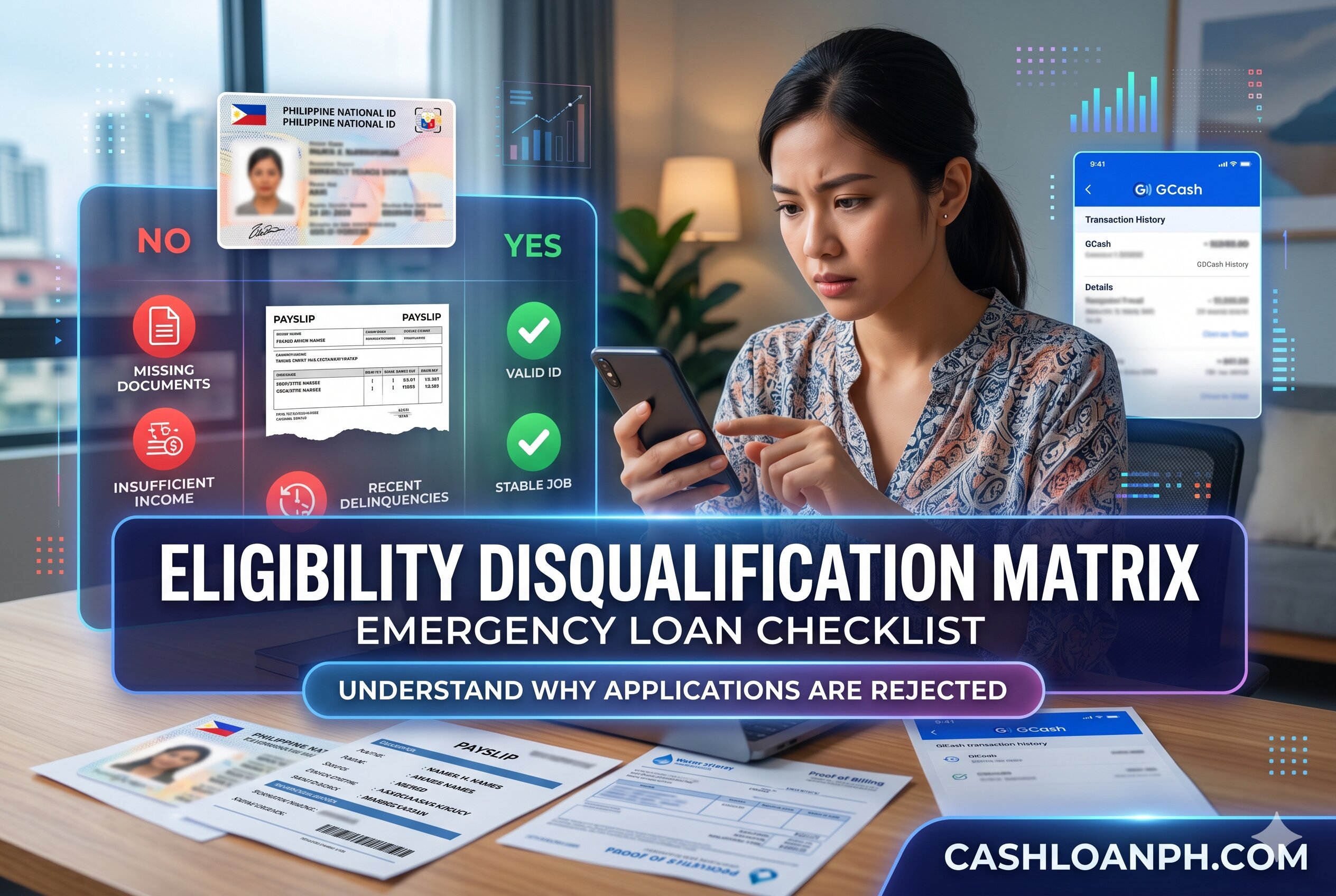
Emergency Loan Eligibility Disqualification Matrix
(Common reasons for SSS emergency loan ineligibility during calamity filing periods)
Featured Snippet: Who Qualifies for an SSS Emergency Loan?
Members may qualify for an SSS emergency loan if they:
- Have active posted contributions
- Belong to an officially declared calamity area
- Maintain valid member records
- Meet minimum contribution rules
- Have no disqualifying loan conflicts
- Possess active membership status
- Are not processing final SSS benefit claims
Eligibility may vary for employed, voluntary, self-employed, and OFW members depending on contribution activity and posting status.
Practical Preparation Before Filing
Verify Contributions Early
Do not wait for the filing announcement before checking:
- Contribution history
- Posting accuracy
- Employer remittance status
Early verification reduces panic during filing surges.
Update Personal Records
Members should confirm:
- Correct address information
- Updated employment records
- Proper contact details
- Accurate member classification
These details affect automated validation.
Review Minimum Posting Requirements
Applicants should confirm the minimum contributions required under the active emergency loan circular because thresholds can vary between programs.
Borrowers often focus only on disaster declarations while ignoring contribution compliance.
Frequently Asked Questions
Who qualifies for an SSS emergency loan?
Qualified members generally include active employed, voluntary, self-employed, and OFW contributors located within officially declared calamity areas who satisfy contribution and account-standing requirements.
Are voluntary members eligible?
Yes, voluntary members may qualify if contributions remain active and properly posted within required periods.
Can members outside calamity areas apply?
Normally, no. Geographic qualification depends on official calamity declarations recognized by SSS.
Does late contribution posting matter?
Yes. Contributions must usually appear as posted inside the SSS system before eligibility can be validated.
Can employer remittance delays affect eligibility?
Yes. Employees may become temporarily ineligible if employers delay contribution reporting or remittance processing.
Do existing salary loans affect approval?
They can. Delinquent balances or overlapping obligations may trigger restrictions depending on program rules.
Conclusion
SSS emergency loan eligibility is more technical than many applicants expect. Approval depends on interconnected system validations involving contribution history, geographic qualification, loan standing, member classification, and account consistency.
Many rejected applications happen because borrowers focus only on the calamity itself while overlooking contribution posting gaps, municipality-level declarations, or unresolved member record issues.
Before filing, members should conduct a careful self-assessment instead of assuming eligibility automatically applies after every disaster declaration. Reviewing contribution visibility, validating employer remittances, confirming calamity-area inclusion, and checking account standing early can significantly reduce filing frustration.
Responsible borrowing also means recognizing when eligibility rules exist to protect the integrity of social insurance funds. Accurate records, active participation, and verified information remain essential for smoother access to emergency financial assistance during difficult periods.