Last Updated on 25/05/2026 by Nicole Alba
Many SSS members assume paying contributions automatically makes them qualified for an emergency loan. In reality, qualification depends on how contributions are posted, counted, and validated inside the SSS system during the calamity filing period. Delayed employer remittances, voluntary payment timing, and reactivated memberships can all affect eligibility even when payments were already made.
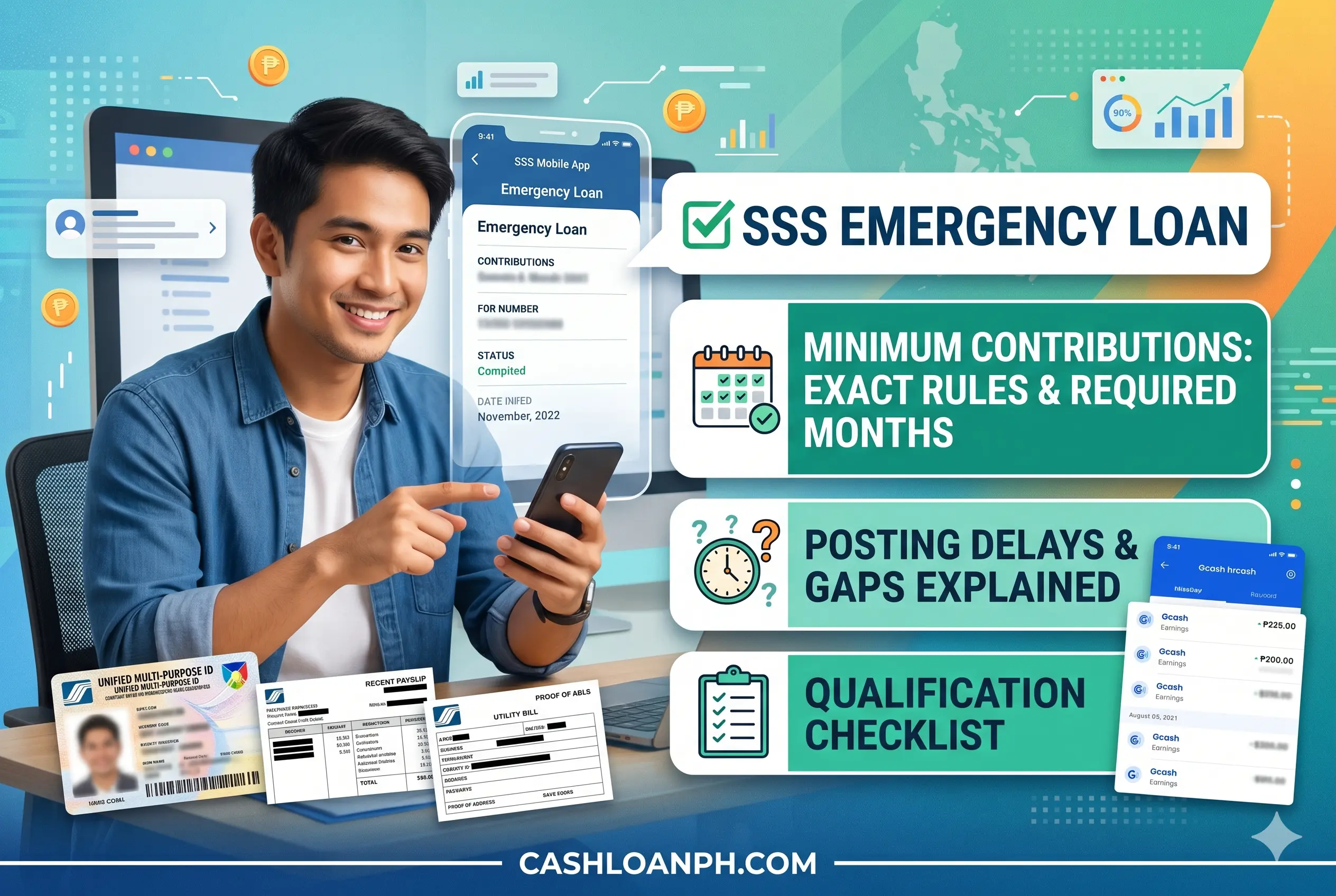
The minimum contributions for SSS emergency loan approval depend on active membership status, posted contribution history, and compliance with current SSS calamity loan eligibility rules. SSS does not only check whether contributions were paid — it validates whether they are already posted in the member’s contribution records during the evaluation window. Members with delayed employer remittances, recently switched voluntary accounts, or reactivated memberships often encounter qualification gaps. Most rejected applications stem from missing posted contributions, timing mismatches, or inactive contribution periods rather than permanent disqualification. Verifying contribution history before applying significantly reduces filing failures and returned applications.
📌 How Many Contributions Are Required for an SSS Emergency Loan?
The contribution requirement for an SSS emergency loan is not always interpreted correctly because members often confuse:
- Paid contributions
- Posted contributions
- Active membership periods
- Recent contribution windows
For most SSS calamity or emergency loan programs, members are commonly required to have:
- At least 36 monthly contributions
- With a minimum number of contributions posted within the recent 12-month evaluation period
- Active membership status at the time of filing
- No final benefit claim such as permanent total disability or retirement
However, the exact counting logic may vary depending on the specific emergency or calamity loan circular released by Social Security System.
What many applicants miss is this:
SSS evaluates contributions based on posted records inside its database — not merely payment receipts.
That distinction is one of the biggest reasons applications get returned or marked ineligible.
🔍 Posted vs Paid Contributions: Why Many Members Get Confused
One of the most common borrower frustrations involves seeing payment confirmations from an employer, e-wallet, or payment center while contributions still do not appear inside My.SSS.
Paid Contributions
These are contributions already deducted or submitted through:
- Employer payroll systems
- Voluntary contribution channels
- GCash
- Maya
- Bank payment portals
- Bayad centers
- Online banking
- Auto-debit arrangements
Posted Contributions
Posted contributions are payments already validated and reflected inside SSS contribution records.
SSS only counts posted contributions during loan qualification review.
This creates a timing gap that affects many members filing immediately after payment.
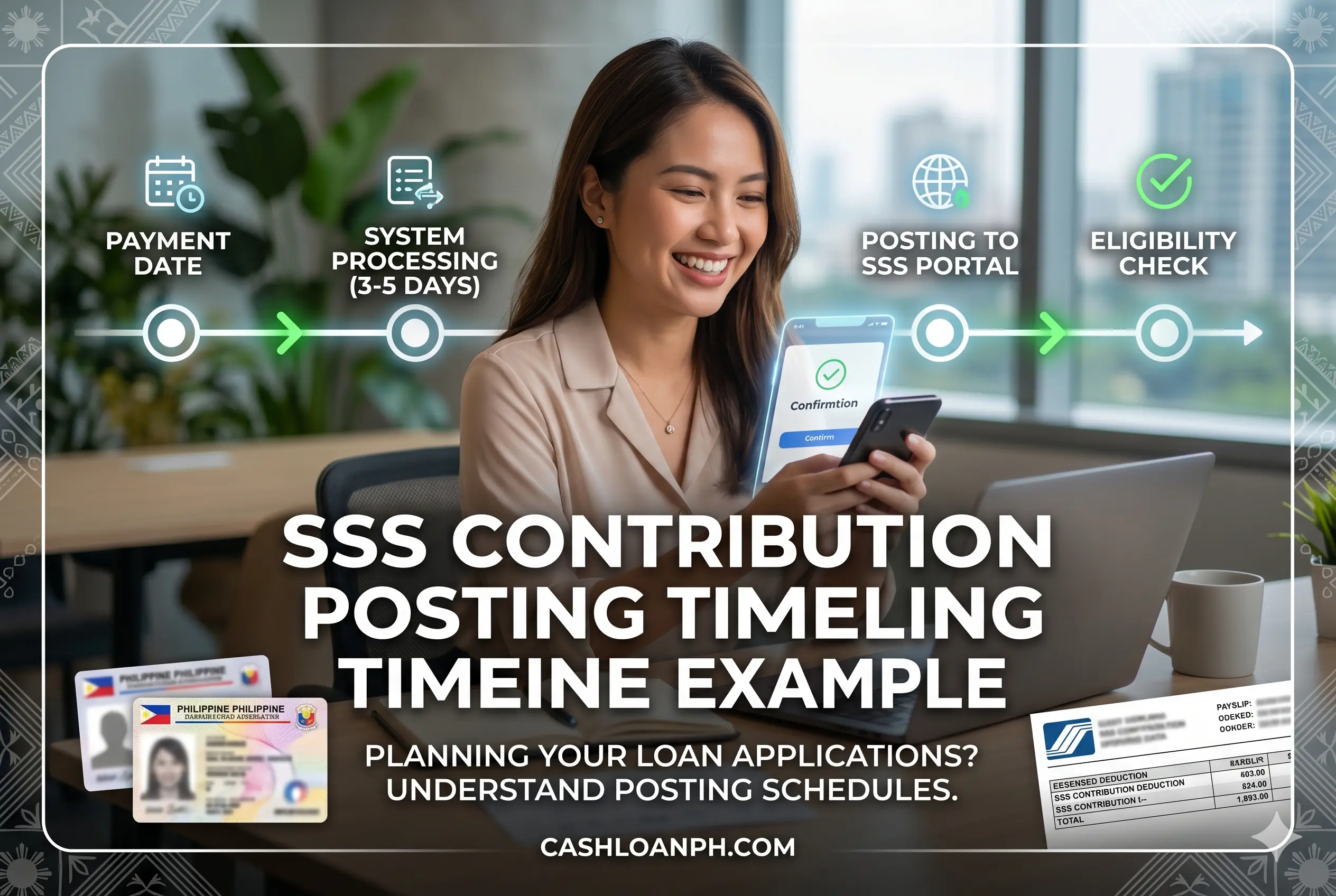
⏳ Contribution Posting Timelines Matter More Than Most Applicants Realize
Contribution posting delays are one of the least explained issues in Philippine lending-related searches.
Processing timelines vary depending on:
| Payment Channel | Typical Posting Behavior |
|---|---|
| Employer remittance systems | Depends on employer submission schedule |
| GCash or Maya | Usually faster but still subject to SSS posting cycles |
| Bank over-the-counter payments | May take several banking days |
| Voluntary PRN payments | Often dependent on PRN matching validation |
| Offline collection partners | Can experience batching delays |
A member may technically have enough payments but still fail qualification because the latest contribution batch has not yet synchronized with SSS databases.
This is especially common during:
- Calamity filing surges
- End-of-month payment periods
- System maintenance windows
- Employer bulk remittance uploads
🧮 How SSS Likely Counts Contributions During Emergency Loan Validation
Although SSS does not publicly expose every backend validation rule, actual borrower patterns reveal several operational behaviors.
Contribution Counting Windows
SSS typically checks:
- Total lifetime contribution count
- Recent contribution activity
- Membership continuity
- Whether the latest contributions are already posted
- Existing loan standing
This explains why some members with older contribution histories still fail eligibility checks after long inactive periods.
Why Membership Continuity Matters
A member with:
- 40 old contributions
- But no recent activity for several years
may still encounter problems if the account appears dormant or inactive during current evaluation windows.
Meanwhile, another member with:
- Consistent recent monthly contributions
- Stable posting history
- Active employment classification
often experiences smoother qualification.
💼 Employer Delayed Remittance: A Major Hidden Cause of Qualification Problems
Many employed workers assume payroll deductions automatically mean contributions are remitted immediately.
In practice, employers sometimes experience:
- Payroll reconciliation delays
- Batch submission issues
- PRN mismatches
- Accounting backlogs
- Late remittance penalties
- Incorrect employee tagging
As a result, the employee sees deductions on payslips while SSS records remain incomplete.
This becomes a serious issue during emergency loan filing periods because SSS qualification systems rely on reflected contribution records rather than employer payroll promises.
Warning Signs of Employer Remittance Delays
You may notice:
- Missing months in contribution history
- “No contribution posted” messages
- Inconsistent salary credit records
- Recently deducted contributions not reflected
- Sudden gaps despite continuous employment
Members dealing with this issue should immediately coordinate with HR or payroll before filing.
This is also closely related to why contribution records are missing, which affects many employed borrowers during high-volume filing periods.
📱 Voluntary Contributions: Can They Qualify for Emergency Loans?
Yes — voluntary contributions may count toward qualification if they satisfy current SSS posting and eligibility conditions.
This is highly relevant for:
- Freelancers
- Self-employed workers
- Online sellers
- Delivery riders
- Gig workers
- OFWs
- Recently resigned employees
However, voluntary members encounter unique verification risks.
Timing Problems for Voluntary Members
A common mistake is paying only after hearing about a calamity loan announcement.
SSS systems can detect irregular contribution behavior patterns such as:
- Sudden reactivation after long inactivity
- Large one-time contribution jumps
- Minimal historical activity
- Retroactive payment attempts
These cases sometimes trigger additional validation or delayed eligibility recognition.
Switching From Employed to Voluntary Status
Members transitioning from employer-based contributions to voluntary payments should verify:
- Correct membership category update
- Accurate PRN generation
- Successful payment matching
- Posted contribution appearance
Failure in any of these stages can temporarily interrupt contribution continuity.
🧾 Recently Reactivated Members Often Face Qualification Gaps
A borrower who previously stopped contributing for several years may assume reactivation instantly restores full eligibility.
That is not always how SSS validation behaves operationally.
SSS systems may evaluate:
- Recent activity consistency
- Number of newly posted contributions
- Active status duration
- Historical gaps
This becomes especially relevant during emergency loan programs where SSS wants to prioritize active contributing members affected by calamities.
What Reactivated Members Should Check
Before applying:
- Confirm recent contributions are already posted
- Review contribution gaps carefully
- Check membership category accuracy
- Ensure personal records are updated
- Validate mobile number and email access
These small administrative details often affect successful digital loan processing.
⚠️ Why Contributions Sometimes Do Not Reflect in My.SSS
Many borrowers panic after paying because the transaction receipt appears successful while contribution records stay unchanged.
In most cases, the issue involves synchronization rather than lost payments.
Common Causes of Missing Contribution Records
Employer-Side Delays
The employer submitted payment late or incomplete reports.
Incorrect PRN Usage
The payment reference number may not match the intended contribution period.
Bank Processing Delays
Some channels batch transactions before sending data to SSS.
System Maintenance
Heavy filing periods occasionally slow synchronization.
Member Classification Errors
A self-employed member accidentally pays under the wrong status.
These issues directly impact qualification forecasting for emergency loans.
📊 Practical Contribution Qualification Examples
Example 1: Employed Worker With Delayed Employer Posting
- Employee has 42 total contributions
- Employer deducted payroll contributions
- Last 3 months not yet posted
Possible outcome:
The member may temporarily fail eligibility until remittances reflect in the system.
Example 2: Freelancer Switching to Voluntary
- Previously employed for 5 years
- Resigned and shifted to freelance work
- Paid voluntary contributions recently
Possible outcome:
Qualification depends on whether the new voluntary payments are fully posted and correctly categorized.
Example 3: Recently Reactivated Member
- 30 old contributions from previous employment
- Restarted payments after 4-year gap
- Only 1 recent posted contribution
Possible outcome:
The account may not yet satisfy recent activity expectations for emergency loan processing.
🛡️ Why SSS Verifies Contributions Strictly
Emergency loans are designed for members affected by declared calamities or national emergencies.
Strict contribution validation helps SSS:
- Prevent fraudulent claims
- Detect inactive or dormant accounts
- Reduce abuse of emergency programs
- Confirm active membership participation
- Maintain actuarial fund stability
This verification approach is similar to modern fintech fraud prevention systems used across Philippine digital lending platforms.
Today, many financial systems rely on:
- Database cross-checking
- Identity validation
- payment history consistency
- Device-linked verification
- Behavioral fraud analysis
Although SSS operates differently from private lenders, the principle remains similar: contribution consistency affects trust scoring.
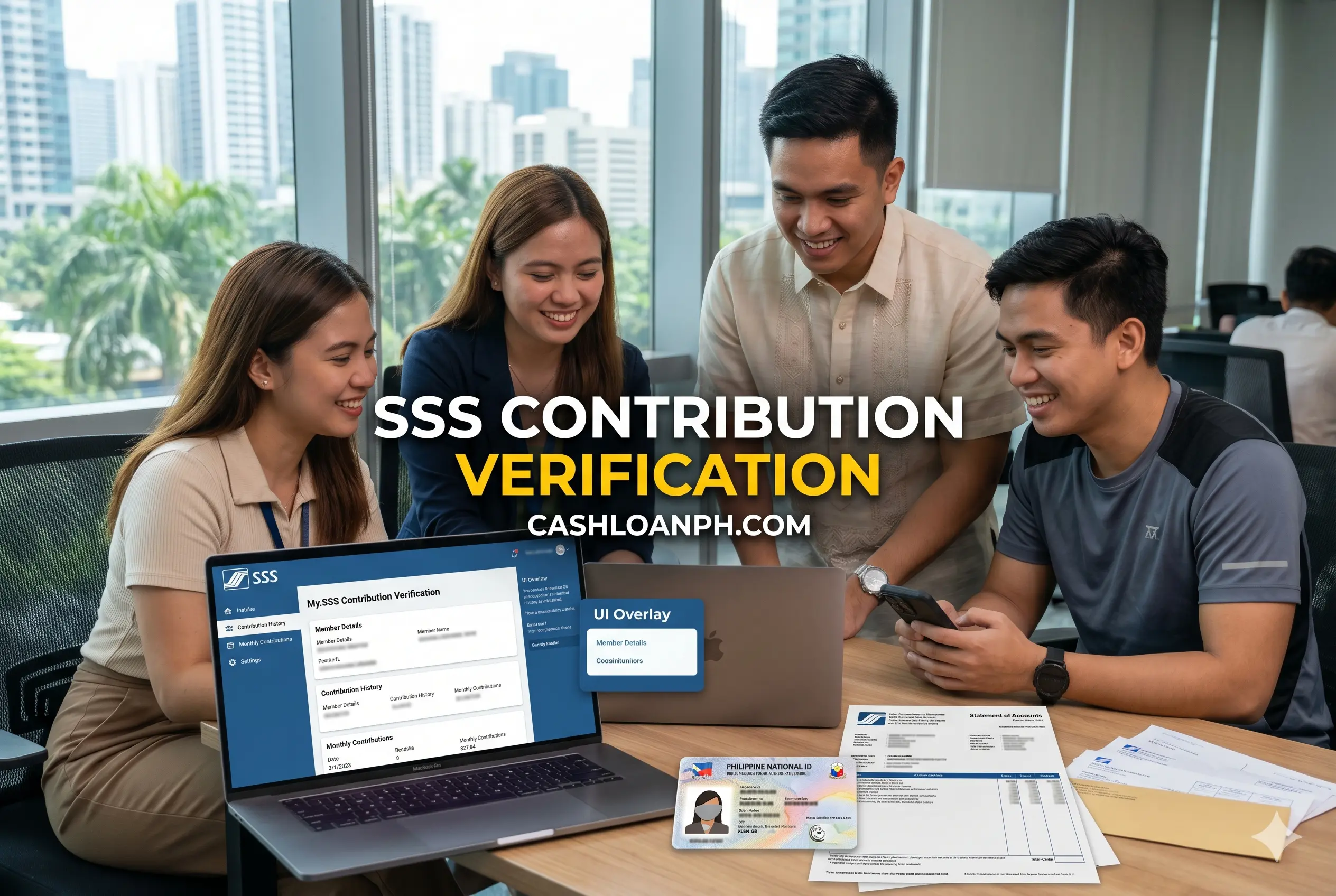
📌 How to Check Your Contribution Records Before Applying
Before filing an emergency loan application, members should verify all contribution details first.
Recommended Pre-Application Checklist
Check Posted Contributions
Review whether recent months already appear in My.SSS.
Validate Membership Type
Ensure employed, voluntary, OFW, or self-employed classification is correct.
Review Existing Loan Standing
Outstanding balances or delinquent records may affect qualification.
Confirm Employer Remittance
Ask HR if recent deductions were already transmitted to SSS.
Verify Contact Information
Updated mobile numbers and email addresses help avoid OTP and verification problems.
These preparation steps significantly reduce filing failures tied to sss emergency loan eligibility issues.
📉 Why Some Members With Many Contributions Still Get Rejected
This confuses many borrowers.
A member may have:
- 50+ lifetime contributions
- Long employment history
- Stable previous remittance records
but still fail emergency loan qualification.
Why?
Because emergency loan systems often prioritize:
- Current activity
- Recent posted contributions
- Membership continuity
- Active account status
- Existing loan compliance
Older contributions alone do not guarantee present eligibility.
💡 Practical Tips Before Filing an Emergency Loan
Wait for Posting Confirmation
Do not immediately apply after payment if records are still pending.
Save Payment Receipts
Receipts help during disputes involving delayed synchronization.
Monitor My.SSS Regularly
Frequent checking helps identify missing periods early.
Coordinate With Employers Quickly
Payroll correction delays become harder to fix during calamity surges.
Avoid Last-Minute Reactivation
Members attempting sudden qualification restoration may face validation delays.
This is particularly important when reviewing broader sss emergency loan requirements before filing.
❓Frequently Asked Questions
Do late payments count for SSS emergency loan qualification?
Late payments may count if SSS officially accepts and posts them within the evaluation period. However, not all retroactive payments immediately restore eligibility, especially after prolonged inactivity.
Can voluntary contributions qualify for emergency loans?
Yes. Voluntary contributions may qualify as long as they are valid, properly posted, and aligned with current SSS membership status rules.
Why are my contributions missing even after payment?
This usually involves posting delays, PRN mismatches, employer remittance issues, or synchronization delays between payment channels and SSS systems.
How long does contribution posting usually take?
Posting timelines vary by payment channel. Digital wallets and online banking are often faster, while employer remittances and offline channels may take longer during peak processing periods.
Can I apply immediately after paying contributions?
It is safer to wait until contributions appear in your official SSS records. Paid but unposted contributions may not yet be counted during qualification review.
Do old contributions still count after account inactivity?
Older contributions remain part of your history, but emergency loan qualification may still require recent active contribution behavior and continuous membership activity.
🧠 Operational Insight Most Borrowers Miss
One overlooked reality is that SSS contribution systems operate in layers:
- Payment acceptance
- Remittance matching
- Contribution posting
- Eligibility validation
- Loan system synchronization
Borrowers often assume payment completion instantly updates all systems simultaneously.
In practice, each stage may process separately.
This explains why:
- Receipts exist but records are incomplete
- Employers confirm payment but contributions remain pending
- Members appear active in one screen but ineligible in another
Knowing this workflow helps borrowers predict qualification gaps more accurately instead of repeatedly filing unsuccessful applications.
Conclusion
The minimum contributions for SSS emergency loan qualification involve far more than simply counting paid months. SSS evaluates posted contribution records, membership continuity, recent activity, remittance accuracy, and account status before approving applications. Delayed employer submissions, voluntary payment timing, inactive periods, and posting synchronization problems all influence eligibility outcomes.
Members who verify contribution records early usually avoid the most common filing frustrations. Before applying, review My.SSS carefully, confirm recent postings, coordinate with employers if necessary, and avoid relying solely on payment receipts as proof of qualification. Responsible preparation helps reduce rejected applications while improving access to emergency financial assistance during critical periods.