Last Updated on 16/06/2026 by Nicole Alba
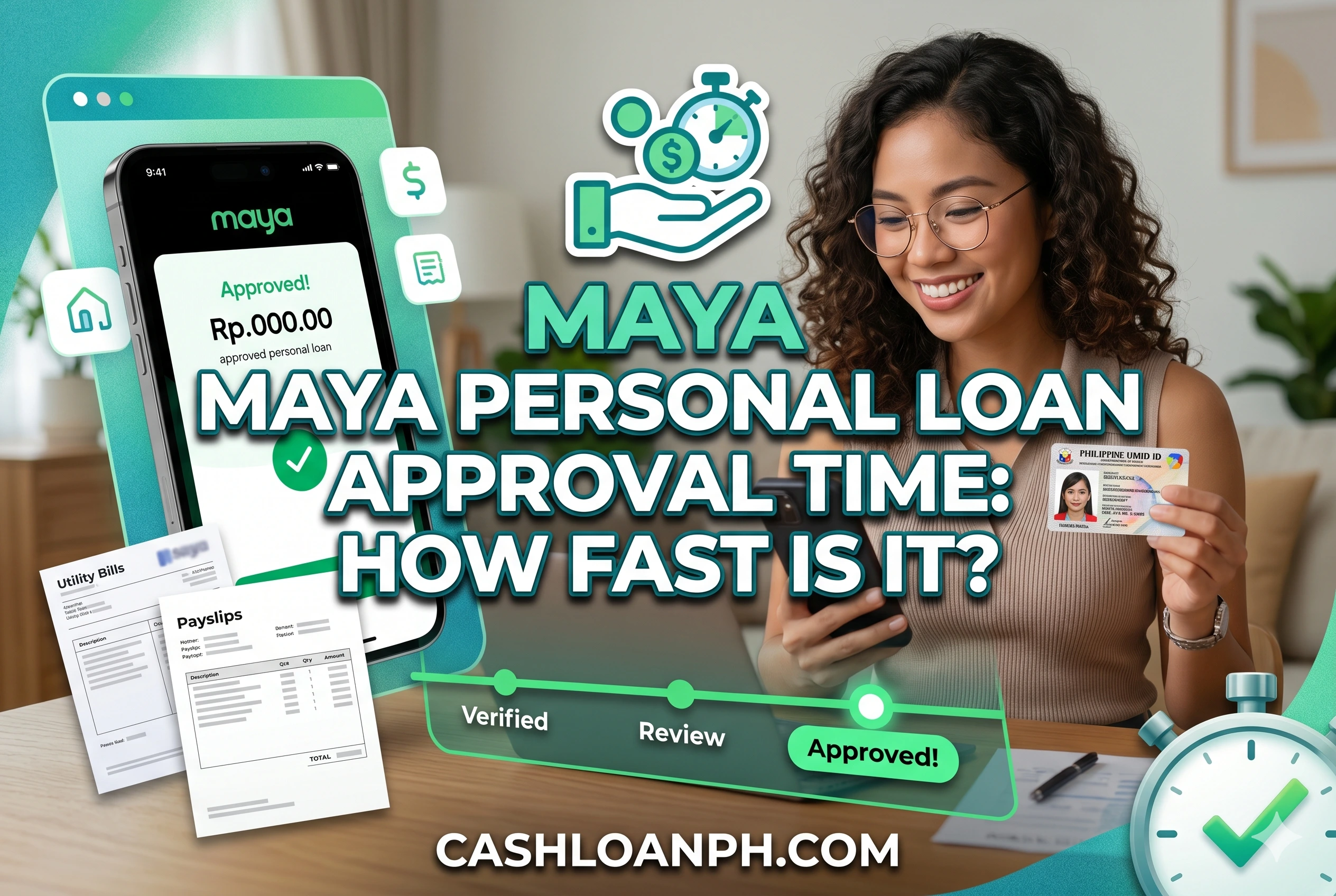
One of the most common questions among borrowers is: How long does Maya Bank take to approve a personal loan? Waiting for a lending decision can feel stressful, especially when funds are needed for emergencies, bills, education, business expenses, or debt consolidation.
The good news is that Maya Bank operates through a largely digital lending workflow, which means many verification and risk assessment processes are automated. However, approval speed can still vary depending on application volume, identity verification results, document quality, income validation, and internal risk reviews.
Rather than focusing only on best-case approval times, it is more useful to understand the entire approval timeline, the factors that create delays, and what different application statuses actually mean.
Maya Bank Loan Approval Timeline at a Glance
| Stage | Typical Time Estimate | What Happens |
|---|---|---|
| Application Submission | 5–15 minutes | Borrower completes digital application |
| Identity Verification | Minutes to several hours | KYC checks, selfie verification, OTP validation |
| Automated Review | Near real-time to several hours | Automated underwriting evaluates risk indicators |
| Additional Review (if required) | 1–3 business days | Manual or enhanced verification checks |
| Approval Decision | Same day to several business days | Final approval or decline issued |
| Loan Acceptance | Minutes | Borrower reviews and accepts loan offer |
| Fund Disbursement | Same day to several business days | Funds transferred after approval |
Summary:
For most applicants, maya bank loan approval time ranges from a few hours to several business days depending on verification results, application completeness, and system workload. Maya Bank uses digital identity checks, automated underwriting, fraud screening, and verification systems to evaluate borrower eligibility. Applications with clear information, successful selfie verification, valid income records, and consistent account activity generally move faster. Delays often occur during high-volume periods, identity mismatches, document quality issues, or additional risk reviews. Understanding the approval stages helps borrowers interpret pending statuses more accurately and reduces anxiety while waiting for a lending decision.
Why Maya Bank Approval Times Can Vary
Many borrowers expect digital loans to be approved instantly. While some applications move very quickly, modern fintech lending systems are designed to balance speed with responsible risk management.
A lender cannot simply release funds immediately after receiving an application. Several verification layers typically occur before approval.
These may include:
- Identity validation
- Fraud screening
- Income assessment
- Device risk checks
- Credit behavior evaluation
- Account activity analysis
- Regulatory compliance reviews
The result is that two applicants who submit applications at the same time may receive decisions at very different speeds.
For example:
- A salaried employee with consistent income records may receive a rapid decision.
- A freelancer with fluctuating income may require additional verification.
- An applicant whose ID photo is blurry may trigger manual review.
This explains why online discussions often show widely different approval experiences.
The Complete Maya Bank Personal Loan Approval Flow
Stage 1: Application Submission
The process starts when an applicant completes the loan application through the Maya ecosystem.
Typical information requested may include:
- Personal details
- Contact information
- Employment information
- Income details
- Government-issued identification
- Supporting verification information
Most borrowers complete this stage within 10 minutes.
An important operational insight often overlooked is that applications are timestamped immediately upon submission and enter a loan processing queue.
The queue determines when the system begins deeper assessment activities.
Stage 2: Verification System Review
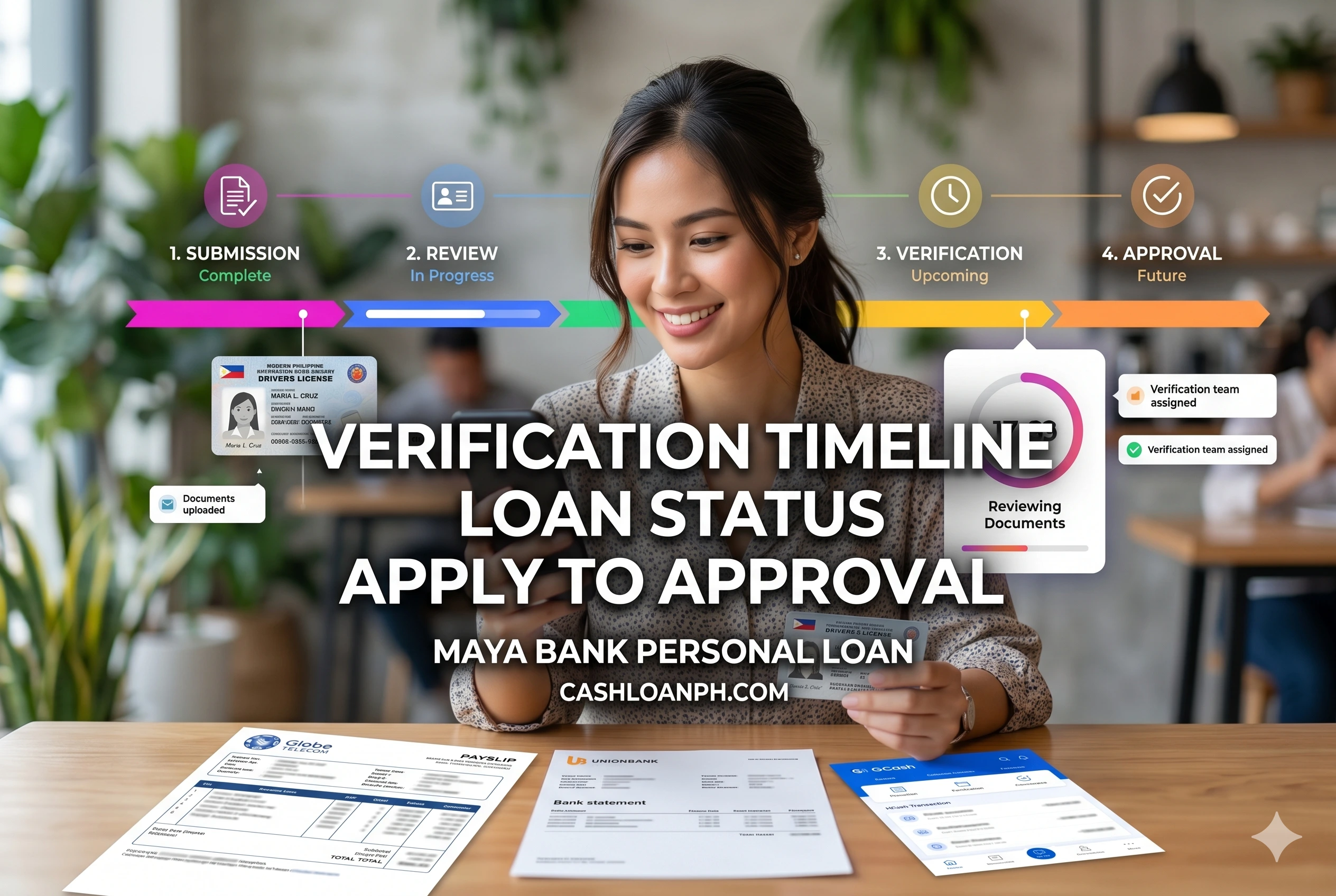
After submission, the verification system begins evaluating the information provided.
This stage may include:
- OTP authentication
- Facial verification
- ID authenticity screening
- Data consistency checks
- Account ownership validation
Modern Philippine fintech lenders increasingly use:
- Selfie matching technology
- Device fingerprinting
- Mobile number validation
- Behavioral fraud detection
These technologies help identify potential impersonation attempts and reduce fraud risk.
Common Verification Bottlenecks
Several issues can slow down verification:
Poor ID Image Quality
One of the most frequent causes of delays involves:
- Cropped IDs
- Blurry photos
- Reflections
- Incomplete document visibility
Selfie Verification Problems
Verification may take longer when:
- Lighting is poor
- Facial features are obscured
- Uploaded images do not match identification records
Borrowers often assume the application is stuck when, in reality, the verification system is still attempting automated validation.
Stage 3: Automated Underwriting Assessment
After successful identity checks, the application usually proceeds to automated underwriting.
This is where sophisticated algorithms evaluate lending risk.
Factors commonly assessed may include:
- Income stability
- Repayment capacity
- Existing obligations
- Account behavior
- Risk indicators
- Historical financial patterns
What Automated Underwriting Actually Looks For
Many borrowers think approval depends only on income.
In reality, automated underwriting often evaluates a broader picture:
- Consistency of financial activity
- Data reliability
- Identity confidence scores
- Fraud indicators
- Affordability calculations
An applicant earning a moderate income with stable patterns may sometimes receive a faster approval than someone reporting higher income but presenting inconsistent information.
Why This Stage Sometimes Feels Instant
Digital lending systems can process thousands of data points within seconds.
When the system finds:
- Strong identity confidence
- Consistent applicant information
- Low-risk indicators
the approval decision can be generated rapidly.
However, not all applications qualify for immediate processing.
What a “Pending” Status Usually Means
A pending status often causes the most anxiety among borrowers.
The important thing to know is that pending does not automatically indicate rejection.
Instead, it usually means one of several things:
| Pending Reason | Possible Meaning |
| Queue Processing | Application waiting in review queue |
| Verification Review | Identity checks still ongoing |
| Additional Validation | More data being evaluated |
| System Volume | High application traffic |
| Risk Assessment | Underwriting review not yet completed |
| Manual Escalation | Extra verification required |
A pending status is frequently a timing issue rather than a negative lending decision.
Why Applications Sometimes Take Longer Than Expected
High-Volume Periods
One major cause of delays is increased application activity.
This commonly occurs during:
- Payday periods
- Holiday seasons
- School enrollment periods
- Major promotional campaigns
- Economic uncertainty events
During these periods, even automated systems can experience larger review queues.
Enhanced Fraud Prevention Reviews
The Philippine digital lending sector has invested heavily in fraud prevention.
Modern lenders often conduct extra checks when unusual patterns appear.
Examples include:
- Device changes
- Location inconsistencies
- Multiple application attempts
- Data mismatches
While these reviews may extend approval times, they also protect legitimate borrowers.
Additional Income Validation
Self-employed applicants, freelancers, online sellers, and gig workers may occasionally experience longer reviews.
This does not mean they are less likely to qualify.
Rather, income verification can be more complex compared to salaried employment.
Examples include:
- Freelance earnings
- Online selling income
- Delivery platform earnings
- Project-based contracts
Additional validation may increase processing time.
Is Same-Day Approval Possible?
The Short Answer
Yes, same-day approval is possible.
However, it should be viewed as a best-case outcome rather than a guarantee.
Applications are more likely to receive faster decisions when:
- Identity verification succeeds immediately
- Information is complete
- Income details are consistent
- No additional reviews are triggered
Factors Supporting Faster Approval
Borrowers can improve processing efficiency by:
- Using a clear government ID
- Ensuring account details are accurate
- Completing all required fields
- Using updated contact information
- Avoiding duplicate submissions
A surprisingly common delay occurs when applicants repeatedly submit new applications because they believe the first application failed.
This can create additional review complexity rather than speeding up approval.
Weekend Applications: What Should Borrowers Expect?
Many applicants submit loan requests during weekends.
The digital components of the system continue operating, including:
- Automated verification
- Identity checks
- Risk scoring
However, certain reviews may depend on operational workflows that are processed during business periods.
As a result:
- Some applications receive rapid weekend decisions.
- Others move more slowly until business-day reviews resume.
The exact timing varies depending on verification requirements and queue conditions.
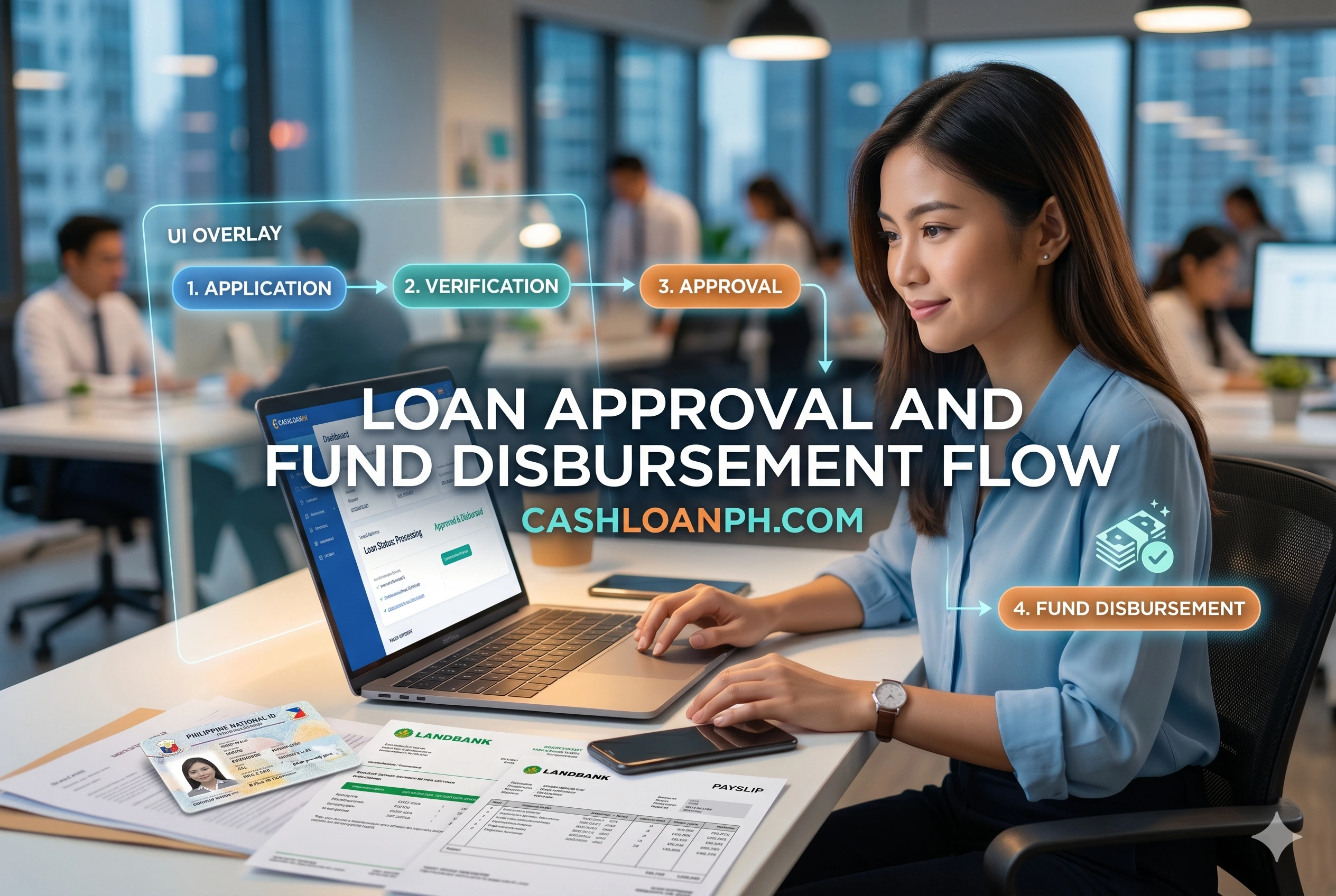
How Long After Approval Does Disbursement Take?
Approval and disbursement are not always identical events.
After approval:
- Loan offer is presented.
- Borrower accepts terms.
- Final processing occurs.
- Funds are released.
In some cases, funds become available quickly.
In others, additional processing may be necessary before the transfer is completed.
Borrowers researching loan disbursement delays often confuse approval timing with funding timing. These are separate stages within the overall lending workflow.
Application Status Meanings Explained
Application Received
The system successfully received your submission.
Under Review
Verification and underwriting assessments are ongoing.
Pending Verification
Additional identity checks are being completed.
Approved
The application meets lending requirements and an offer is available.
Declined
The application was not approved based on current evaluation criteria.
Borrowers seeking explanations for declined applications may find that lenders rarely disclose exact scoring methodologies. However, common application rejection reasons often involve affordability concerns, verification issues, risk indicators, or incomplete information.
Real Borrower Experiences: Why Timelines Differ
Community discussions across fintech forums and app reviews reveal a recurring pattern:
Two borrowers may submit applications within minutes of each other and experience completely different timelines.
The reason is that digital lending decisions are individualized.
Variables include:
- Verification confidence
- Income profile
- Risk indicators
- Application accuracy
- Queue volume
This is why anecdotal reports should be viewed as reference points rather than predictions.
One applicant receiving approval within hours does not guarantee the same result for another borrower.
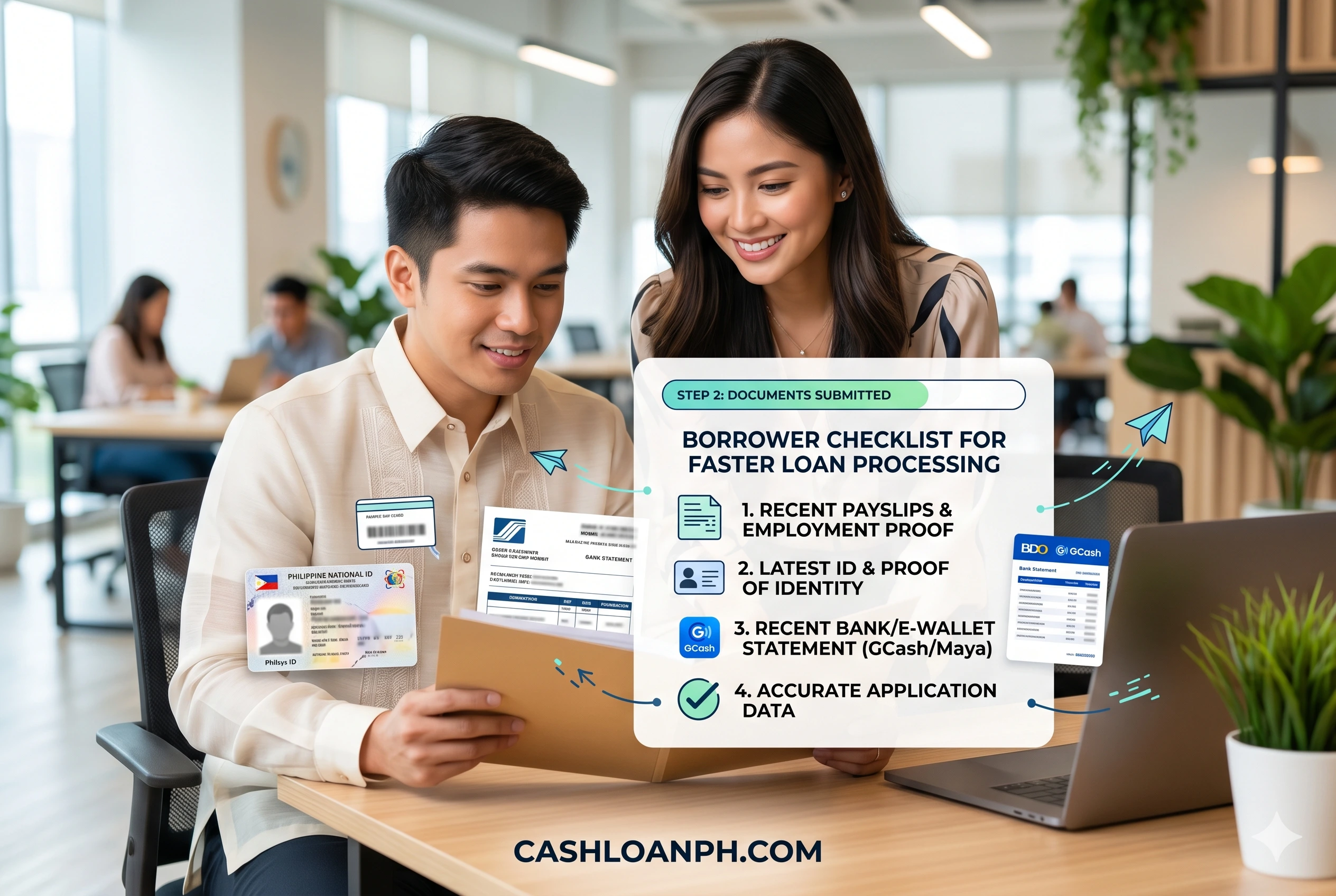
Practical Ways to Avoid Approval Delays
Before Submitting
Prepare:
- Valid government ID
- Stable internet connection
- Accurate employment information
- Updated mobile number
During Verification
Ensure:
- Good lighting
- Clear photos
- Consistent information
- Accurate document uploads
After Submission
Avoid:
- Repeated applications
- Multiple account attempts
- Editing information inconsistently
- Ignoring verification notifications
These simple steps can reduce avoidable processing friction.
What Borrowers Should Not Assume While Waiting
Several misconceptions create unnecessary stress.
Myth: Pending Means Rejected
Not true.
Many approved loans spend time in pending status.
Myth: Faster Approval Means Guaranteed Funding
Approval and disbursement remain separate stages.
Myth: Higher Income Guarantees Instant Approval
Risk assessment involves more than income alone.
Myth: Reapplying Speeds Up Processing
Duplicate applications can sometimes increase review complexity.
How Maya’s Digital Lending Model Differs From Traditional Banks
Traditional lending often relies heavily on manual processing.
Digital lenders increasingly leverage:
- Automated underwriting
- Verification systems
- Mobile-first onboarding
- Fraud analytics
- Digital KYC workflows
This can reduce approval times significantly while maintaining responsible lending controls.
Borrowers looking for broader information about Maya lending products may also explore a dedicated maya personal loan hub that covers eligibility, requirements, repayment structures, and loan management topics.
Frequently Asked Questions
How long does Maya Bank personal loan approval usually take?
Approval may range from several hours to several business days depending on verification outcomes, queue volume, and underwriting requirements.
Why is my Maya Bank loan application still pending?
Pending status commonly indicates ongoing verification, underwriting review, high application volume, or additional validation requirements.
Can I get approved on the same day?
Yes. Some applications receive same-day decisions when identity verification and automated risk assessment are completed successfully without additional reviews.
Do weekend applications take longer?
Not necessarily. Automated systems continue operating, but certain review activities may progress more quickly during business days.
Does submitting multiple applications speed things up?
No. Multiple submissions can create additional verification checks and may complicate the review process.
What causes the biggest approval delays?
Common causes include blurry documents, identity mismatches, incomplete information, high-volume periods, and enhanced fraud prevention reviews.
Conclusion
Waiting for a lending decision can feel uncomfortable, particularly when funds are needed quickly. The key takeaway is that maya bank loan approval time depends on much more than the moment an application is submitted. Identity verification, automated underwriting, fraud screening, queue conditions, and borrower-specific risk indicators all influence processing speed.
Applicants can improve their experience by providing accurate information, submitting clear identification documents, completing verification requests promptly, and avoiding duplicate applications. Most importantly, a pending status should be viewed as part of the review process rather than an immediate sign of rejection. Responsible borrowing begins with patience, accurate information, and realistic expectations about how modern digital lending systems operate.