Last Updated on 16/06/2026 by Nicole Alba
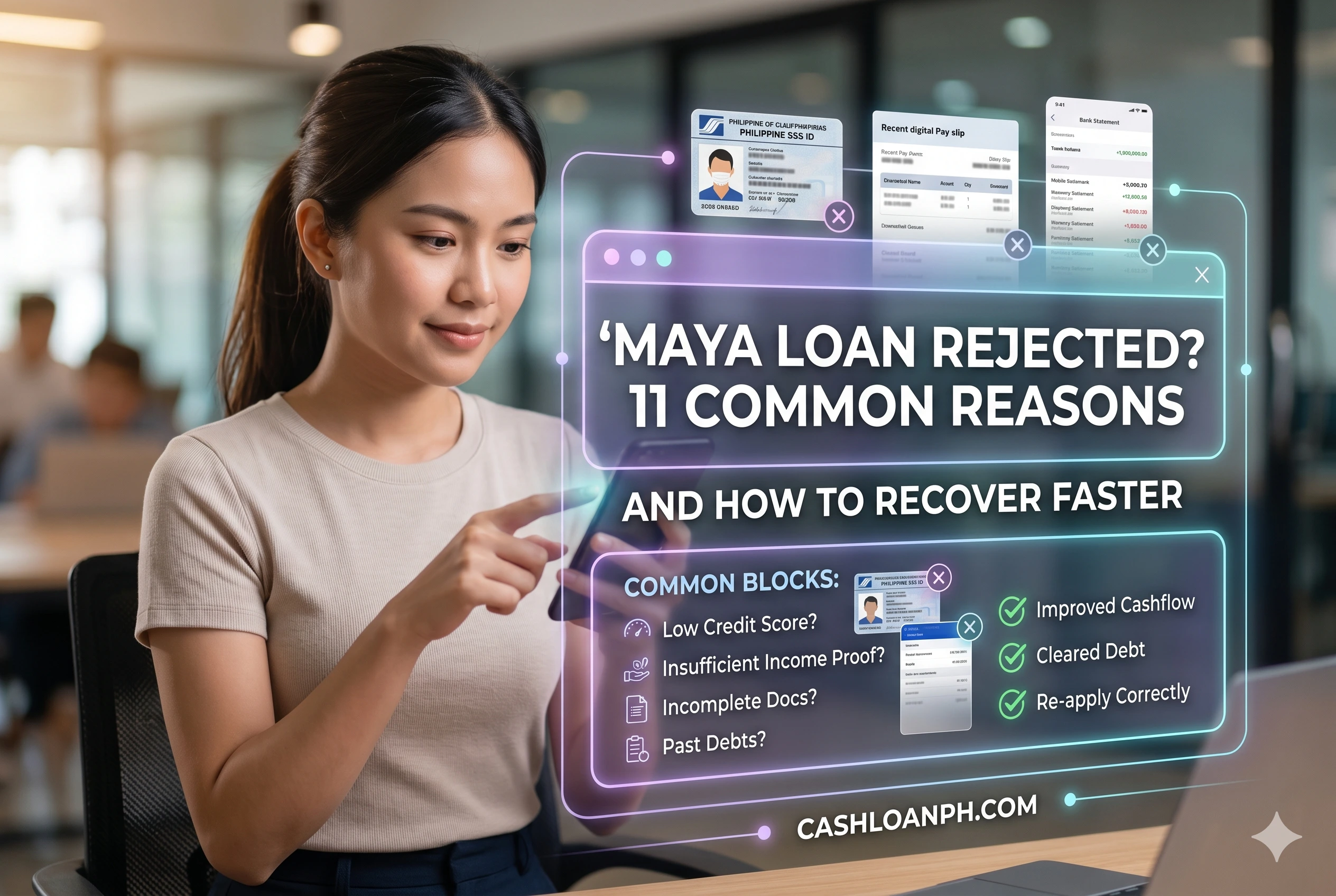
Applying for a Maya Personal Loan can feel straightforward, especially when the process is completed entirely through a mobile app. However, many borrowers are surprised when they receive a rejection notice despite having an active Maya account, regular transactions, or stable income.
If your maya loan rejected result left you confused, the good news is that a rejection does not automatically mean you will never qualify. Most declines are connected to specific risk signals, verification issues, eligibility gaps, or data inconsistencies that can often be addressed before a future application.
This article breaks down the most common reasons Maya Personal Loan applications get rejected, how modern digital lending systems evaluate risk, and the practical steps borrowers can take to strengthen their next application.
Quick Overview: Why Maya Loan Applications Get Rejected
| Rejection Factor | What It Means | Can It Be Fixed? |
|---|---|---|
| Incomplete verification | Missing or failed identity checks | Yes |
| Incorrect personal information | Mismatched records or documents | Yes |
| Income verification concerns | Income cannot be validated | Yes |
| Thin credit file | Limited credit history available | Usually |
| Credit report issues | Existing obligations or negative records | Often |
| Fraud detection flags | System detects unusual activity | Depends |
| Device or account risk signals | Multiple suspicious indicators | Depends |
| Eligibility requirements not met | Basic criteria not satisfied | Yes |
| Recent rejection history | Cooling-off period may apply | Yes |
| Loan amount exceeds profile | Requested amount considered too risky | Yes |
| Internal risk assessment | Overall lending score below threshold | Sometimes |
Summary
A maya loan rejected outcome is typically linked to identity verification problems, credit report records, income validation concerns, risk flags, fraud detection systems, or eligibility gaps. Maya Bank uses digital underwriting processes that analyze applicant information, account behavior, credit data, and verification results before making a lending decision. Borrowers can often improve future approval chances by correcting profile inconsistencies, strengthening income documentation, reducing debt obligations, maintaining accurate account information, and waiting for sufficient profile updates before reapplying. Understanding the specific category of rejection helps create a more effective reapplication strategy and prevents repeated declines.
Why Loan Rejections Are More Common Than Many Borrowers Realize
One of the biggest misconceptions in digital lending is that active app usage automatically translates into loan approval.
In reality, Maya Bank, like other regulated digital banks in the Philippines, operates under risk-management frameworks designed to evaluate repayment probability. Approval decisions are not based solely on account activity or loyalty to the platform.
Digital lenders evaluate multiple layers of information, including:
- Identity verification results
- Credit report records
- Income consistency
- Existing debt exposure
- Behavioral risk signals
- Fraud prevention checks
- Device and account security indicators
Maya also states that loan approvals remain subject to its credit underwriting policies and may depend on credit standing and information validation processes.
The result is that two users with similar account balances may receive completely different lending outcomes.
🔍 The Most Common Reasons Maya Loan Applications Get Rejected
Identity Verification Problems
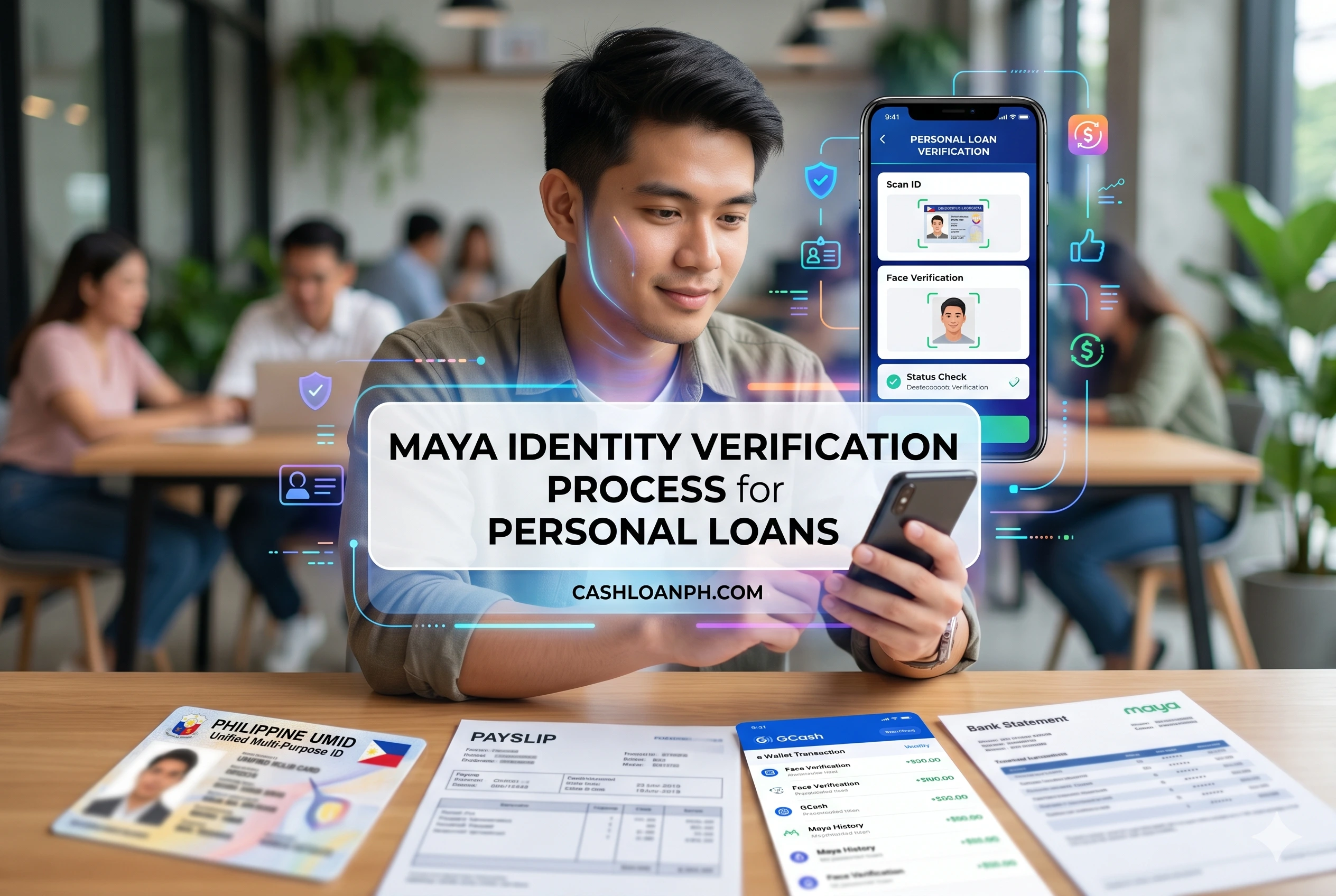
Identity verification remains one of the most frequent rejection triggers in digital lending.
Modern fintech onboarding systems rely heavily on:
- Government-issued IDs
- Facial verification
- Selfie matching
- Account ownership validation
- Database cross-checking
When any part of this verification chain fails, the application may be declined before creditworthiness is even assessed.
Common examples include:
- Blurry ID uploads
- Cropped documents
- Damaged IDs
- Name mismatches
- Inconsistent birthdates
- Verification failures during selfie checks
Borrower discussions frequently reference verification challenges involving IDs, email verification, or profile inconsistencies that delayed or blocked loan access.
Information Does Not Match Existing Records
Many borrowers accidentally create inconsistencies across their submitted information.
Examples include:
- Different addresses across documents
- Employment details that differ from previous records
- Nicknames instead of legal names
- Missing middle names
- Inconsistent contact information
Digital underwriting systems automatically compare submitted information against available records.
Even small inconsistencies can trigger manual reviews or automated rejection pathways.
Credit Report Records and Lending Risk Assessments
Existing Loan Obligations May Increase Risk
Borrowers often assume that paying current loans on time guarantees approval.
However, lenders evaluate total debt exposure rather than individual repayment behavior alone.
A borrower may be rejected if:
- Multiple active loans exist
- Monthly obligations are already high
- Debt-to-income ratios appear elevated
- New borrowing significantly increases repayment risk
Credit report records help lenders identify these patterns.
Negative Credit Signals Can Affect Approval
Credit information may include:
- Late payments
- Default records
- Collections activity
- Delinquent obligations
- High utilization patterns
Not every rejection is caused by negative credit history, but these factors commonly influence lending decisions.
Maya’s publicly available loan information indicates that credit standing forms part of the underwriting evaluation process.
The Thin Credit File Problem Many First-Time Borrowers Face
A rejection can happen even when a borrower has never missed a payment.
Why?
Because lenders may have limited data available.
This is often called a thin credit file.
A thin credit file occurs when:
- The borrower has little borrowing history
- No previous installment loans exist
- No credit card history is available
- Few formal financial records can be analyzed
From a lender’s perspective, insufficient data can be almost as challenging as poor data.
Without enough repayment history, risk models have less confidence when estimating future repayment behavior.
This situation frequently affects:
- Young professionals
- Newly employed workers
- Freelancers entering formal credit markets
- First-time borrowers
Income Verification Challenges That Lead to Rejection
Employed Applicants
For salaried workers, verification usually focuses on:
- Employment stability
- Income consistency
- Employer validation
- Supporting documentation
Problems arise when:
- Documents are outdated
- Employment status recently changed
- Submitted records appear inconsistent
Self-Employed, Freelance, and Gig-Economy Applicants
This group often faces different challenges.
Income may be legitimate but harder to validate.
Examples include:
- Freelance platform earnings
- Online seller revenue
- Content creator income
- Ride-hailing earnings
- Project-based contracts
Digital lenders increasingly recognize alternative income sources, but documentation remains essential.
Operationally, many fintech lenders place greater emphasis on income consistency than occasional high-income months.
A borrower earning ₱40,000 consistently every month may appear less risky than someone earning ₱80,000 one month and ₱5,000 the next.
🚩 Fraud Detection Systems and Hidden Risk Flags
What Are Risk Flags?
Risk flags are indicators suggesting elevated lending risk.
They do not automatically mean fraud occurred.
Instead, they trigger additional scrutiny.
Examples include:
- Unusual application behavior
- Multiple rapid applications
- Suspicious account changes
- Device inconsistencies
- Identity verification anomalies
How Fraud Detection Systems Work
Modern Philippine digital banks increasingly use AI-assisted fraud detection systems.
These systems may analyze:
- Device fingerprinting
- Login patterns
- Geolocation consistency
- SIM ownership indicators
- Behavioral biometrics
- Account activity patterns
The objective is borrower protection and fraud prevention.
If enough signals suggest elevated risk, the application may be declined automatically.
This often explains why some borrowers with apparently strong financial profiles still receive rejections.

Loan Amount Requests Can Influence Approval Outcomes
A frequently overlooked factor is the requested loan amount.
Borrowers sometimes focus exclusively on eligibility while ignoring affordability calculations.
A lender may conclude that:
- The requested amount exceeds the applicant’s profile
- Repayment capacity appears insufficient
- Risk increases at higher loan levels
Community discussions often show borrowers assuming active platform usage should guarantee approval, while lending decisions remain driven by underwriting criteria rather than app engagement alone.
If rejected, it may be worthwhile reviewing your expected loan amount eligibility before submitting another application.
Incomplete Documentation Remains a Major Cause of Declines
Even highly qualified borrowers can be rejected when documentation is incomplete.
Typical issues include:
- Missing pages
- Unreadable files
- Expired documents
- Incorrect uploads
- Unsupported file formats
Before reapplying, create a personal loan requirements checklist and verify every document individually.
Operationally, many automated verification systems reject documents before a human reviewer even sees them.
This explains why seemingly minor upload mistakes can produce immediate declines.
Can You Apply Again After a Maya Loan Rejection?
The Short Answer
Yes, many borrowers can apply again.
However, submitting another application immediately is rarely the best strategy.
Why Reapplying Too Quickly Can Backfire
If the underlying issue remains unresolved, the same risk indicators may simply trigger another rejection.
Instead:
- Identify likely decline causes.
- Correct documentation issues.
- Update account information.
- Strengthen income evidence.
- Reduce existing debt where possible.
- Wait for meaningful profile changes.
Some lenders impose waiting periods after declines, while others reassess applications based on updated information. Borrowers should always check current platform terms and notifications before reapplying.
Practical Recovery Plan After a Maya Loan Rejection
Step 1: Audit Your Maya Profile
Review:
- Name format
- Contact information
- Address details
- Employment information
- Linked accounts
Look for inconsistencies.
Step 2: Strengthen Verification Records
Ensure:
- IDs are valid
- Photos are clear
- Information matches exactly
- Verification steps are completed
Step 3: Review Credit Health
Check whether:
- Existing obligations are manageable
- Payments remain current
- Outstanding balances can be reduced
Step 4: Improve Financial Stability Signals
Lenders generally favor:
- Consistent income
- Stable employment
- Responsible account activity
- Predictable cash flow
These actions can gradually help improve approval chances for future applications.
Step 5: Avoid Multiple Simultaneous Applications
Submitting many applications across different lenders within a short period can sometimes create additional risk concerns.
A focused, prepared reapplication is usually more effective than repeated trial-and-error submissions.
Borrower Situations That Frequently Lead to Confusion
“I Have Plenty of Savings. Why Was I Rejected?”
Savings are only one variable.
Approval decisions often consider:
- Income stability
- Debt exposure
- Credit history
- Verification confidence
- Overall risk profile
“I’ve Used Maya for Years. Why Didn’t I Qualify?”
Platform activity does not automatically create loan eligibility.
Lending decisions rely on underwriting models designed to assess repayment risk rather than customer loyalty alone.
“I Have No Loans and No Bad Records. Why Was I Declined?”
This frequently points to:
- Thin credit file issues
- Verification concerns
- Limited income validation
- Internal risk scoring outcomes
Does a Rejected Maya Loan Affect Future Approvals?
A single rejection does not permanently damage future borrowing opportunities.
What matters more is:
- Why the application was rejected
- Whether the issue is corrected
- How your financial profile evolves afterward
Repeated applications without resolving underlying concerns may be less productive than taking time to improve the application profile.
In many cases, borrowers who strengthen verification records, maintain responsible financial behavior, and provide better supporting information become stronger candidates later.
Frequently Asked Questions
How long should I wait before reapplying?
There is no universal waiting period for every borrower. Review current Maya notifications and ensure meaningful profile improvements occur before submitting another application.
Will Maya tell me the exact reason for rejection?
Digital lenders often do not disclose detailed underwriting logic. Public loan terms indicate that approval and rejection decisions remain within the lender’s discretion.
Can freelancers qualify for Maya Personal Loans?
Yes, but income verification may differ from traditional salaried employment. Consistent and verifiable earnings generally help.
Can verification problems be fixed?
Often yes. Correcting profile mismatches, updating IDs, resolving verification errors, and ensuring complete documentation can improve future application quality.

Conclusion
Receiving a maya loan rejected result can be frustrating, especially when the reason is not immediately obvious. However, most loan declines stem from identifiable categories such as verification issues, credit report records, eligibility gaps, income validation concerns, fraud detection reviews, or internal risk flags.
The most productive response is not rushing into another application. Instead, focus on strengthening your borrower profile, reviewing your documentation, correcting inconsistencies, and ensuring your information accurately reflects your financial situation.
Digital lending decisions are designed to balance borrower access with responsible risk management. By approaching reapplication strategically and maintaining sound financial habits, many borrowers place themselves in a stronger position for future approval opportunities while borrowing responsibly and safely.