Last Updated on 11/09/2026 by Nicole Alba
If you found this Cashalo review after paying a previous loan on time only to get rejected when you tried to borrow again, you are not the only borrower asking what went wrong. Other users are worried about shorter-than-expected repayment periods, delayed disbursement, payment-posting problems, or whether collection calls will become aggressive.
There is one fact worth establishing immediately: Cashalo is not an anonymous lending app with no identifiable Philippine operator. It is operated by Paloo Financing, Inc., a financing company appearing in SEC records under SEC Registration No. CS201800209 and Certificate of Authority No. 1162. That does not mean every offer is inexpensive, every applicant will be approved, or every customer-service case will go smoothly.
If you are already overdue, another important point may lower the panic level: ordinary unpaid contractual debt does not automatically put a Filipino borrower in jail. Article III, Section 20 of the 1987 Constitution states that no person shall be imprisoned for debt. That does not erase the debt, stop lawful collection, prevent credit reporting, or protect someone from liability for a separate criminal act such as fraud.
| Key Takeaway | What we found in 2026 | What it means for you |
|---|---|---|
| Legitimacy | Paloo Financing, Inc. appears in SEC financing-company records with CA No. 1162 | Cashalo is identifiable and regulated; “legit” does not mean every loan is good value |
| Advertised cash loan | Google Play currently advertises up to ₱13,000 | Your personal offer can be much lower |
| Advertised term | Current listing states 61 – 180 days | The exact term offered to you may still feel tight for your cash flow |
| Covered-loan rate ceiling | Up to 6% monthly nominal / 12% monthly EIR for loans meeting the SEC criteria | Not every Cashalo product necessarily falls inside this special cap |
| Common complaint | Rejection or reduced offers after repayment | Paying early does not guarantee another loan |
| Repayment | GCash, Maya and several other channels are supported | Keep receipts until the app balance updates |
| Privacy | Credit, identity, financial and device-related information may be processed | Read permissions before granting access |
| Overdue debt | Lawful collection and credit consequences remain possible | Debt itself does not automatically mean imprisonment |
Is Cashalo legit and regulated in the Philippines in 2026?
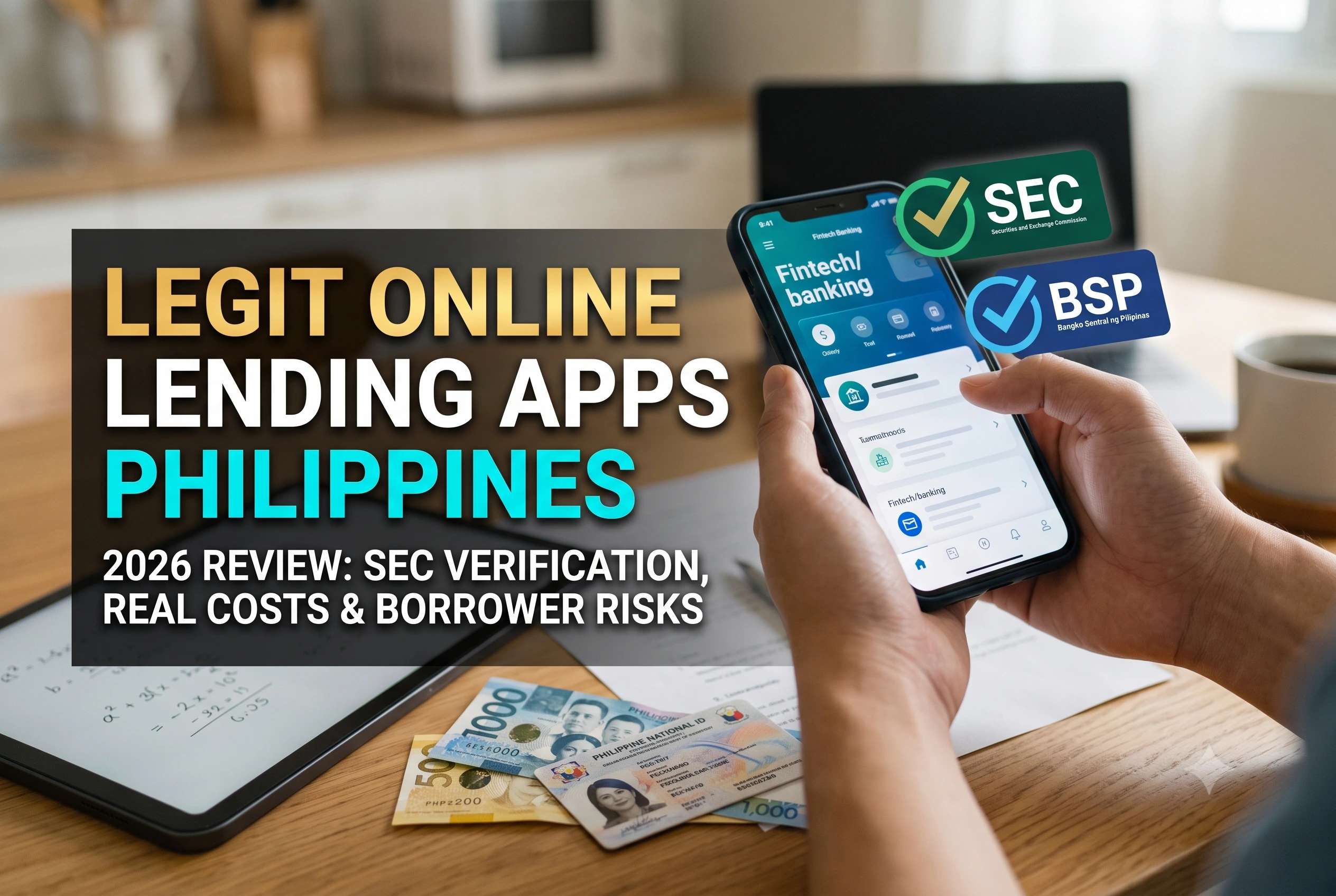
Yes. Cashalo is operated by Paloo Financing, Inc., which appears in SEC records as a financing company with SEC Registration No. CS201800209 and Certificate of Authority No. 1162.
The SEC’s published financing-company records identify Paloo Financing, Inc. under those registration details, while Cashalo’s current website and app listing use the same corporate information.
That distinction matters because many questionable online-loan operations hide their legal entity, use several changing app names, or provide no verifiable Certificate of Authority.
Cashalo does not fit that pattern.
Still, “SEC registered” answers only one question: whether there is an identifiable financing company authorized to operate. It does not guarantee your application will be approved, your credit limit will rise after repayment, or that a loan will be affordable for your household.
It also does not mean the Bangko Sentral ng Pilipinas is Cashalo’s primary lender regulator. For this financing product, the SEC is the key regulator. Banks, e-money issuers and payment institutions involved in moving money may fall under BSP supervision separately.
What does a Cashalo loan actually look like in 2026?
Cashalo’s current Google Play listing advertises cash loans of up to ₱13,000, repayment periods from 61 to 180 days, one valid ID, and disbursement to supported banks and e-wallets. Your approved amount and term are risk-based, not guaranteed.
The listing names GCash, Maya, GoTyme, BPI, BDO and other accounts among possible disbursement destinations. It also advertises repayment through channels including GCash, Maya, ShopeePay, PalawanPay, Cebuana Express and 7-Eleven.
Cashalo’s own example is particularly useful because it shows why borrowers should look beyond the advertised interest percentage.
For a sample ₱2,000 loan over 90 days, the listing currently shows:
| Cost item | Cashalo example |
|---|---|
| Principal received | ₱2,000 |
| Daily nominal interest | 0.2% |
| Daily service fee | 0.2% |
| 90-day interest | ₱360 |
| 90-day service fee | ₱360 |
| Total repayment | ₱2,720 |
| Cost above principal | ₱720 |
That ₱720 matters much more to your household budget than the phrase “0.2% daily interest.”
A borrower sees ₱2,000 arrive but must find another ₱720 over the life of the example loan. The service fee is therefore part of the cost of credit and should not be mentally separated from “interest” when deciding whether you can afford the transaction.

There is also a disclosure issue worth watching. Cashalo’s current website states that qualifying loans from April 1, 2026 are subject to a 12% monthly effective-rate ceiling, yet the Google Play description updated August 20, 2026 still displays an older “maximum monthly EIR: 15%” statement. The same Play listing’s worked example uses 0.4% total daily cost, which is consistent with 12% over a 30-day month.
I would treat the loan-specific Disclosure Statement shown immediately before acceptance as the controlling document you need to inspect.
Are Cashalo’s interest and fees legal under the new 2026 SEC rate cap?
For qualifying loans entered into, renewed or restructured from April 1, 2026, the ceiling is 6% monthly nominal interest, 12% monthly effective interest including applicable fees, 5% monthly late-payment penalty, and a 100% total-cost cap.
The special ceiling applies only when the loan satisfies the relevant conditions: it must generally be unsecured, for general purposes, ₱10,000 or less, and have a tenor of four months or less.
This creates an important distinction that many loan comparisons miss.
A ₱5,000 Cashalo loan repayable within three months may fit inside the special SEC ceiling. A ₱13,000 loan or a six-month loan does not automatically receive that same numerical protection simply because both products appear in the same app.
Loans falling outside the special bracket are not free from regulation. Disclosure rules, contract law, consumer-protection duties and rules against unfair conduct still apply. The point is that you should not mechanically apply the 12% monthly cap to every loan configuration.
Cashalo itself published the April 2026 limits as:
| Charge | Ceiling for a qualifying loan |
|---|---|
| Nominal interest | 6% per month |
| Interest plus applicable fees / effective cost | 12% per month |
| Late-payment penalty | 5% per month on the overdue amount |
| Cumulative interest, fees and penalties | Not more than 100% of principal |
For a covered ₱5,000 loan, that last protection means cumulative charges cannot simply grow without limit until the borrower owes several multiples of the amount originally borrowed.
Why can Cashalo reject you even after you paid your previous loan on time?
Because repayment history is only one component of digital credit underwriting. Cashalo’s terms allow identity, credit, financial, behavioral, device and fraud-related information to be used in risk assessment, and the company does not publish the weights used by its scoring model.
This is one of the biggest sources of frustration visible in 2026 reviews.
Why doesn’t early repayment guarantee a higher Cashalo credit limit?
An early payment proves that one loan was repaid, but it does not create a contractual right to a larger second loan. The lender can recalculate risk every time you apply.
Cashalo’s Terms of Service allow background verification, credit checks, fraud checks and user profiling using information supplied by the borrower and information from approved third-party sources. The company also states that inaccurate or incomplete information can result in rejection or account restrictions.
This means the familiar borrower logic –
“I borrowed ₱3,000, paid early, so I should qualify for ₱5,000 next time” –
is not necessarily how the underwriting model works.
A lender may reassess current exposure, identity consistency, repayment behavior across other accounts, current credit information, fraud indicators, declared employment or financial capacity and its own portfolio-risk limits. The exact Cashalo scoring formula is not public, so anyone claiming to know an exact approval formula is guessing.
Are borrowers really reporting rejections after successful Cashalo repayments?
Yes. Recent public reviews include borrowers who say they repaid successfully or early but were later declined, offered less, or given a lengthy reapplication date. These are individual reports, not proof that the same result occurs for every customer.
A current Philippine App Store review describes a borrower who says previous ₱1,000, ₱6,000 and ₱3,000 loans were repaid, yet later applications were rejected; the reviewer said the app eventually displayed a future reapplication date in February 2027.
Recent Google Play feedback also includes borrowers complaining that limits can decrease even after on-time or advance payments.
That is why I would never repay Cashalo early solely because you expect to immediately borrow again. Pay early because it is financially sensible for the existing debt – not because you are depending on the next approval.

What Cashalo complaints are borrowers raising most often in 2026?
The recurring themes are approval inconsistency, changing limits, short assigned repayment periods, slow or disputed payment handling, disbursement delays and customer-support frustration. Complaint posts should be read as borrower experiences, not automatically as verified regulatory violations.
Recent public feedback is useful because it tells us where borrowers experience friction even when the lender remains legally registered.
Why do borrowers complain about unstable Cashalo offers?
Many borrowers expect repeated successful repayment to create a steadily increasing limit, while Cashalo appears to reassess eligibility and offer size rather than follow a simple loyalty ladder.
Recent reviews describe limits dropping, offers disappearing, or applications being declined after several completed loans.
From a lender’s side, that makes sense if underwriting is recalculated at each application. From a borrower’s side, it creates a planning problem: the amount displayed as an offer should never be treated as emergency cash until the application is actually approved and funded.
Why do some Cashalo borrowers complain that repayment is too short?
Because the advertised 61 – 180-day range does not mean every borrower gets six months. A customer’s assigned term can still be much shorter than the period needed to comfortably repay the debt.
A September 4, 2026 Google Play reviewer described fast verification but asked for longer three- or six-month options because the repayment period felt burdensome.
The operational lesson is simple: calculate the repayment against your next two or three pay cycles before accepting. Do not judge affordability using only the loan amount.
A ₱4,000 emergency can feel manageable today but become another emergency when the due date arrives before your household cash flow has recovered.
What should you do if a Cashalo payment has not reflected?
Keep the receipt, verify the Loan ID and registered mobile number, and allow the official posting window to pass before escalating. Cashalo says several channels post instantly, while some other payment methods may require up to 24 hours.
Cashalo’s repayment page tells borrowers whose payments remain missing after 24 hours to contact its repayment support. It also provides a process for wrong amounts or incorrect reference numbers.
This is one reason I recommend screenshots before and after payment. Save the biller’s name, reference number, timestamp, amount, Loan ID and confirmation message. If a late fee later appears because the payment was posted incorrectly, you have evidence showing when you actually initiated payment.
Should a reported Cashalo double-payment problem worry you?
It deserves attention, but one review is not enough to conclude that duplicate charging is a platform-wide problem. Treat it as a reason to keep transaction records and monitor any automatic debit arrangement carefully.
A current App Store complaint alleges a duplicate payment followed by slow customer-service handling.
Cashalo’s 2026 Terms of Service also describe an Automatic Debit Arrangement that may be offered, allowing amounts due to be debited from a nominated account.
If you use automatic debit, check the nominated account before manually paying the same installment. After any apparent duplicate debit, preserve both transaction references and dispute it immediately rather than relying on a phone conversation you cannot later prove.
Does BSP regulate Cashalo, or should a borrower complain to the SEC?
Cashalo’s lending operator is a financing company regulated primarily by the SEC. BSP may become relevant to a separate bank, e-wallet or payment-service issue, but a complaint about Cashalo’s financing conduct belongs first with Cashalo and, where appropriate, the SEC.
This regulator distinction is frequently blurred in loan articles.
Paloo Financing, Inc. is an SEC-regulated financing company. The SEC publishes rules covering financing and lending companies, including disclosure requirements, rate ceilings and unfair debt-collection practices.
The SEC also operates its iMessage ticketing system, which includes a category for complaints concerning financing and lending companies.
If the disputed transaction involves how GCash, Maya, BPI or another regulated payment institution moved money, you may have a second complaint path with that institution.
Do not send every online-loan dispute automatically to BSP simply because the transaction involves money.
Can Cashalo legally harass you or contact everyone in your phone if you become overdue?
No lender receives unlimited collection rights because a payment is late. SEC rules prohibit unfair collection practices, while Philippine privacy rules restrict excessive or unauthorized processing of borrowers’ and third parties’ personal data.
SEC Memorandum Circular No. 18, Series of 2019 addresses conduct such as threats, abusive language, deceptive representations and improper disclosure of borrower information. Financing companies remain responsible for collection practices even when outside collection providers are involved.
Privacy protection has become even more relevant in 2026. A joint DICT-NPC-SEC advisory reiterated that unnecessary app permissions and unauthorized, excessive or disproportionate processing of personal data – particularly borrower contact-list information – are prohibited.
That does not stop lawful reminders, calls, emails or civil collection.
It draws the line at harassment, intimidation, public shaming and improper use of personal information.
If you believe collection crossed that line, keep screenshots, SMS messages, caller numbers, call logs, emails, recordings where lawfully obtained, names used by agents, and dates. Evidence makes a complaint much stronger than a general statement that someone was rude.
What personal data can Cashalo use when assessing your application?
Cashalo’s published terms permit processing of identity, employment, financial, credit, device and behavioral information, while the Play listing specifically mentions location, information about installed apps and SMS-related data for fraud and credit assessment.
This deserves more attention than most loan reviews give it.
Cashalo’s Terms of Service state that information can include identification details, employment information, financial capacity, bank-account data, financial history, government ID details, device information and information from credit agencies or fraud-prevention services.
The Google Play disclosure states that location, external information regarding other installed applications and SMS information may be used for identity validation, fraud prevention or eligibility assessment.
There is also a terminology nuance worth knowing. Google Play’s Data Safety panel currently says “No data shared with third parties,” while Cashalo’s Terms and Privacy Policy describe circumstances where information may be disclosed to affiliates, platform lenders, payment providers, collections providers, credit bureaus, fraud providers and government agencies. These statements are not necessarily legally inconsistent because Google’s technical definition of “sharing” includes exceptions, but borrowers should read the full privacy document rather than relying only on the app-store badge.
Cashalo also provides a data-deletion process, although it states that information required in connection with an outstanding balance may be retained where necessary.

What happens if you cannot pay Cashalo on the due date?
Contact Cashalo before or as soon as payment trouble becomes clear. Late charges, collection activity and credit consequences may follow, but ordinary unpaid loan debt itself does not automatically result in imprisonment.
For a loan covered by the April 2026 SEC ceiling, the late-payment penalty is capped at 5% per month on the applicable overdue amount, subject to the specific rule and loan agreement.
Cashalo’s published materials also state that borrower information may be reported to the Credit Information Corporation and used in credit assessment.
So “I can’t go to jail just for debt” should never be interpreted as “I can ignore the loan.”
The safer move is to contact in-app support in writing, state what you can realistically pay, ask whether any payment arrangement or restructuring option is available, and request the exact balance breakdown.
Do not promise a date you already know you cannot meet.
And do not borrow from three more apps simply to silence one lender for a few days. That is how a ₱3,000 liquidity shortage can turn into a multi-lender debt cycle with several due dates landing on the same salary.
Is Cashalo safe enough to use for an emergency?
Cashalo can be a legitimate short-term credit option, but I would use it only when the repayment already fits inside your expected income without requiring another loan. It should not be treated as a guaranteed revolving emergency fund.
The strongest positive case is straightforward: you have a temporary, specific expense; the amount is small; the Disclosure Statement is clear; the total peso cost is acceptable; and you can repay even if Cashalo never lends to you again.
The weakest case is also easy to identify: you need the new Cashalo loan to pay another app, you are choosing the maximum offer because it is available rather than because you need it, or your plan assumes your next Cashalo limit will automatically increase after repayment.
That last assumption is especially risky given the 2026 rejection and limit complaints.
| Borrower situation | My assessment |
|---|---|
| Small emergency with a known payday before the due date | Potentially workable if total cost is acceptable |
| Loan needed to pay another online lender | High risk |
| Depending on an immediate reloan after repayment | High risk |
| Income varies heavily week to week | Use a large repayment buffer |
| Loan disclosure differs from promotional wording | Stop and clarify before accepting |
| You cannot identify where the repayment money will come from | Do not proceed |
| You are already juggling multiple OLAs | Prioritize debt stabilization rather than another application |
What should you check immediately before accepting a Cashalo offer?
Ignore the headline credit limit for a moment and inspect five numbers: cash received, total fees, total repayment, due dates and late-payment consequences. Your specific Disclosure Statement matters more than an advertisement or another borrower’s screenshot.
A practical affordability test is to subtract your unavoidable expenses first – rent, food, transport, electricity, medicines, tuition or family support – from income expected before each due date.
Only then ask whether the installment fits.
For example, if ₱7,000 will arrive before the due date but ₱6,100 is already committed to necessities, a ₱1,300 loan payment does not “fit” just because your salary is ₱7,000.
You are short ₱400 before ordinary surprises such as transport repairs, medicine or reduced work hours.
That is the difference between lender affordability and household affordability.
What is the final verdict from this Cashalo review complaints 2026 analysis?
Cashalo is a legitimate SEC-regulated lender, but its biggest borrower risk is not whether the company exists – it is assuming approval, limits and repayment flexibility will behave predictably. Treat every loan as a standalone contract.
The positive side is meaningful. Cashalo has an identifiable SEC-regulated operator, publishes corporate contact details, supports multiple payment channels, provides privacy documentation and has adapted its covered-loan pricing disclosures to the April 2026 SEC framework. Its Google Play profile also shows more than 10 million downloads and a 4.7-star rating at the time checked.
The complaints still deserve attention. Recent borrowers report unexpected rejection after prior successful loans, lower-than-expected limits, short repayment periods, delayed disbursement and support frustrations. A separate App Store complaint raises a duplicate-payment dispute.
My strongest borrower-protection rule is therefore this:
Never take a Cashalo loan because you believe paying it will unlock a bigger Cashalo loan. Take it only if the current loan, by itself, solves a necessary short-term problem and can be repaid without borrowing again.
That single rule protects you from one of the most damaging assumptions in digital lending: treating an algorithmic credit offer as dependable future income.
References
- Securities and Exchange Commission
Organization: Securities and Exchange Commission Philippines
Resource: List of Registered Financing Companies
URL: https://www.sec.gov.ph/ – SEC Philippines - Securities and Exchange Commission
Organization: Securities and Exchange Commission Philippines
Resource: Financing and Lending Companies – Advisories and Notices
URL: https://www.sec.gov.ph/ – Lending and Financing Company Advisories - Cashalo
Organization: Paloo Financing, Inc.
Resource: April 2026 New Rate Cap
URL: https://cashalo.com/ – Cashalo 2026 Rate Cap - Cashalo
Organization: Paloo Financing, Inc.
Resource: Cash Loan Product Information
URL: https://cashalo.com/ – Cashalo Cash Loan - Cashalo
Organization: Paloo Financing, Inc.
Resource: Terms of Service, updated June 29, 2026
URL: https://cashalo.com/ – Cashalo Terms of Service - Cashalo
Organization: Paloo Financing, Inc.
Resource: Privacy Policy
URL: https://cashalo.com/ – Cashalo Privacy Policy - National Privacy Commission
Organization: National Privacy Commission Philippines
Resource: Joint Advisory on Online Lending Platforms
URL: https://privacy.gov.ph/ – NPC Online Lending Advisory - Google Play
Organization: Google / Tilt Finance
Resource: Cashalo – Fast Cash Loan App
URL: https://play.google.com/ – Cashalo Google Play Listing - LawPhil Project
Organization: Supreme Court E-Library / Philippine Legal Resource
Resource: 1987 Philippine Constitution, Article III, Section 20
URL: https://lawphil.net/ – 1987 Philippine Constitution