Last Updated on 08/10/2026 by Nicole Alba
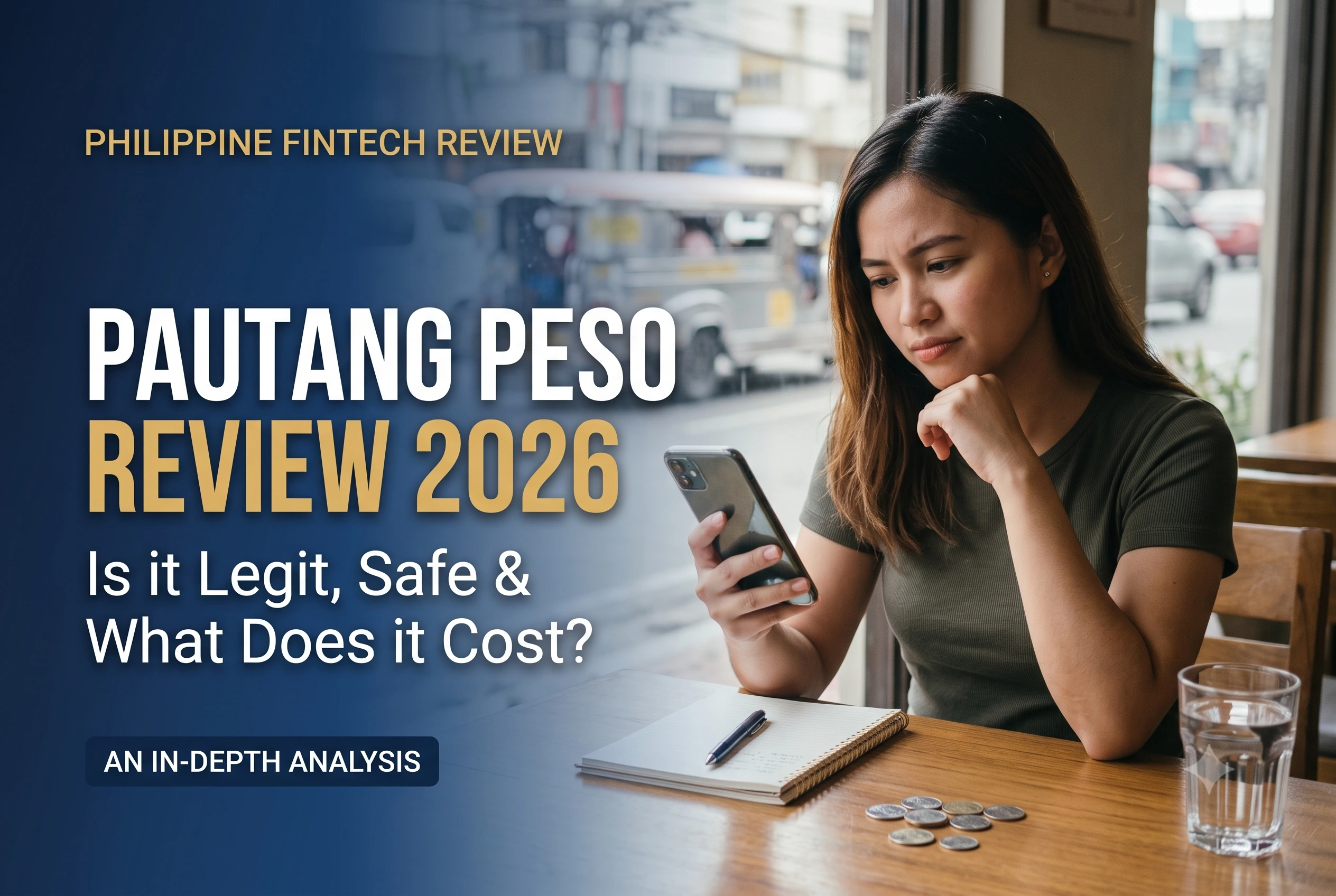
The demand for quick, accessible emergency credit has led many Filipino borrowers to rely on online lending applications. The Pautang Peso app frequently surfaces as a potential option for those seeking short-term cash without traditional banking requirements. However, many applicants accept online loan offers without fully understanding the difference between the advertised limit and the actual cash they will receive after aggressive upfront deductions. Furthermore, rising concerns over data privacy and debt collection practices have made borrowers increasingly cautious about the applications they install. This review investigates Pautang Peso’s legal operating status, examines its true cost structures, and reviews recent regulatory actions to help borrowers make an informed, safe financial decision.
Summary:
Pautang Peso is the consumer-facing brand legally operated by LHL Online Lending, Inc., a registered entity with the Philippine Securities and Exchange Commission (SEC). While the company holds a valid Certificate of Authority to operate, it was fined by the SEC in July 2025 for violating the Truth in Lending Act regarding disclosure failures. Borrowers should be aware that despite advertising up to ₱50,000, initial limits are usually much lower and subject to heavy upfront processing fees. The most significant risk involves a documented history of regulatory scrutiny over debt collection practices. Borrowers must calculate the exact net proceeds against total repayment before accepting any offer.
| Borrower question | Current finding | Why it matters |
| Legal Operator | LHL Online Lending, Inc. (SEC Reg No. CS201916699) | Confirms the app is run by a registered corporate entity subject to Philippine laws. |
| Regulatory Status | Authorized (CA No. 3119), but fined in 2025 for disclosure violations | Shows regulatory oversight exists, but past compliance issues warrant strict borrower caution. |
| Advertised Loan Range | ₱1,000 to ₱50,000 | First-time borrowers typically qualify only for the lowest initial tier. |
| Net Proceeds | Subject to high upfront processing fees (often 10% or more) | You will likely receive significantly less cash than the principal balance you must repay. |
| Borrower Complaints | Multiple Freedom of Information (FOI) complaints filed regarding harassment | Indicates a potential risk of aggressive communication if payments are delayed. |
Is Pautang Peso legitimate and properly authorized in the Philippines?
Yes. Pautang Peso is legally operated by LHL Online Lending, Inc., which holds SEC Registration No. CS201916699 and Certificate of Authority No. 3119. However, operating legally does not mean the platform is free from compliance issues or expensive fees.
Many borrowers assume that if an app is available for download, it is entirely safe to use. While Pautang Peso is not an underground or unregistered “colorum” operation, distinguishing the app brand from its legal operator is an important first step in risk assessment. The consumer-facing brand “Pautang Peso” and its sister platform “Pautang online” are registered digital properties under the corporate entity LHL Online Lending, Inc..
Because the company is formally registered, it remains subject to the regulations of the Securities and Exchange Commission (SEC), the Bangko Sentral ng Pilipinas (BSP), and the National Privacy Commission (NPC). If a borrower has a severe dispute, they know exactly which corporate entity to name in a formal complaint.
However, holding a license does not guarantee a flawless or entirely transparent borrower experience. In July 2025, the SEC ordered LHL Online Lending, Inc. to pay a fine of ₱129,000 for violating the Truth in Lending Act (TILA). TILA requires lenders to provide a clear disclosure statement showing the exact true cost of borrowing before a loan is executed. The SEC publicly warned the company that future violations could result in the cancellation of its primary registration and operating license.
How much can you actually borrow from Pautang Peso?
While the app advertises credit limits ranging from ₱1,000 to ₱50,000, new users should expect an initial limit closer to the minimum. The maximum amount is rarely granted to first-time applicants.
Online lending platforms utilize high marketing limits to attract users. Public marketing materials for Pautang Peso indicate that a borrower might access up to ₱50,000. However, our review of standard online lending underwriting structures shows that companies heavily restrict their initial exposure to unknown credit risks.
First-time borrowers without an established repayment history on the platform usually receive an offer on the absolute lowest end of the spectrum, frequently between ₱1,000 and ₱3,000. Accessing the higher advertised tiers requires the applicant to borrow, incur fees, and repay successfully across multiple loan cycles. This system can frustrate borrowers who need a specific larger amount to cover a medical emergency or utility bill, forcing them to look for secondary loans elsewhere.
What does a Pautang Peso loan really cost?
The true cost is heavily driven by upfront processing fees, not just the advertised interest rate. Deductions of 10% or more are frequently applied before the borrower receives the funds.
Lending apps often highlight a nominal interest rate, such as 1.5% per month or 18% per year. While this sounds manageable on paper, evaluating a digital micro-loan based solely on its nominal interest rate is a severe financial miscalculation. The actual financial burden stems from service charges, processing fees, and management deductions.
For example, if an applicant is approved for a ₱5,000 principal, the lender may apply an upfront processing fee. If the fee is 10%, the lender deducts ₱500 immediately. The borrower receives only ₱4,500 in their bank account, but they are contractually obligated to repay the full ₱5,000 plus any accrued daily interest by the due date.
Because the term of these micro-loans is often extremely short-sometimes as brief as 7 to 14 days, despite marketing claims of terms up to 365 days-the effective annualized interest rate (EIR) spikes dramatically. A ₱500 fee on a loan held for only a week equates to an exorbitant cost of capital. Borrowers must look strictly at the final disclosure statement to see the exact net proceeds compared to the total repayment amount.
How fast is Pautang Peso approval and disbursement?
The application process relies on automated underwriting, allowing for rapid evaluation. However, actual disbursement speed depends entirely on the borrower’s chosen bank or e-wallet clearing windows.
Like most fintech operators, Pautang Peso utilizes an entirely digital application flow. Applicants are required to provide a valid government-issued ID, submit a live selfie for biometric identity verification, and supply basic employment or income information.
When the automated underwriting system functions without issue, an approval decision can be rendered in a matter of hours. However, real-world friction frequently occurs during the verification stage. Issues that slow down approval include:
- Blurry ID photos or glare obscuring critical details.
- Name mismatches between the provided ID and the nominated disbursement account.
- Incomplete reference contact information.
If approved, the funds are routed to the borrower’s nominated e-wallet (such as GCash) or a traditional bank account. If the disbursement triggers late in the evening, on a weekend, or during a banking holiday, the actual settlement of funds may be delayed until the next standard clearing window.
What happens if you pay Pautang Peso late?
Late payments trigger immediate penalty fees calculated daily. Unpaid accounts also face aggressive collection efforts, a primary source of regulatory complaints against the operator.
When an account falls past due, the cost of the loan inflates rapidly. Pautang Peso applies late penalty charges immediately following the missed due date. Because these penalties are often calculated on a daily compounding basis, ignoring a debt will cause the total balance to become unmanageable within a matter of weeks.
Beyond financial penalties, borrowers face intense collection procedures. An analysis of public Freedom of Information (FOI) requests submitted to the SEC reveals a consistent pattern of borrower complaints regarding harassment, threatening text messages, and unauthorized contact linked to LHL Online Lending and similar operators.
In the Philippines, non-payment of a civil debt does not result in imprisonment. Furthermore, lenders and their third-party collection agencies are strictly prohibited from using abusive language, threatening physical harm, or contacting individuals in the borrower’s phonebook who were not explicitly named as guarantors (under SEC Memorandum Circular No. 18, Series of 2019). Borrowers experiencing unfair debt collection practices have the right to file formal complaints with the SEC.
How does the app handle your personal data?
The application requires device permissions to function, including access to camera data for identity verification. Borrowers must review the privacy policy to understand third-party data sharing.
To assess creditworthiness without demanding physical collateral, online lending platforms substitute traditional financial histories with alternative data extracted from the borrower’s mobile device.
The public application flow indicates that borrowers are required to grant the app permissions to access the camera (for selfie checks) and potentially local device network information. While recent Philippine regulations have clamped down heavily on apps scraping internal contact lists to use for unauthorized debt collection, the risk of data exposure remains a significant concern in the online lending sector. Borrowers should explicitly read the data privacy agreement to verify whether the operator reserves the right to share personal information with third-party marketers or external collection agencies.
What should you check before accepting a Pautang Peso loan?
Never accept the loan until you have reviewed the SEC-mandated Disclosure Statement, which reveals the exact net proceeds, total repayment, and specific due date.
Before finalizing any transaction with Pautang Peso, borrowers should run through a strict safety checklist:
- Verify the net disbursement: Check exactly how many pesos will land in your account. Subtract this from the amount you must repay to find your absolute borrowing cost.
- Check the due date: Ensure the repayment date aligns directly with your upcoming salary or expected cash inflow. A loan is a poor choice if it comes due before you get paid.
- Read the Disclosure Statement: The SEC’s 2025 fine against LHL Online Lending for Truth in Lending Act violations emphasizes exactly why borrowers must demand and review this document.
- Evaluate affordability: Do not borrow if repaying the loan will leave you with a deficit that forces you to borrow from another app immediately just to survive the week.
Conclusion
Pautang Peso, operated by LHL Online Lending, Inc., is a registered lending platform that offers short-term, uncollateralized credit to Filipino borrowers. Its legal status provides a layer of regulatory accountability not found in unregistered loan sharks. However, the true cost of borrowing is exceptionally high due to significant upfront processing fees, and the company’s recent regulatory fine for disclosure violations serves as a major warning sign.
Borrowers who need emergency cash must weigh the convenience of digital approval against the reality of receiving less money than they requested. If you choose to use this service, do so only if you have a clear, guaranteed source of income to clear the balance on the exact due date, thereby avoiding daily penalties and the severe risk of aggressive collection tactics.
References
- Securities and Exchange CommissionOrganization: Republic of the Philippines Securities and Exchange Commission
Resource: List of Financing and Lending Companies Registered with the SEC and their Online Lending Platforms
- Freedom of Information (FOI) PhilippinesOrganization: Government of the Philippines
Resource: Public FOI Requests directed to the SEC regarding Online Lending Complaints
- PhilstarOrganization: The Philippine Star
Resource: SEC fines 2 lending firms for violations
URL: https://www.philstar.com/business/2025/07/30/2461680/sec-fines-2-lending-firms-violations
- All The Best Loans PHOrganization: All The Best Loans
Resource: Pautang Peso Philippines – Reviews, Loan Info and Terms