Last Updated on 17/10/2026 by Nicole Alba
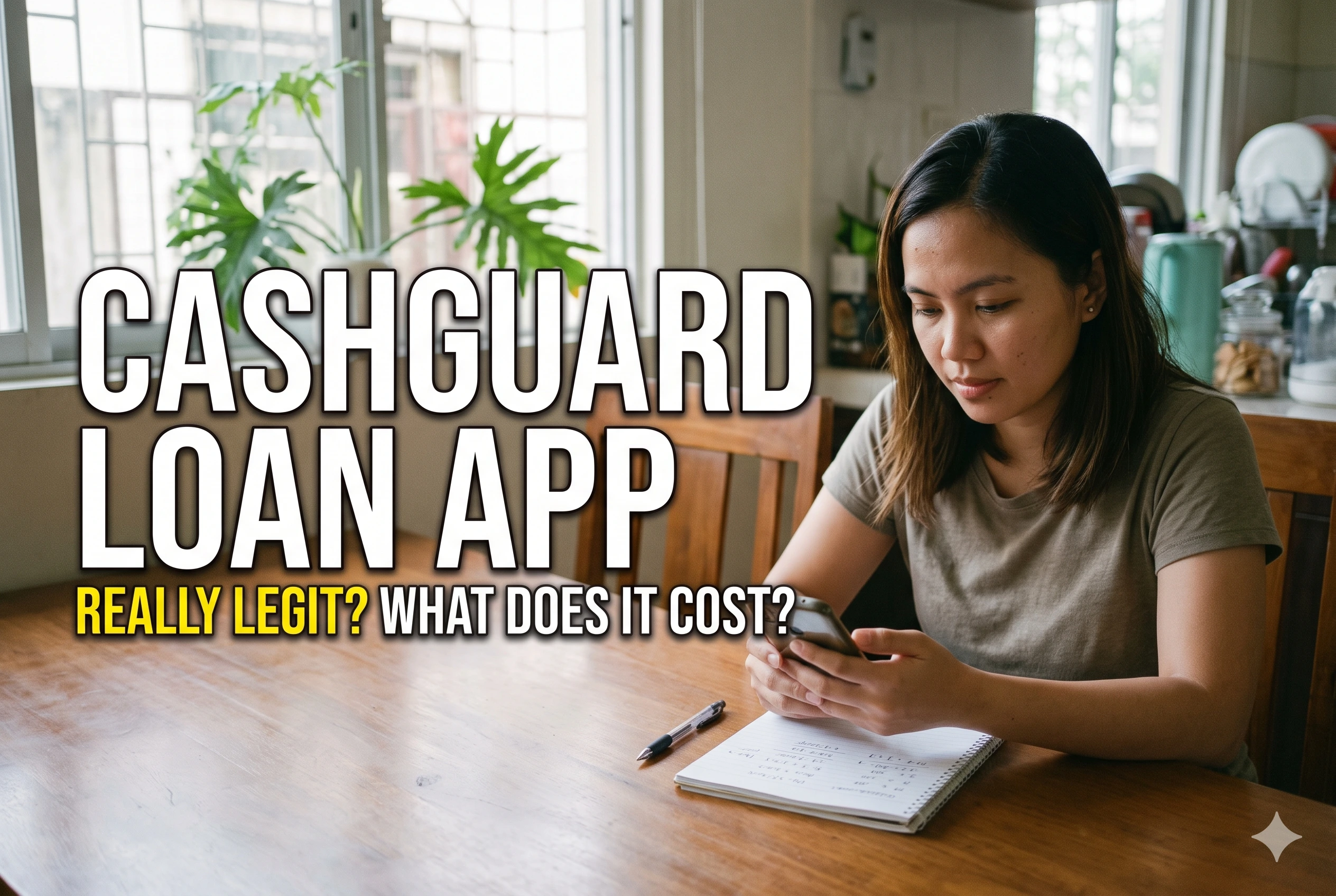
Many Filipinos seeking emergency credit encounter apps that promise rapid approval with minimal requirements. If you are considering the Cashguard loan app, the primary concern is usually not just how fast the money arrives, but whether the operator is legally authorized, what the actual peso cost will be, and how your personal contacts will be handled if a payment is delayed.
This review investigates the framework surrounding Cashguard, focusing on regulatory compliance, the difference between advertised rates and actual deductions, and the essential verifications every borrower must perform before accepting an offer.
Summary:
Our preliminary review of the Cashguard loan app highlights the critical need for independent verification of its legal status. Before applying, borrowers must confirm the exact legal entity operating Cashguard against the Philippine Securities and Exchange Commission (SEC) list of authorized lending or financing companies. While the app may advertise high loan limits and fast disbursement, borrowers frequently encounter significant upfront processing fees that reduce the net cash received, alongside short repayment tenors that increase default risk. Do not proceed without a clear, written disclosure statement detailing the exact peso amount due.
| Borrower question | Current finding | Why it matters |
| Legal Operator | Requires verification | You must know the exact registered corporate name, not just the “Cashguard” brand, to check its SEC standing. |
| Regulatory Status | Must be checked against current SEC/BSP lists | Unauthorized lenders often employ aggressive, illegal collection tactics and lack consumer protection mechanisms. |
| Net Proceeds | Often lower than approved principal | Upfront processing or service fees are frequently deducted before disbursement, meaning you receive less than you owe. |
| Data Privacy | High risk | Many apps request access to contacts and media. You must review the permissions Cashguard actually requires before installing. |
Is Cashguard legitimate and properly authorized in the Philippines?
The legitimacy of Cashguard depends entirely on whether its specific corporate operator holds a valid Certificate of Authority (CA) from the SEC to operate as a lending or financing company. A generic business registration is insufficient; explicit lending authorization is legally required.
Who legally operates Cashguard?
To determine if Cashguard is a legitimate operation, the consumer-facing brand name is not enough. You must locate the official corporate name of the developer or operator within the app’s terms and conditions or its official app store listing. Once identified, this exact corporate entity must be searched within the SEC’s published lists of registered lending and financing companies. If the operating entity is missing from these lists, or if its CA has been revoked or suspended, engaging with the app carries severe risks regarding data privacy and collection practices.
Is Cashguard itself the lender or only a platform?
It is vital to distinguish between a technology platform and the actual lending entity. Sometimes, the app you install acts merely as a broker or marketing front for a separate financing company. The loan agreement you sign will identify the actual creditor. If the app acts only as a lead generator, your data may be shared with third parties, and the terms of your loan will be dictated by the hidden partner, not necessarily the app developer.
How much can you actually borrow from Cashguard?
While Cashguard may advertise maximum loan limits of ₱10,000 or higher, first-time borrowers usually receive significantly lower approvals, often ranging from ₱1,000 to ₱3,000, until a repayment history is established.
What limits are advertised versus actual approvals?
Marketing materials for online lending applications frequently highlight the maximum possible credit limit to attract users. However, these limits are almost never granted to new applicants. Approval amounts are determined by the operator’s internal risk assessment. A first-time user should anticipate an initial offer well below the advertised maximum.
Why might a first-time borrower receive less?
Without a traditional credit history, online lenders rely on alternative data and initial loan performance to gauge risk. The first loan acts as a test. Only after the initial small principal is repaid on time, including all associated fees and interest, will the system potentially unlock higher borrowing tiers.
What does a Cashguard loan really cost?
The true cost of a Cashguard loan is rarely just the nominal interest rate. Borrowers must calculate the total peso cost by subtracting all upfront processing and service fees from the approved principal to understand the actual net cash received.
What interest and fees are typically charged?
Philippine regulations mandate that lenders provide a clear Disclosure Statement detailing all charges before the loan is consummated. When evaluating Cashguard, look beyond the stated monthly or daily interest rate. Pay close attention to “processing fees,” “service fees,” or “evaluation fees.” These are frequently deducted upfront. For example, if you are approved for ₱2,000 but a 30% service fee is deducted, you will only receive ₱1,400, but you are still obligated to repay the full ₱2,000 plus interest.
How do you calculate the effective cost?
To evaluate affordability, divide the total cost of borrowing (total amount to be repaid minus the net cash received) by the net cash received. If you receive ₱1,400 and must repay ₱2,200 after 14 days, the cost of borrowing that ₱1,400 is ₱800. This represents an extremely high effective interest rate, regardless of the nominal rate advertised.
How does Cashguard handle your personal data?
Like many digital lenders, Cashguard likely requires broad device permissions. Borrowers must review the privacy policy to ensure the app does not access contact lists or photo galleries for unauthorized debt collection purposes.
What data does the application collect?
The application process typically requires a government-issued ID, a selfie for facial recognition, and basic employment information. However, the technical permissions requested by the app upon installation are equally critical. You must check your device settings to see what Cashguard attempts to access.
Can the lender contact people in your phone?
The National Privacy Commission (NPC) strictly prohibits lending apps from harvesting a borrower’s contact list to harass third parties for unpaid debts. If the Cashguard app demands access to your phonebook or media files as a condition for the loan, this is a significant red flag indicating potential future privacy violations and illegal collection tactics.
What happens if you pay late?
Late payments will trigger penalty fees, accumulating daily interest, and collection efforts. If the operator is not SEC-authorized, these collection efforts may involve severe harassment and unauthorized contact with your network.
What charges may apply?
If you miss the due date, expect immediate late fees and penalty interest to be applied to the outstanding balance. These penalties are outlined in the loan agreement and can cause the total debt to inflate rapidly, making it increasingly difficult to settle.
What are the collection consequences?
Legitimate, SEC-registered companies are bound by rules against unfair collection practices. They may report delinquencies to the Credit Information Corporation (CIC), which will damage your ability to secure future credit from banks or other authorized lenders. If the operator is unauthorized, the primary risk is public shaming and harassment of the contacts stored in your device.
What should you check before accepting a Cashguard loan?
Before you click “accept” on any offer from Cashguard, complete this mandatory checklist:
- Verify the SEC Registration: Find the exact corporate name and confirm it holds a valid Certificate of Authority to operate as a lending or financing company on the SEC website.
- Demand the Disclosure Statement: Do not accept the loan without reviewing the official Disclosure Statement required by the Truth in Lending Act.
- Calculate the Net Proceeds: Subtract all upfront deductions from the principal. Ensure the actual cash you will receive is sufficient for your emergency.
- Check the Due Date: Confirm that the repayment date aligns with your expected salary or income arrival. Short tenors (e.g., 7 or 14 days) often lead to default.
- Review App Permissions: Deny any requests for access to your contacts, call logs, or photo galleries.
References
- Securities and Exchange Commission PhilippinesOrganization: SEC Philippines
Resource: List of Lending Companies
URL: https://www.sec.gov.ph/lending-companies-and-financing-companies-2/list-of-lending-companies-2/
- National Privacy CommissionOrganization: NPC
Resource: Issuances on Online Lending Applications
- Bangko Sentral ng PilipinasOrganization: BSP
Resource: Consumer Protection Framework