Last Updated on 17/10/2026 by Nicole Alba
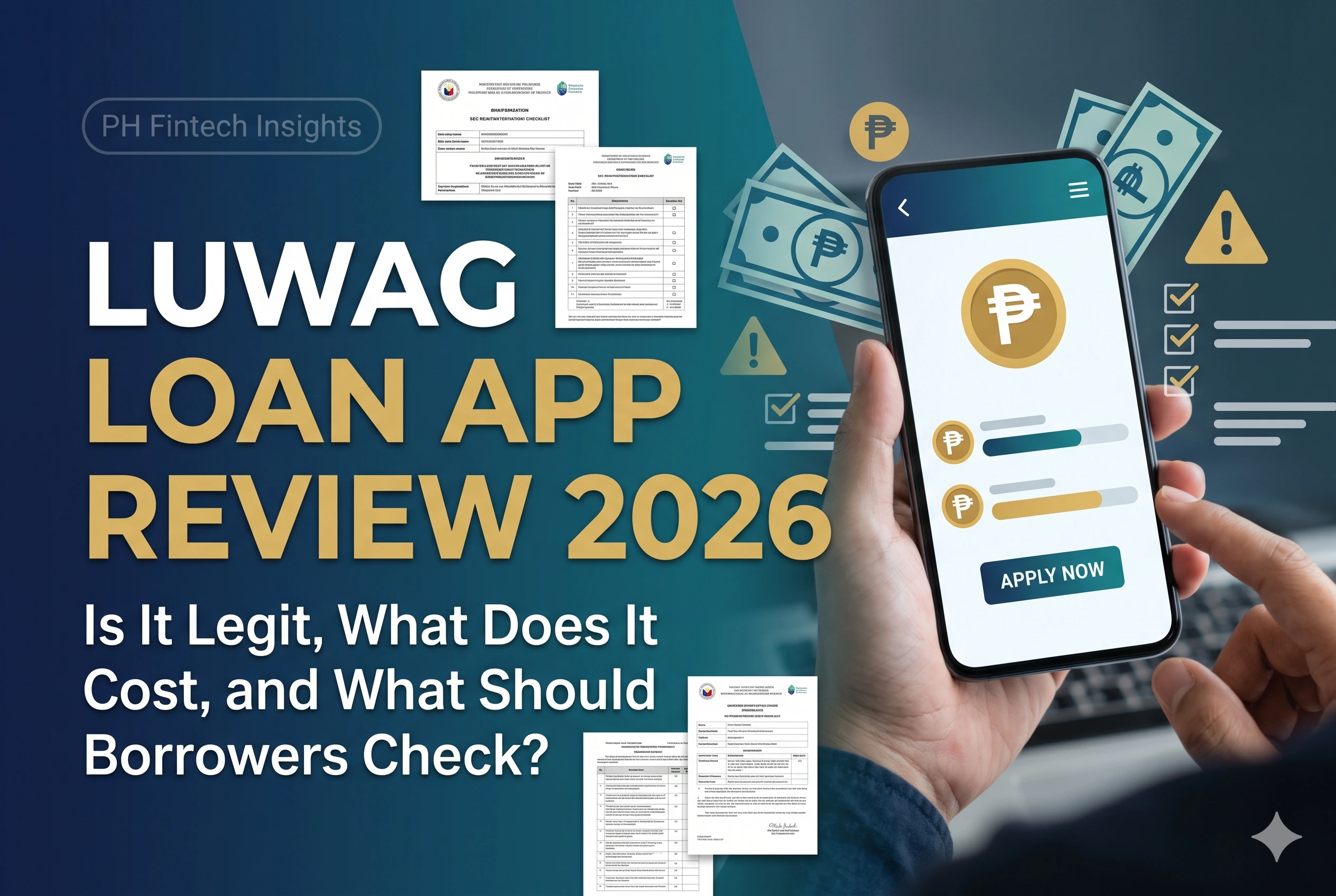
Borrowers in the Philippines often turn to online lending apps when facing a sudden cash shortage, looking for breathing room until the next payday. The Luwag loan app markets itself to this exact need, promising fast approval and minimal documentary requirements. However, the difference between the advertised loan limit and the cash actually sent to a borrower’s e-wallet can be substantial. For individuals already managing tight budgets, accepting a loan without identifying the actual corporate operator, understanding the upfront fee deductions, and reading the exact repayment schedule can lead to heavier financial strain rather than relief. This review examines the public disclosures, cost structures, and regulatory footprint of the Luwag platform to help borrowers evaluate the actual cost of this credit.
Summary:
The Luwag loan app targets Philippine borrowers seeking immediate cash relief through a purely digital application process. While marketing materials highlight high maximum limits and low interest rates, available evidence indicates that first-time borrowers typically receive small approvals with significant upfront service fees deducted before disbursement. This structure materially reduces the net cash received and increases the effective cost of borrowing. Publicly available documentation regarding the exact SEC-licensed financing entity operating the platform is fragmented, requiring users to carefully verify the legal lender identity within the digital contract before accepting any funds. Delinquency carries high penalty fees and exposes borrowers to aggressive collection procedures.
| Borrower question | Current finding | Why it matters |
| Legal Operator | The app’s public storefronts do not consistently highlight a prominent SEC Certificate of Authority (CA) number. | Operating without a visible CA number makes it difficult to verify if the lender is legally supervised by the SEC. |
| Loan Range | Advertises up to ₱50,000, but public user feedback indicates initial limits often range from ₱2,000 to ₱3,000. | Borrowers needing larger amounts for emergencies may find the approved limit insufficient. |
| Net Proceeds | High processing and service fees are typically deducted directly from the approved principal. | The borrower receives significantly less cash than the amount they are legally obligated to repay. |
| Repayment Term | While listings suggest terms up to 120 days, actual contracts frequently enforce 7-day or 14-day repayment cycles. | Short cycles create immediate repayment pressure, increasing the risk of default or the need to re-borrow. |
| Data Privacy | The app requests extensive device permissions, including contact list and location access. | Overreaching permissions can expose personal networks to third-party debt collection messages if payments are missed. |
Is Luwag legitimate and properly authorized in the Philippines?
The public app listings for Luwag lack consistent, prominent display of an SEC Certificate of Authority (CA) number. Borrowers must cross-check the exact corporate operator named in their specific loan agreement against the SEC’s official list of registered online lending platforms to confirm legal authorization.
Philippine financial regulations require all lending and financing companies to secure a Certificate of Authority (CA) to operate, independent of a standard corporate SEC registration. Furthermore, the specific consumer-facing app (the Online Lending Platform or OLP) must be officially registered under that authorized company.
When reviewing apps like Luwag, a major risk factor is the separation between the brand name and the legal entity. App store listings frequently change developer names, and a brand might act merely as a marketing front or broker for an entirely different financing company. If the developer page or the app’s internal terms of service do not explicitly list a registered company name and its corresponding CA number, borrowers face severe risks. Dealing with an unregistered entity means the borrower has limited recourse through the Securities and Exchange Commission or the Bangko Sentral ng Pilipinas if abusive debt collection or excessive fee charging occurs.
How much can you actually borrow from Luwag?
Luwag promotional materials suggest maximum loan limits reaching ₱50,000, but public borrower reports show that initial approvals generally sit between ₱2,000 and ₱3,000. Higher limits are strictly reserved for repeat users with flawless repayment records.
Online lending platforms utilize automated underwriting algorithms that heavily restrict initial credit exposure. For a first-time applicant providing only a basic government ID and a selfie, the risk of default is statistically high. Consequently, the lender caps the initial offer to a fraction of the advertised maximum.
Borrowers applying for a ₱15,000 medical emergency or tuition shortfall are likely to be disappointed when the system approves only ₱2,500. Attempting to bridge a large financial gap with multiple small, high-cost loans from different platforms frequently leads to a debt trap. Borrowers should verify the exact approved principal shown on the final confirmation screen, as it represents the legal debt obligation, regardless of the marketing claims that brought them to the app.
What does a Luwag loan really cost?
The true cost of a Luwag loan lies in the upfront service fees, not the advertised nominal interest rate. A ₱3,000 approved loan might incur a 25% to 30% processing deduction, leaving the borrower with only ₱2,100 to ₱2,250, while still owing the full ₱3,000 a week later.
Philippine lending apps frequently use a deduction-based fee structure. Instead of charging high interest over time, the platform deducts a “service fee,” “processing fee,” or “platform fee” before releasing the funds.
If a borrower accepts a ₱3,000 loan, the app might state an interest rate of 1% per month. However, a ₱900 service fee is subtracted immediately. The borrower receives ₱2,100 in their GCash or bank account. On the due date – often just 7 or 14 days later – the borrower must remit exactly ₱3,000.
This mechanism makes the effective interest rate astronomically high. Paying ₱900 for the privilege of holding ₱2,100 for seven days translates to a weekly cost of over 42%. Borrowers must ignore the advertised interest percentage and focus entirely on two numbers in the disclosure statement: the net cash they will receive today, and the total cash they must return on the due date.
How fast are the approval and disbursement processes?
Automated system reviews allow Luwag to issue approval decisions within minutes to a few hours. Following approval, disbursement to e-wallets like GCash or Maya is generally real-time, though traditional bank transfers may face clearing delays.
The primary appeal of the Luwag app is operational speed. The application requires no physical paperwork, no collateral, and no face-to-face interviews. Users upload a primary ID – such as a UMID, Passport, or National ID – and perform a biometric facial scan. The app’s algorithm cross-references this data against device analytics and external databases.
Friction in the process usually occurs at the disbursement stage. If the registered name on the Luwag app does not perfectly match the name on the receiving bank account or e-wallet, the transfer will fail. Additionally, while e-wallet crediting operates 24/7 via InstaPay, transferring funds to certain traditional banking institutions during weekends or public holidays may result in the funds floating until the next business day, negating the benefit of an emergency loan.
What happens if you pay your Luwag loan late?
Missing a Luwag payment triggers immediate late fees that accrue daily, rapidly inflating the balance. Prolonged delinquency results in aggressive SMS and phone follow-ups from third-party collection agencies.
Late payment structures on short-term digital loans are punitive. A standard contract may impose a one-time late penalty upon missing the deadline, followed by an additional percentage fee calculated for every subsequent day the account remains in arrears. A ₱3,000 debt can escalate to ₱4,500 or more within a few weeks of default.
Beyond financial penalties, borrowers face intensive collection procedures. While SEC Memorandum Circular No. 18, Series of 2019, strictly prohibits unfair debt collection practices – such as the use of threats, insults, or contacting individuals not named as guarantors – enforcement in the digital lending sector remains a challenge. Borrowers frequently report that third-party collection desks utilize persistent auto-dialers and send threatening text messages to pressure immediate settlement.
Unpaid legitimate debts are civil liabilities in the Philippines, meaning borrowers cannot be imprisoned merely for failing to pay. However, ignoring the debt damages credit records, particularly as the Credit Information Corporation (CIC) continues integrating digital lender data into its central registry.
How does Luwag handle your personal data?
The Luwag application requests access to sensitive device functions, including location services, camera, and sometimes contact lists. Granting these permissions allows the platform to harvest personal data for aggressive underwriting and collection purposes.
Data privacy remains one of the highest risks associated with unregistered or poorly regulated lending platforms. When a user installs the app, the system prompts them to accept its privacy policy and grant device permissions.
Historically, aggressive Philippine lending apps scraped users’ phonebooks, utilizing the contact list to shame delinquent borrowers by texting their friends, family, and coworkers. The National Privacy Commission (NPC) explicitly banned this practice through NPC Circular No. 20-01. However, less compliant apps still attempt to access contacts under the guise of “fraud prevention” or “identity verification.” Borrowers should immediately uninstall any app that refuses to function without access to their entire phone directory.
What are borrowers saying about the Luwag app?
Recent anecdotal reports on public app repositories reveal a sharp divide: positive reviews praise the fast disbursement speed, while negative reviews consistently warn of hidden upfront deductions and restrictive seven-day repayment terms.
App store ratings for financial products are notoriously manipulated, often heavily skewed by incentivized five-star ratings required before loan approval. Therefore, reading the written text of low-star reviews provides more accurate operational insight.
Recurring borrower complaints regarding Luwag center on the shock of the net proceeds. Users frequently express frustration that they applied for a specific amount to cover a bill, only to receive a sum too small to solve their problem, yet they are now trapped in a high-cost repayment cycle. Another recurring theme involves the payment posting system; borrowers note that remitting funds via certain offline payment centers causes a 24-hour delay, resulting in automated late fees even if the borrower paid on the due date.
What should you verify before accepting a Luwag loan?
Before confirming the loan, borrowers must demand the mandatory Disclosure Statement, verify the exact peso amount to be disbursed, and check the legal lender’s name against the SEC database.
Accepting a digital loan requires defensive reading. A borrower should complete the following checks before pressing the final acceptance button:
- Identify the Lender: Find the specific corporate name operating the loan. Search this exact name on the SEC’s registered OLP list.
- Review the Disclosure Statement: The Truth in Lending Act (Republic Act No. 3765) requires lenders to provide a clear breakdown of all charges. If the app hides the processing fees until after the loan is approved, do not proceed.
- Calculate the Gap: Subtract the cash you will receive from the cash you must repay. Decide if that specific peso cost is worth the short-term relief.
- Check the Calendar: Look at the exact due date. Ensure your expected salary or income source will actually arrive before that day to avoid daily penalty fees.
References
- Securities and Exchange Commission PhilippinesOrganization: Securities and Exchange Commission
Resource: List of Registered Online Lending Platforms
- Securities and Exchange Commission PhilippinesOrganization: Securities and Exchange Commission
Resource: SEC Memorandum Circular No. 18, Series of 2019 (Prohibition on Unfair Debt Collection Practices)
URL: https://www.sec.gov.ph/mc-2019/sec-mc-no-18-series-of-2019/
- National Privacy CommissionOrganization: National Privacy Commission
Resource: NPC Circular No. 20-01 (Guidelines on the Processing of Personal Data for Loan-Related Transactions)
- Official Gazette of the PhilippinesOrganization: Government of the Philippines
Resource: Republic Act No. 3765 (Truth in Lending Act)
URL: https://www.officialgazette.gov.ph/1963/06/22/republic-act-no-3765/