Last Updated on 09/11/2026 by Nicole Alba
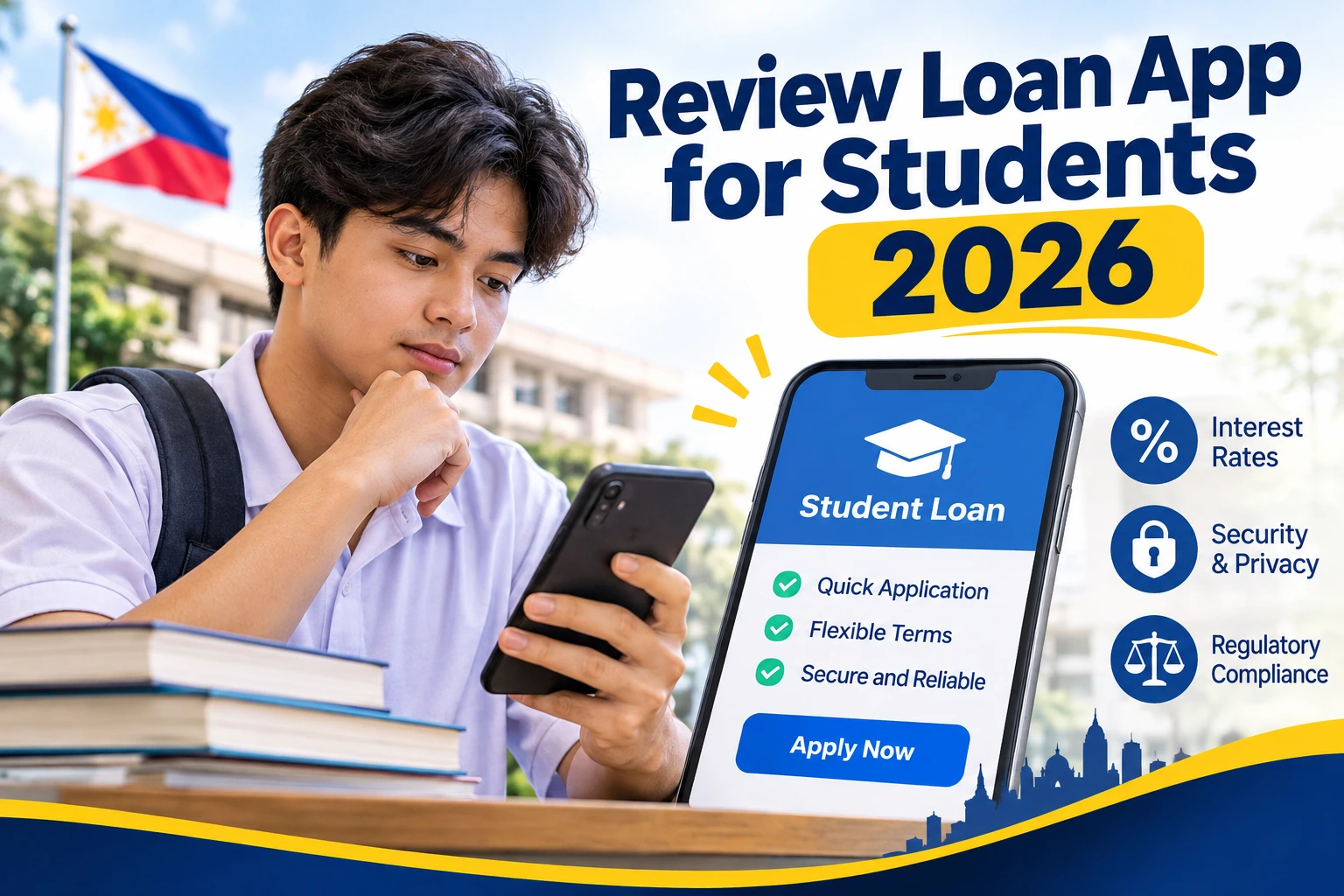
College students in the Philippines face a difficult financing gap. Tuition balances, school supplies, transportation, accommodation, internet access, and unexpected academic expenses can exceed what families can comfortably provide. Online loan applications appear to offer a quick solution, but many students have limited income, no established credit history, and little capacity to absorb expensive repayment obligations.
The central question is not simply which application approves students. It is whether the financing is legitimate, whether a student qualifies without regular employment, and whether repayment is realistic.
Summary
A dedicated student financing provider is generally more appropriate for education expenses than a short-term cash loan app. Bukas is one relevant Philippine education-financing provider to investigate, while SEC-recorded lending platforms may offer other forms of borrowing subject to individual eligibility. Students should distinguish tuition financing from unrestricted cash loans. A platform’s SEC registration does not guarantee approval, affordable pricing, or suitability for borrowers without income. The safest decision depends on the actual financing agreement, total repayment, school eligibility, and the availability of family or institutional assistance.
| Borrower question | Current finding | Why it matters |
|---|---|---|
| Is there a student loan app? | Yes. Bukas specializes in education financing. | More relevant than general-purpose cash loans. |
| Can unemployed students apply? | Bukas accepts income from the student, co-borrower, or both. | A regular salary in the student’s name is not always necessary. |
| Is Bukas SEC-registered? | Bukas Finance Corp. identifies itself as a registered financing company with SEC No. CS201901691. | The legal entity can be checked against SEC records. |
| What are its interest rates? | 1.90%-4.90% monthly, plus a 4.50%-10% one-time service fee. | Fees materially increase borrowing costs. |
| Can students receive unrestricted cash? | Bukas tuition financing is paid directly to the partner school. | It is designed for tuition, not everyday spending. |
| Are ordinary cash loan apps suitable? | Some are SEC-recorded, but student-specific approval is not established. | Registration does not mean a student qualifies. |
| Is borrowing without income safe? | Only when a reliable co-borrower or repayment source exists. | Debt does not disappear when a student cannot pay. |
1. Are There Legitimate Loan Apps for Students in the Philippines?
Bukas is a dedicated education-financing provider in the Philippines. Its tuition installment product can cover up to 100% of eligible tuition balances at participating schools, with repayment spread across monthly installments. General-purpose loan apps are a different category and should not automatically be treated as student loan providers.
Bukas: The education-focused option
Tuition Installment Plans (Student Loans) for FEU | Bukas
SEC-registered financing company
Official website: bukas.ph
Legal entity: Bukas Finance Corp.
Bukas focuses on helping students finance tuition through installment arrangements rather than providing unrestricted personal cash loans.
Its published product information includes:
- Tuition coverage of up to 100% of eligible tuition balances.
- Monthly repayment arrangements.
- Installment periods of 3, 6, 9, or 12 months, depending on the school and product.
- Direct payment to the educational institution.
- Application and assessment through its online platform.
The direct-to-school arrangement is an important distinction. Students should not expect the approved tuition amount to be deposited into their personal bank accounts for transportation, food, gadgets, or other expenses.
Bukas identifies its legal entity as Bukas Finance Corp., SEC Registration No. CS201901691, with Certificate of Authority No. 1199. Its company information also appears in the SEC’s recorded online lending platform list.
Other loan apps students may encounter
Some general-purpose lending applications operate under entities appearing in the SEC’s recorded online lending platform list.
| Loan platform | Identified legal entity | Primary distinction |
|---|---|---|
| Tala | Tala Financing Philippines Inc. | General-purpose digital lending |
| JuanHand | Wefund Lending Corp. | General-purpose online cash loans |
| Cashalo | Paloo Financing Inc. | Consumer financing |
| Bukas | Bukas Finance Corp. | Education and tuition financing |
The SEC list identifies the corresponding entities and recorded platforms. This is evidence of their regulatory status as financing or lending businesses and recorded online lending platforms, not proof that every applicant will qualify or that every product is appropriate for students.
Editorial assessment: Bukas is the more directly relevant option for tuition. The other applications should be evaluated as ordinary borrowing products, not advertised as specialized student financing.
2. Bukas Legitimacy Review: SEC Registration and Regulatory Status
Bukas Finance Corp. identifies itself as a financing company with SEC Registration No. CS201901691 and Certificate of Authority No. 1199. Its platform is also listed in the SEC’s recorded online lending platform database. It is not a digital bank, and SEC registration should not be confused with BSP bank authorization.
What the SEC record establishes
The distinction between company registration and authority to operate matters.
A company can be incorporated with the SEC without necessarily being authorized to conduct lending or financing operations. A Certificate of Authority is a separate regulatory requirement for financing and lending companies.
Bukas publishes both its registration number and Certificate of Authority number. Its online platform is also included in the SEC’s recorded platform list.
This provides a stronger verification basis than an app that only displays a corporate logo or claims to be licensed without supplying an identifiable legal entity.
Is Bukas regulated by the BSP?
Bukas operates as a financing company under SEC supervision. It should not be described as a BSP-licensed digital bank.
These are different regulatory categories:
| Institution type | Main regulator | Typical activity |
|---|---|---|
| Banks and digital banks | BSP | Deposits, banking and authorized credit products |
| Financing companies | SEC | Consumer and other financing |
| Lending companies | SEC | Lending activities |
| Online lending platforms | Relevant underlying lender’s regulator | Digital loan application and servicing |
Students should verify the actual legal entity behind any lending application rather than assuming that all financial applications are banks.
SEC and BSP verification
Useful official resources include:
- SEC recorded online lending platforms
- SEC lending and financing company information
- BSP official website
The SEC also publishes advisories concerning unauthorized online lending platforms. An application missing from the recorded platform list deserves additional scrutiny.
3. Bukas Interest Rates, Processing Fees, and Real Borrowing Costs
Bukas publishes a standard monthly interest range of 1.90%-4.90% and a one-time service fee of 4.50%-10% of the requested amount. Actual rates depend on the school and application assessment. The service fee is incorporated into the installments, so the advertised principal is not the complete cost of financing.
Published pricing structure
| Cost component | Published range |
|---|---|
| Monthly interest rate | 1.90%-4.90% |
| One-time service fee | 4.50%-10% |
| Available installment periods | 3, 6, 9 or 12 months |
| Advance repayment | Available without additional cost, according to published terms |
These figures come from Bukas’s published rates and help-center documentation. The final approved offer may differ.
Example: Financing PHP 20,000 in tuition
Assume a student needs PHP 20,000 to settle an eligible tuition balance.
The one-time service fee calculation is:
Service Fee = Requested Amount × Service Fee Percentage
At the lowest published fee:
PHP 20,000 × 4.50% = PHP 900
At the highest published fee:
PHP 20,000 × 10% = PHP 2,000
| Item | Lowest fee scenario | Highest fee scenario |
|---|---|---|
| Tuition financing | ₱20,000 | ₱20,000 |
| One-time service fee | ₱900 | ₱2,000 |
| Principal plus service fee | ₱20,900 | ₱22,000 |
The PHP 20,900-PHP 22,000 figure is not the final repayment amount. Monthly interest must also be accounted for.
For illustration, if the full PHP 20,000 remains outstanding for the first interest period:
First-Month Interest = Outstanding Principal × Monthly Interest Rate
At 1.90%:
PHP 20,000 × 1.90% = PHP 380
At 4.90%:
PHP 20,000 × 4.90% = PHP 980
This is an illustration of the published rate applied to the initial principal, not a quoted installment or a complete amortization schedule. Actual interest depends on the contractual balance calculation and repayment schedule.
Why the final repayment amount matters
A student should request a personalized disclosure statement showing:
- Original tuition amount financed.
- Exact service or origination fee.
- Monthly interest rate.
- Interest calculation method.
- Total repayment obligation.
- Number and amount of installments.
- Due dates.
- Late-payment charges.
- Early repayment conditions.
The public pricing information does not establish one universal repayment total for every student. The public documentation also does not provide one universal late-payment fee applicable to all applications.
Do not calculate affordability using the monthly installment alone. A smaller installment over a longer period can still produce a higher total borrowing cost.
Are Bukas fees hidden?
The service fee is disclosed in Bukas’s public pricing information. It should therefore not automatically be characterized as a hidden charge.
However, borrowers must distinguish between a disclosed fee and a low-cost loan. A transparent fee can still make financing expensive.
Bukas states that its service fee is added to the amount repaid through installments rather than requiring an upfront payment. The borrower should confirm how this is reflected in the individual disclosure statement.
4. Student Eligibility: Can Unemployed College Students Apply?
Bukas requires the student, co-borrower, and additional contact person to meet its published eligibility conditions. A verifiable income source must exist through the applicant, co-borrower, or a combination of both. Students without employment may therefore have a potential application route, but approval is not automatic.
Published eligibility requirements
According to Bukas’s help center, applicants must satisfy the following conditions:
| Requirement | Published condition |
|---|---|
| Citizenship | Filipino citizen |
| Minimum age | 18 years old |
| Enrollment | Currently enrolled at a Bukas partner school |
| Income | Verifiable income from applicant, co-borrower, or both |
| Contact details | Active mobile number |
| Valid email address |
The company also requires a co-borrower and an additional contact person under its application process. Its published guidance should be consulted for the specific documentation required from each participant.
Can a student without a job qualify?
Potentially, yes.
Consider three different applicant situations.
Scenario A: Full-time student with no personal income
The student may apply with a qualifying co-borrower who has a verifiable income source. The lender still evaluates the submitted application.
Scenario B: Student with part-time employment
A student with verifiable part-time earnings may provide income documentation. The amount and stability of income remain relevant to the assessment.
Scenario C: Student supported by parents
A parent may potentially participate as a co-borrower, subject to the lender’s eligibility requirements and assessment.
A co-borrower is not merely an emergency contact. The person may assume contractual responsibility for the loan.
What documents should students prepare?
Applicants should consult Bukas’s official documentation checklist. Depending on the application, relevant documents may include:
- Valid government-issued identification.
- School assessment or tuition statement.
- Proof of income.
- Proof of residence.
- Active contact information.
- Required co-borrower documentation.
Never submit false employment records or fabricated income information to improve approval chances.
Which schools are supported?
Bukas maintains a partner-school list that includes universities, colleges, and educational institutions.
Examples include:
- Ateneo de Manila University.
- De La Salle University.
- University of the East.
- Far Eastern University.
- Mapúa University.
- Adamson University.
- Miriam College.
- Saint Louis University.
- PHINMA-affiliated institutions.
This is not an exhaustive list. Eligibility depends on the specific institution and applicable financing arrangement. Students should confirm their exact campus and program before applying.
5. Application Process and Approval Expectations
Bukas publishes an application process involving account creation, school and tuition information, document submission, assessment, and confirmation of the approved financing terms. Its published guidance indicates a processing period of approximately 3-5 business days. Approval remains conditional on the lender’s assessment.
How to apply
- Create an account: Visit the official Bukas platform at https://app.bukas.ph/.
- Complete your profile: Submit the requested personal and contact information.
- Enter school details: Identify the partner institution and provide the relevant tuition assessment.
- Submit supporting documents: Provide the required student and co-borrower information.
- Wait for assessment: Bukas indicates a processing period of approximately 3-5 business days.
- Review the offer: Check the interest rate, service fee, installment period, and total repayment.
- Confirm the agreement: Proceed only after understanding the disclosure statement and contractual obligations.
According to Bukas, approved tuition financing is disbursed directly to the school, generally within 1-2 working days after the required confirmation. Its published information also states that the first monthly installment is due 30 days after disbursement. Actual processing and payment arrangements should be confirmed with the institution and lender.
Source: Bukas application process and requirements.
Does Bukas guarantee approval?
No.
An eligible student can still receive a declined application. Meeting the minimum requirements does not mean the lender must approve the requested amount.
The assessment may consider:
- Verifiable income.
- Co-borrower financial capacity.
- Submitted identification and documents.
- Existing financial obligations.
- School eligibility.
- Information supplied during the application.
Students should avoid relying on an unapproved loan to meet an imminent enrollment deadline.
6. Privacy, Personal Information, and Debt Collection Risks
Philippine lending companies must follow applicable SEC collection rules and National Privacy Commission requirements. Borrowers’ contact lists cannot be indiscriminately harvested for debt collection or harassment. A character reference is different from a guarantor, who must expressly consent to assume financial responsibility.
What personal information should students protect?
A loan application may request personal information to verify identity, assess eligibility, and process the financing agreement.
Students should pay particular attention to permissions involving:
- Phone contacts.
- Social media accounts.
- Photo galleries.
- Camera access.
- Location information.
- Personal identification documents.
An application should explain why it needs particular information and how it will be used.
Under National Privacy Commission Circular No. 20-01 and its amendments, unrestricted processing of contact lists is prohibited. Limited contact-list processing may be allowed for legitimate purposes, including selecting character references or guarantors, subject to applicable requirements.
A lender cannot simply treat every person saved in a student’s phone as someone it may contact for debt collection.
Character reference versus guarantor
This distinction is particularly important for students.
| Person | Main role | Financial responsibility |
|---|---|---|
| Character reference | Provides information for verification | Does not automatically become liable for the loan |
| Co-borrower | Participates in the borrowing agreement | May be contractually responsible for repayment |
| Guarantor | Agrees to answer for the borrower’s obligation under applicable terms | Has financial responsibility according to the guarantee |
A student should never provide someone’s information as a guarantor without that person’s informed and express consent.
Can online lenders threaten or embarrass borrowers?
No lender should use unlawful threats, public shaming, intimidation, or abusive collection methods.
SEC Memorandum Circular No. 18, Series of 2019, prohibits unfair debt collection practices by financing and lending companies.
Examples of prohibited conduct include:
- Threats of violence.
- Threats to damage someone’s reputation or property.
- False representations about legal action.
- Disclosure of borrower information to unrelated third parties.
- Harassment of people who are not responsible for the debt.
A legitimate outstanding obligation does not give a lender unrestricted authority to intimidate the borrower or their family.
Securities and Exchange Commission+2
What should students do if a lender harasses them?
Preserve evidence rather than responding emotionally.
Recommended steps:
- Save text messages, emails, screenshots, and call records.
- Record the name of the lending company and its online platform.
- Keep copies of the loan agreement and disclosure statement.
- Send a written complaint to the lender.
- Escalate unresolved financing-company or lending-company complaints through the SEC’s official complaint channels.
- Report inappropriate personal-data processing to the National Privacy Commission.
The SEC identifies its Financial and Lending Company Division as the relevant office for lending complaints. Its published complaint guidance directs complainants to the SEC iMessage Portal.
Official complaint resources:
- SEC: https://imessage.sec.gov.ph/
- SEC complaint information: https://www.sec.gov.ph/lending-companies-and-financing-companies/complaints/
- National Privacy Commission: https://privacy.gov.ph/
For BSP-supervised financial institutions, unresolved complaints can be escalated through the BSP Consumer Protection and Market Conduct Office. This distinction matters because Bukas is an SEC-supervised financing company, not a BSP-supervised bank.
7. Bukas Pros and Cons: Is It Suitable for Students?
Bukas has a clear education-financing purpose, published pricing ranges, and direct-to-school disbursement. Its main limitations are the partner-school requirement, income verification, co-borrower requirements, and potentially significant monthly interest and service fees. It is not a universal cash-loan solution.
Advantages
1. Education-specific financing: Its product is designed for tuition payments rather than general-purpose personal borrowing.
2. Potentially full tuition coverage: Eligible applicants can apply for up to 100% of their tuition balance.
3. Flexible repayment periods: Published options range from 3 to 12 monthly installments, depending on the school and plan.
4. Transparent published pricing: The company discloses its standard interest and service-fee ranges.
5. Direct school payment: Tuition financing is sent to the educational institution instead of being treated as unrestricted cash.
6. Potential access for unemployed students: Income may be verified through a co-borrower rather than relying exclusively on the student’s earnings.
Disadvantages
1. Limited school availability: Students attending institutions outside its partner network may not qualify.
2. Relatively high potential financing costs: Monthly interest of up to 4.90%, combined with a service fee of up to 10%, requires careful evaluation.
3. Co-borrower requirement: Students may need another person to participate in the financing arrangement.
4. No unrestricted cash payout: Its tuition installment product does not address every financial need.
5. Approval is conditional: Eligibility does not guarantee that the requested amount will be approved.
6. Personalized pricing: Students cannot assume that the lowest advertised interest rate will apply to their application.
Overall product assessment
| Evaluation category | Assessment |
|---|---|
| Education financing suitability | Strong |
| Regulatory transparency | Good |
| Published fee transparency | Good |
| Access for unemployed students | Conditional |
| Unrestricted cash availability | Not suitable |
| Affordability | Depends on approved pricing |
| School coverage | Limited to participating institutions |
These are editorial assessments of the published product features, not independent laboratory testing, a customer satisfaction survey, or a guarantee of individual outcomes.
8. Alternatives to Student Loan Apps
Students should compare non-debt education assistance before taking a commercial loan. Government scholarships, school financial aid, tuition installment arrangements, and family-supported payment plans can reduce borrowing requirements without introducing the same commercial interest obligations.
Government scholarships and education assistance
File:Commission on Higher Education (CHEd).svg – Wikimedia Commons
Commission on Higher Education (CHED)
Scholarship and student financial assistance programs may be available depending on the program, qualifications, and funding.
Official CHED website
Department of Social Welfare and Development (DSWD) Philippines – Assistance.PH
Department of Social Welfare and Development (DSWD)
Eligible families may investigate available educational assistance and applicable social welfare programs.
Official DSWD website
Online Portal for HEIs ver 0.01
Unified Student Financial Assistance System for Tertiary Education (UniFAST)
Students can investigate applicable government-funded tertiary education assistance, including programs administered under the Universal Access to Quality Tertiary Education framework.
Official UniFAST website
Eligibility, available funding, participating institutions, and application conditions differ by program. Students should confirm the current requirements directly with the relevant government agency.
School-based financial assistance
Contact the university’s registrar, accounting office, or student affairs department.
Ask about:
- Tuition installment arrangements.
- Scholarship opportunities.
- Financial assistance for economically disadvantaged students.
- Emergency student assistance.
- Deferred tuition payment.
- Academic merit grants.
A school-based installment arrangement may be more affordable than a commercial loan, particularly when it does not charge interest or substantial administrative fees.
Family-supported financing
A documented family repayment arrangement may be preferable to a high-cost cash loan when family members can comfortably provide the funds.
The agreement should establish the amount, repayment expectations, and responsible parties. This can prevent misunderstandings and reduce pressure on the student’s monthly budget.
9. Common Questions About Student Loan Apps in the Philippines
Can a student get a loan without a job?
Yes, potentially. Bukas accepts applications where verifiable income comes from the student, a co-borrower, or both. The student must still meet the other eligibility requirements.
Which loan app is specifically designed for students?
Bukas is an identifiable Philippine education-financing provider. Its tuition installment product is designed for students attending participating institutions.
Can senior high school students apply?
Bukas’s published minimum age requirement is 18. The student must also meet its enrollment and other eligibility conditions. Being a senior high school student does not automatically establish eligibility.
Can students borrow money for gadgets and laptops?
Bukas’s tuition financing product is designed for tuition payments. It should not be assumed to cover laptops, smartphones, or unrestricted educational expenses.
Students needing a laptop should first investigate school assistance, scholarship support, installment purchases, or other financing with clearly disclosed costs.
Does SEC registration guarantee a safe loan?
No. SEC registration and a Certificate of Authority establish important regulatory credentials, but they do not guarantee affordable rates, approval, good service, or the absence of disputes.
Borrowers must still examine the individual agreement and verify the specific platform.
What happens if a student cannot repay?
The contractual obligation remains enforceable according to the applicable agreement and law. A co-borrower may also face financial responsibility if they signed the agreement in that capacity.
Students should contact the lender promptly if they anticipate repayment difficulties and request any available repayment arrangements in writing.
Can a student use a loan app without a co-borrower?
This depends on the lender’s eligibility requirements. Bukas’s published application guidance requires a co-borrower and an additional contact person. Other lenders may have different policies.
Are student loan apps available through Google Play or the Apple App Store?
Some digital lenders distribute mobile applications through official app stores, while others provide browser-based application platforms. Students should verify the developer and legal entity before downloading.
Do not rely on an application simply because it appears in an app store. App-store availability is not proof of SEC authorization.
Are student loans interest-free in the Philippines?
Some scholarships, grants, and school-based financial assistance programs may not require commercial interest payments. Commercial student financing products generally have their own pricing and contractual charges.
Bukas’s published student financing rates are not interest-free.
10. Final Verdict: Should Students Use a Loan App in 2026?
A student loan should solve a genuine education-financing problem without creating a repayment burden that threatens the student’s ability to finish school.
The practical decision should follow three tests.
Test 1: Is the expense essential?
Tuition balances and mandatory academic fees are more defensible borrowing purposes than discretionary purchases. Borrowing for entertainment, lifestyle expenses, or unnecessary gadgets can create long-term financial pressure.
Test 2: Is there a dependable repayment source?
Students should identify who will actually make each installment. A parent or co-borrower should understand their contractual responsibilities before signing.
Do not base repayment plans on an uncertain future job, expected scholarship, or money that has not yet been received.
Test 3: Is the total financing cost affordable?
Compare the total repayment obligation against the amount the school receives. Include the service fee, interest, and any applicable charges.
If the monthly payment requires sacrificing food, transportation, essential school materials, or other household necessities, the loan is not affordable.
Final recommendation
Bukas is a relevant option for students who need tuition financing at participating Philippine schools and can provide the required income verification through themselves or a co-borrower.
However, its published interest and service-fee ranges mean that students should not assume education-specific financing is automatically inexpensive.
For students who cannot identify a dependable repayment source, scholarships, government assistance, school installment arrangements, and family support should be investigated first.
The best student loan is not necessarily the one with the easiest application or fastest approval. It is the financing arrangement that allows a student to continue studying without creating an unsustainable financial obligation.
References
The following official sources provide the regulatory, product, and consumer-protection information used in this review.
1. Bukas Finance Corp. – Official Product and Company Information
- Official website: https://bukas.ph/
- Student loan interest rates: https://bukas.ph/help-center/how-much-interest-do-i-have-pay/
- Interest rate explanation: https://bukas.ph/help-center/different-interest-rates/
- Partner schools: https://bukas.ph/help-center/who-are-your-partner-schools/
- Borrower eligibility: https://bukas.ph/help-center/what-are-requirements-become-bukas-borrower/
- Application process: https://bukas.ph/how-it-works/process-and-requirements/
- Terms and rates: https://bukas.ph/how-it-works/rate-terms/
2. Securities and Exchange Commission (SEC) Philippines
- Recorded online lending platforms: https://www.sec.gov.ph/registered-companies-and-partnerships/list-of-recorded-online-lending-platforms/
- SEC Memorandum Circular No. 18, Series of 2019 – Unfair debt collection practices: https://www.sec.gov.ph/mc-2019/mc-no-18-s-2019/
- SEC Memorandum Circular No. 3, Series of 2022 – Interest rate ceilings: https://www.sec.gov.ph/mc-financing-lending-companies/mc-no-03-s-2022/
- SEC lending and financing company complaints: https://www.sec.gov.ph/lending-companies-and-financing-companies/complaints/
- SEC iMessage Portal: https://imessage.sec.gov.ph/
3. Bangko Sentral ng Pilipinas (BSP)
- Official website: https://www.bsp.gov.ph/
- Consumer protection and financial education: https://www.bsp.gov.ph/Pages/InclusiveFinance/PYMContacts.aspx
- Fraud and scam prevention: https://www.bsp.gov.ph/Media_and_Research/Primers%20Faqs/Protect_yourself_from_Fraud_and_Scam.pdf
4. National Privacy Commission (NPC)
- Loan-related personal data protection: https://privacy.gov.ph/wp-content/uploads/2022/02/NPC-Circular-No.-20-01.pdf
- Amendments to loan-related data processing rules: https://privacy.gov.ph/npc-amends-circular-on-the-processing-of-personal-data-for-loan-related-transactions/
- Online lending app privacy guidance: https://privacy.gov.ph/online-lenders-barred-from-harvesting-borrowers-phone-and-social-media-contact-list-says-privacy-commission/
5. Government Education Assistance
- Commission on Higher Education: https://ched.gov.ph/
- Unified Student Financial Assistance System for Tertiary Education: https://unifast.gov.ph/
- Department of Social Welfare and Development: https://www.dswd.gov.ph/
Research and editorial disclaimer: This article reviews publicly available product information and regulatory records. Interest rates, fees, eligibility, and product availability may change. The review does not claim to have conducted a live loan application, independently tested customer service, or verified individual borrower outcomes. Students should obtain and examine the latest contractual disclosure statement before accepting financing.