
Last Updated on 10/09/2026 by Nicole Alba
A ₱250 monthly card fee may not sound painful at first. But once you realize that means ₱3,000 for a full year after the applicable first-year period, the real question changes: does the BPI Omni Credit Card give an online shopper enough security, rewards, and convenience to justify keeping it?
That question matters even more if you already have a BPI card, were migrated from the old eCredit Card, or received an invitation from BPI and are wondering whether accepting another credit line is financially sensible.
If cash flow is already tight, do not treat a credit card as replacement income. Paying only the minimum amount keeps an account from immediately falling into late-payment territory, but it can still trigger finance charges. Philippine law also protects consumers from imprisonment merely for debt; ordinary unpaid credit-card debt is not, by itself, grounds for imprisonment. Contractual obligations, lawful collection, and possible civil action can still continue.
| Question | BPI Omni Credit Card 2026 |
|---|---|
| Best suited for | Frequent Philippine online shoppers who value fraud and purchase protection |
| Rewards | 3 BPI Points per ₱50 online spend |
| Principal membership fee | ₱250/month, listed by BPI after the applicable first-year period |
| Standard finance charge | 3% nominal monthly rate |
| Virtual credit card | Yes |
| Google Pay | BPI currently advertises support |
| Online Fraud Protect | Up to ₱25,000, subject to policy conditions |
| Fraud-protection activation | Requires a qualifying ₱10,000 online transaction |
| E-commerce protection | Up to US$200 per occurrence and annual aggregate, subject to exclusions |
| Cash advance | Not yet available for Omni under BPI’s July 2026 fee schedule |
| Installments | Not yet available for Omni under the same schedule |
| Supplementary card | BPI’s Omni page still describes supplementary issuance as unavailable at launch |
| Public application status | Current BPI page still says select BPI depositors only |
| Main concern | ₱3,000 yearly membership cost once ₱250 monthly billing applies |
| Regulator | Bangko Sentral ng Pilipinas, not the SEC, for BPI credit-card concerns |
Is the BPI Omni Credit Card actually open to everyone in the Philippines in 2026?
No – not according to BPI’s live product page checked on September 10, 2026. BPI still describes Omni as available exclusively to selected BPI depositors and says invited customers are contacted through official email and SMS.
There is a noticeable timing problem in BPI’s own published information. The live Omni page says public availability was expected “by Q2 2026,” yet the same page currently continues to describe the card as invitation-only.
For a prospective applicant, that distinction is more important than any rumored income requirement.
BPI does not currently publish an Omni-specific minimum annual income threshold on the product page. Instead, it states that issuance remains subject to its normal credit-card evaluation and approval process. If you did not receive an official invitation, do not assume a Facebook agent, Telegram contact, or unofficial “credit card processor” can bypass that process.
Under Republic Act No. 10870, Philippine credit-card issuers are expected to perform KYC and exercise proper diligence in checking an applicant’s credit standing and financial capacity.
That means having money in a BPI deposit account does not create an automatic right to approval.

Why might a BPI depositor receive an Omni invitation while another depositor does not?
BPI does not publicly disclose the exact invitation algorithm. A bank may legally evaluate credit standing and repayment capacity, but consumers should not assume that maintaining a particular deposit balance guarantees an invitation.
Bank underwriting rarely depends on a single number.
For an existing banking customer, the issuer may already possess information needed for lawful customer due diligence and risk assessment. That can make a pre-selected offer operationally easier than evaluating a completely new-to-bank applicant.
What should not be claimed without evidence is that BPI requires a particular deposit balance, payroll amount, transaction frequency, or credit score for Omni. BPI has not published such an Omni-specific formula on the page reviewed.
This is where many card articles become misleading: they turn probable bank underwriting practices into fake approval rules.
What does the BPI Omni Credit Card actually give online shoppers?
Omni combines online rewards with a virtual-card experience and two distinct protection layers: cyber-fraud insurance and e-commerce purchase protection. Its strongest use case is repeated online purchasing rather than cash advances or installment-heavy spending.
The headline feature is straightforward: BPI advertises 3 BPI Points for every ₱50 spent online.
That is noticeably more aggressive for online transactions than the former eCredit Card’s standard earning structure of one point for every ₱35.
The card also provides a virtual credit-card view through BPI’s digital environment. For someone who pays for subscriptions, airline tickets, food delivery, marketplace orders, software, or other web-based transactions every month, separating an online-oriented card from everyday spending can make transaction monitoring easier.
It should not be confused with a prepaid card. It remains revolving credit.
Are three BPI Points for every ₱50 of online spend automatically a great return?
Not necessarily. A high points-earning rate sounds attractive, but points only become valuable when you actually redeem them for something useful, and reward conversion values can change.
A shopper spending ₱10,000 online would generate:
₱10,000 ÷ ₱50 × 3 = 600 BPI Points
At ₱30,000 of qualified online expenditure, that becomes 1,800 points.
The mistake is looking only at points generated and ignoring the cost of holding the card.
Once the ₱250 monthly membership fee applies, you are paying as much as ₱3,000 over 12 months before considering finance charges, foreign-transaction charges, or late-payment costs.
So ask a tougher question:
Would you still choose Omni if the rewards points disappeared?
If the answer is yes because you value its online-fraud and purchase-protection package, the fee has a stronger justification. If your only reason is “3x points,” compare the cash value of your actual redemptions against the card fee before renewing it.
How much can the BPI Omni Credit Card really cost you?
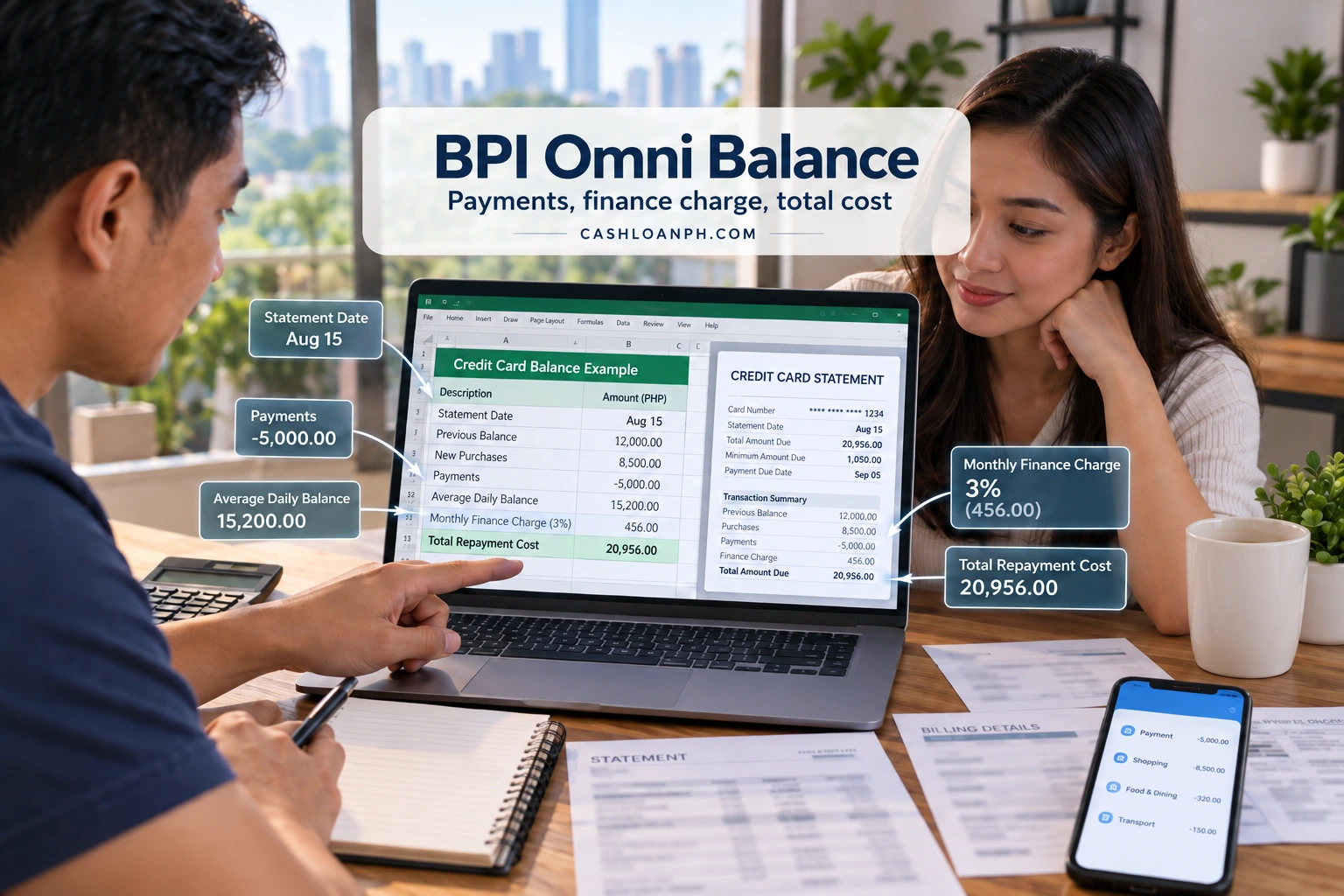
BPI currently lists Omni at ₱250 per month for the principal card and a standard nominal finance charge of 3% per month. Paying the statement balance in full by the due date is the most reliable way to prevent revolving interest from erasing your rewards.
BPI’s fee schedule describes membership fees as being incurred after the first year of card ownership and lists the Omni principal card at ₱250 monthly. That translates to:
₱250 × 12 = ₱3,000 per year
That is the figure I would use when deciding whether to retain the card long term.
BPI also lists an effective monthly interest rate of 2.73% alongside its 3% nominal finance charge for Omni and many of its other cards. BPI explains that finance charges depend on the Average Daily Balance rather than simply multiplying your statement amount by 3%.
The BSP’s applicable regulatory ceiling allows credit-card finance charges of up to 36% annually, equivalent to a 3% monthly nominal ceiling.
What happens if you pay only the minimum amount due?
Paying the minimum can avoid a late-payment fee when it is received correctly and on time, but it does not prevent interest from being charged on the remaining eligible balance.
This is the part distressed cardholders often learn after the first difficult billing cycle.
Suppose your budget deteriorates and you cannot pay the Total Amount Due. Paying the Minimum Amount Due is better than ignoring the bill, but it is not a cheap installment plan.
BPI specifically warns that paying less than the full Total Amount Due increases interest costs and the time required to repay the debt. Its current late-payment fee is listed as ₱850 or the unpaid minimum amount due, whichever is lower, per occurrence per card.
Under Philippine credit-card rules, late-payment charges must also be properly disclosed.
A practical rule from years of credit-risk analysis is simple: judge affordability based on the Total Amount Due, not the Minimum Amount Due.
The minimum is a contractual floor. It is not a healthy monthly budget target.
Are BPI Omni’s cyber-fraud benefits genuinely useful?
Yes, but they are conditional insurance benefits rather than a blanket promise that every scam loss will be refunded. Eligible cardholders must satisfy the policy trigger and claims requirements.
BPI’s Online Fraud Protect is one of Omni’s more interesting features.
The current program says an active Omni cardholder in good standing can obtain one year of coverage after making an eligible online transaction of at least ₱10,000. Coverage can reach ₱25,000 for specified fraud scenarios.
The policy information also states:
- a maximum of one claim of up to ₱25,000 per card within five years;
- a 10% participation fee deducted from the approved claim;
- fraud should be reported to BPI within 24 hours after discovery;
- a police report is required within seven days;
- insurance claims remain subject to policy terms and documentation requirements.
Those conditions matter.
Someone who reads “₱25,000 fraud protection” and assumes BPI will instantly reverse any scam payment is setting the wrong expectation.
Insurance claims and ordinary credit-card transaction disputes are also not identical processes.
Does Online Fraud Protect mean it is safe to share your OTP?
No. Insurance coverage should never be treated as permission to disclose an OTP. BPI and the BSP continue to warn consumers about phishing, smishing, identity theft, and related scams.
This distinction deserves emphasis because some policy scenarios mention losses linked to social engineering.
You should still never deliberately give an OTP, password, CVV, or account credential to someone claiming to be a bank employee.
Insurance may reduce financial damage in a qualifying event. Prevention is still far safer than making a claim.
Does BPI Omni protect online purchases that never arrive?
Yes, certain qualifying purchases may be covered for non-delivery, incomplete delivery, or qualifying physical damage, but the benefit has a US$200 per-occurrence and annual aggregate limit and carries detailed conditions and exclusions.
The e-commerce policy requires the covered item to be purchased using an eligible card. The current terms also require the delivery address to match the Philippine postal address registered with the card issuer and require a shipment tracking number.
For non-delivery, the policy expects the cardholder to pursue the seller first.
For damaged goods, notification requirements are strict: the current terms require notification to the seller and insurer within 48 hours of delivery. Written notice of a claim generally must be submitted no later than 30 calendar days after the loss or incident.
This is good consumer protection, but it is not equivalent to “everything bought online is insured.”
Excluded categories include several types of consumables, services, second-hand or refurbished goods, commercial-use goods, certain valuables, downloaded digital content, travel-related services, and other listed items.
Keep screenshots, order confirmations, invoices, courier tracking information, merchant conversations, photos of damaged packaging, and refund requests. A claim becomes much harder when the buyer has no documentation.
What happened to the old BPI eCredit Card in 2026?
BPI began replacing eligible eCredit Cards with Omni cards in June 2026 after discontinuing the old eCredit product. The change is more than cosmetic because Omni has a different fee and product structure.
BPI stopped accepting new eCredit applications in November 2024 and later announced that eligible eCredit users would transition to Omni beginning in June 2026. BPI scheduled replacement-card delivery between June and July 2026.
The old eCredit Card’s appeal was very specific: it acted as a free companion card with a separate card number and adjustable lower sublimit for internet purchases.
Omni is a broader standalone online-oriented card with extra protections and enhanced online rewards – but its published fee is no longer zero.
That makes migration worth reviewing rather than accepting passively.
What payment mistake can former eCredit Card users make during migration?
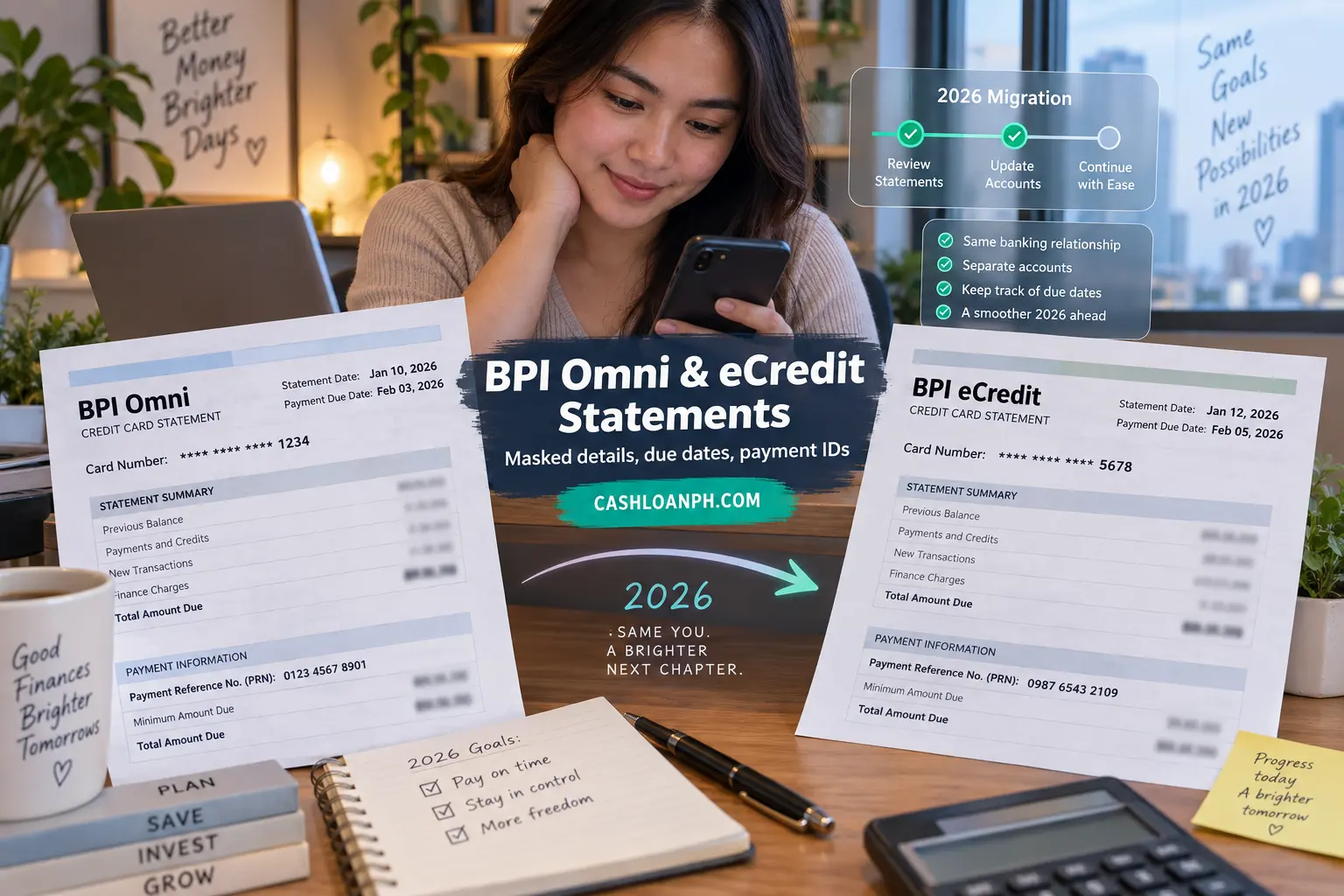
Omni can have its own Statement of Account and payment treatment. BPI warned migrating cardholders that Omni and their former eCredit or other BPI card statements may need to be settled separately.
BPI instructed Omni payments in the migration flow to use the relevant 16-digit card number shown in masked form on the Omni statement, while other BPI credit-card payments could continue using the Customer Number indicated in their respective statements.
This is precisely the kind of operational detail that can cause a payment problem even when the cardholder actually has enough money.
Do not assume that sending one lump-sum payment against another BPI customer number will automatically settle the separate Omni statement correctly.
Check the Statement of Account before every first payment after migration.
BPI also warned that once the former eCredit account is cancelled, recurring subscriptions charged to that old number will stop. That means Netflix, cloud storage, insurance, productivity software, marketplace subscriptions, or other recurring merchants may need their payment details updated.
Can you use BPI Omni for cash advances or installment purchases in 2026?
Not yet according to BPI’s fee schedule updated in July 2026. Cash Advance and installment functionality are listed as unavailable for Omni until BPI announces a future update.
That limitation can be either good or bad depending on your behavior.
If you expected Omni to finance a large appliance through installment conversion, do not assume that function exists merely because another BPI card supports it.
Likewise, do not obtain the card expecting emergency ATM cash access.
From a consumer-risk standpoint, the absence of cash advance functionality can reduce one expensive form of borrowing. From a flexibility standpoint, it makes Omni less useful as an all-purpose credit card.
BPI also states that certain app capabilities available to its other cardholders may not yet be available for Omni, including some bill-payment, autocharge, and installment functions.
Does BPI Omni really work with Google Pay in the Philippines?
BPI’s current Omni product page advertises Google Pay support, but newly activated cards can still encounter individual provisioning or system issues. Bank support should be contacted when wallet enrollment fails persistently.
There is useful real-world friction here.
A September 3, 2026 Philippine cardholder discussion reported an activated Omni card that was still failing to work with Google Pay. That is one anecdotal report, not proof of a system-wide defect, but it illustrates why “supported” does not mean every wallet enrollment will succeed instantly.
This is also why I will not claim that “our team tested Google Pay and activation took exactly X minutes.” No such controlled test was conducted for this article.
What can be verified is BPI’s published activation process: eligible users are instructed to send an SMS from the mobile number registered with BPI, using the prescribed card-activation format. BPI says activation can take up to two banking days.
If Google Pay still fails after confirmed card activation, use BPI’s official contact channels rather than repeatedly entering card information into third-party troubleshooting websites.
Is BPI Omni safer than using an ordinary credit card online?
It has useful online-specific protections, but no credit card removes phishing, merchant, account-takeover, or card-on-file risk. The safest setup combines card controls, transaction monitoring, merchant hygiene, and fast fraud reporting.
BPI offers real-time temporary card blocking through its Credit Card Control feature. A temporary block restricts new transactions such as purchases, bill payments, and subscription charges.
For a card used mainly online, I would adopt a simple operational routine:
- Keep transaction alerts enabled.
- Review card-on-file merchants every few months.
- Remove the card from retailers you no longer use.
- Temporarily block the card when compromise is suspected.
- Never approve an OTP because a caller claims to be “reversing fraud.”
- Save order and merchant evidence for higher-value purchases.
- Report an unrecognized transaction immediately.
The Financial Products and Services Consumer Protection Act recognizes rights to fair treatment, disclosure and transparency, protection of consumer assets, data privacy, and timely complaint handling.
Those rights matter, but consumers still need to act quickly after suspected fraud.
Is the BPI Omni Credit Card worth its ₱250 monthly fee?
It can be worth keeping for a high-frequency online shopper who pays every statement in full and places genuine value on its cyber and purchase protections. It is much harder to justify for light spenders, reward chasers, or borrowers who regularly carry balances.
Consider four users.
| User profile | Omni fit | Why |
|---|---|---|
| Pays ₱25,000 – ₱50,000 online monthly and settles in full | Strong | Makes repeated use of rewards and protection features |
| Shops online occasionally and spends ₱3,000 – ₱5,000 monthly | Weak to moderate | ₱3,000 annualized membership cost can outweigh practical value |
| Frequently pays only the minimum | Poor | 3% nominal monthly finance charge can dominate rewards |
| Wants installments, cash advances and broad everyday flexibility | Poor in current form | Key functions remain unavailable |
| Former eCredit user wanting a free online-only companion card | Needs reassessment | Omni’s fee structure differs materially from the old free eCredit model |
| Security-conscious heavy marketplace shopper | Potentially strong | Fraud and e-commerce protection are differentiated benefits |
The best credit card is not the one with the loudest rewards headline. It is the card whose benefits you actually use without paying interest to obtain them.
Is BPI Omni better than BPI Free+ for someone worried about card fees?
If avoiding membership fees and reducing revolving-credit cost matter more than online rewards, BPI Free+ deserves a direct comparison. BPI currently lists Free+ with no annual membership fee and a lower 2.5% finance charge.
Free+ and Omni target very different behaviors.
Omni rewards online spending and adds online-oriented insurance protections.
Free+ emphasizes no annual fee, a 2.5% finance charge, and an interest-cashback feature for qualifying users who meet its conditions.
For someone who always pays in full, the lower finance charge on Free+ may have little practical effect because there should be no revolving balance to charge interest against.
For someone who sometimes carries debt, though, chasing extra Omni points while paying 3% monthly finance charges makes little financial sense.
There is another catch: BPI’s current Free+ page also says it is being offered to selected depositors rather than universally.
So the decision may depend on which product BPI actually offers you.
How should you use the BPI Omni Card without letting rewards turn into debt?
Set your spending limit from your monthly cash budget, not from the credit limit BPI grants you. The safest rewards strategy is to spend only what you could already pay in cash and settle the Total Amount Due on time.
A ₱100,000 credit limit does not mean your household can afford ₱100,000 of spending.
Credit limits are bank risk limits, not personal budgeting advice.
Republic Act No. 10870 allows card issuers to determine credit limits based on credit standing and financial capacity, but your own acceptable spending ceiling can – and often should – be much lower.
A practical system is to maintain a “card payable” category in your budget. Every time you charge ₱2,500 to Omni, mentally or physically reserve ₱2,500 from cash already available.
That prevents the classic credit-card trap: treating the bill as a problem for next month’s salary.
If you already carry a balance, stop calculating how many points your next purchase generates. Calculate how much additional debt the purchase creates.
Rewards are a rebate mechanism. They are not income.
What should you do if an Omni transaction is fraudulent or a purchase goes wrong?
Secure the card first, preserve your evidence, contact BPI through an official channel, and obtain a complaint or case reference number. If the problem remains unresolved, eligible complaints involving BPI can be escalated to the BSP.
For suspected card compromise, BPI advises customers to use its card-control functions or contact its 24-hour Contact Center. Permanent blocking prevents further use of a compromised card, while temporary blocking can restrict new transactions immediately.
For an e-commerce problem, preserve:
- merchant invoice or receipt;
- order confirmation;
- screenshots of the item listing;
- courier tracking;
- chat or email correspondence;
- refund request;
- photos or video of damaged packaging and goods;
- the relevant Statement of Account entry.
Your bank dispute, merchant complaint, insurance claim, and DTI consumer remedy may involve different rules. Do not assume filing with one automatically starts every other process.
For qualifying Omni e-commerce insurance, some notification periods are short, so read the policy before delaying.
When should you escalate a BPI credit-card complaint to the BSP?
Raise the problem with BPI first and keep the reference number. If the bank does not resolve the concern satisfactorily, the BSP’s Consumer Assistance Mechanism can accept an escalation through BSP Online Buddy and other official channels.
This regulatory distinction matters.
BPI is a BSP-supervised bank. For a dispute concerning BPI credit-card servicing, billing, fraud handling, fees, or collection conduct, the BSP is the relevant financial regulator.
The SEC commonly appears in articles about Philippine online lending apps because it regulates lending and financing companies under its jurisdiction. That does not make the SEC the primary regulator for a BPI-issued credit card.
The BSP states that consumers should first file the incident with the concerned financial institution and obtain its reference number before escalating through BOB.
What borrower protections apply if you can no longer pay the BPI Omni balance?
You remain responsible for legitimate debt, interest, and disclosed charges, but debt collection must still follow Philippine consumer-protection rules. Threats, deception, public shaming, and other abusive collection conduct are not legitimate substitutes for lawful collection.
Financial trouble changes how this card should be handled.
Stop using the card for discretionary purchases. Identify the Total Amount Due, Minimum Amount Due, due date, finance charge, and any past-due amount.
Then contact the bank instead of disappearing.
BSP guidance identifies practices such as threats of violence, deceptive collection methods, certain disclosures of debtor information, false credit information, and threats to take actions that cannot legally be taken as examples relevant to unfair collection standards.
RA 11765 also protects financial consumers’ rights to fair treatment, transparency, asset protection, data privacy, and effective complaint redress.
Remember the legal distinction: owing a civil debt is not itself a crime. The Constitution states that no person shall be imprisoned for debt. That does not excuse fraud, falsification, or separate criminal conduct, and it does not erase a valid contractual obligation.
If you are struggling, the financially safer objective is debt stabilization – not earning another batch of reward points.
Should you get the BPI Omni Credit Card in 2026?
Choose Omni if you are a disciplined online spender who will pay in full, use its security benefits, and can justify the recurring fee. Skip or reconsider it if you mainly need emergency credit, cheap revolving debt, cash advances, installments, or a no-fee card.
The Omni concept makes sense.
Philippine consumers buy more goods and services online, fraud risks are real, and a card built around e-commerce protection has a clearer purpose than another generic rewards card. The virtual-card access, triple online points, cyber insurance, purchase protection, and Google Pay compatibility create a strong online-shopping package.
Yet the weaknesses are just as real.
The ₱250 monthly membership fee deserves scrutiny. The 3% monthly nominal finance charge makes revolving debt expensive. Cash advances and installments remain unavailable based on BPI’s July 2026 schedule. The current public page still describes the card as select-depositor-only even after its earlier Q2 public-launch wording.
For a disciplined shopper, Omni may be a useful specialist card.
For a household already stretching one salary across rent, groceries, tuition, utilities, and existing debt, another credit limit can create more pressure than protection.
The right test is not, “Can BPI approve me?”
Ask instead:
Can I pay every Omni purchase in full even if my next paycheck is delayed?
If the answer is no, fixing cash flow is more valuable than adding another credit card.
What questions do Filipinos still ask about the BPI Omni Credit Card?
Most remaining questions concern eligibility, fees, activation, insurance, migration, and functions that are still being rolled out. BPI’s current product and fee pages should be checked before acting because several Omni features are still changing.
Does BPI Omni have an annual fee?
BPI lists a ₱250 monthly principal-card membership fee. Its fee page states that membership fees are incurred after the first year, making the annualized recurring cost ₱3,000 once monthly charging applies.
Does BPI Omni earn rewards on online purchases?
Yes. BPI advertises 3 BPI Points for every ₱50 of online spend.
Can an existing BPI cardholder convert another card to Omni?
BPI’s current Omni FAQ says card conversion is not available under the present select-customer rollout.
Can I get a supplementary BPI Omni Card?
BPI’s live FAQ still says supplementary Omni cards were not available at launch and that availability would be announced later. Check the current product page before applying because this can change.
Is BPI Omni the same as the old BPI eCredit Card?
No. Omni replaced eligible eCredit Cards during BPI’s 2026 migration, but it has its own rewards, insurance features, card experience, and fee structure.
Can I withdraw cash using BPI Omni?
BPI’s July 2026 fee schedule says Cash Advance is not yet available for Omni.
Can I convert an Omni purchase to installment?
BPI’s July 2026 schedule states that installment services are not yet available for Omni. BPI says customers will be notified when these functions become available.
Is BPI Omni regulated by the SEC?
BPI’s credit-card operations are supervised by the Bangko Sentral ng Pilipinas. RA 10870 expressly assigns BSP supervision over credit-card issuers and acquirers.
References
- Bank of the Philippine Islands
Organization: Bank of the Philippine Islands
Resource: BPI OMNI Credit Card
URL: BPI Omni Credit Card official page - Bank of the Philippine Islands
Organization: Bank of the Philippine Islands
Resource: BPI Credit Card Rates and Fees
URL: BPI Credit Card Rates and Fees - Bank of the Philippine Islands
Organization: Bank of the Philippine Islands
Resource: BPI Omni Online Fraud Protect
URL: BPI Omni Online Fraud Protect - Bank of the Philippine Islands
Organization: Bank of the Philippine Islands
Resource: BPI Omni Card E-commerce Protection Terms and Conditions
URL: BPI Omni E-commerce Protection terms - Bank of the Philippine Islands
Organization: Bank of the Philippine Islands
Resource: Service Advisory – Updates to Your BPI eCredit Card
URL: BPI eCredit to Omni migration advisory - Bangko Sentral ng Pilipinas
Organization: Bangko Sentral ng Pilipinas
Resource: Republic Act No. 11765 – Financial Products and Services Consumer Protection Act
URL: RA 11765 via BSP - Bangko Sentral ng Pilipinas
Organization: Bangko Sentral ng Pilipinas
Resource: Circular No. 1165 – Credit Card Interest Rate Ceiling
URL: BSP Circular No. 1165 - The LawPhil Project
Organization: Republic of the Philippines
Resource: Republic Act No. 10870 – Philippine Credit Card Industry Regulation Law
URL: Republic Act No. 10870 - National Privacy Commission
Organization: National Privacy Commission
Resource: Data Privacy Act of 2012
URL: Data Privacy Act of 2012 - Department of Trade and Industry
Organization: Department of Trade and Industry
Resource: Republic Act No. 11967 – Internet Transactions Act of 2023
URL: DTI Internet Transactions Act resource


![EastWest Bank Exchange Rate Today [Latest Update] October 2026](https://cashloanph.com/wp-content/uploads/2023/05/eastwest-bank-exchange-rate-today-cashloanph-438x246.jpg "EastWest Bank Exchange Rate Today [Latest Update] October 2026")