Last Updated on 25/09/2026 by Nicole Alba
Getting a loan through a phone can take minutes. The dangerous part is that a borrower may also hand over an ID, selfie, contact details, financial information, and permission to access a device before confirming who is actually providing the money.
In 2026, applying safely for a loan in the Philippines means checking more than whether an app looks professional or appears in an app store. You need to identify the legal lender, verify its regulatory status, understand exactly how much cash you will receive and repay, inspect data permissions, and keep evidence of the transaction.
This guide is based on current Philippine regulatory and consumer-protection sources as of September 25, 2026. It does not claim that we applied for, borrowed from, or personally tested a particular lender. The analysis relies on published rules and official consumer guidance rather than invented first-hand experience.
The safest way to apply for a loan in the Philippines in 2026 is to verify the institution before submitting personal information. Lending and financing companies should be checked through SEC records, while banks and other BSP-supervised institutions can be checked through the BSP Verifier. For certain unsecured general-purpose loans of ₱10,000 or less with terms of up to four months, SEC rules effective April 1, 2026 impose specific interest and fee ceilings. Borrowers should also compare the approved amount with actual cash received, reject unnecessary phone permissions, avoid advance-fee schemes, and save the disclosure statement, contract, repayment schedule, and receipts.
| Borrower question | Current finding | Why it matters |
|---|---|---|
| How do I verify a lending company? | Check the legal company, Certificate of Authority, and online lending platform through current SEC resources. | Corporate registration alone does not establish authority to operate as a lending company. |
| What if the lender is a bank? | Check BSP-supervised institutions through the BSP Verifier. | SEC and BSP supervise different categories of financial providers. |
| Did online lending rules change in 2026? | Yes. SEC MC No. 20, Series of 2026 lifted the moratorium on new online lending platforms effective August 1, 2026 and introduced updated prudential, disclosure and market-conduct requirements. | Old screenshots and old OLP lists can become outdated. |
| Are there interest-rate limits? | For defined small, short-term loans from SEC-regulated lending and financing companies, the nominal rate is capped at 6% monthly and the effective rate at 12% monthly. | These caps do not apply automatically to every type of loan in the Philippines. |
| Can an app use my phone contacts for collection? | Excessive contact-list processing and contacting people other than declared guarantors for debt collection are prohibited. | A request for broad contact access deserves close scrutiny. |
| Should I pay a fee before receiving the loan? | The SEC’s borrower advisory specifically warns about advance-fee scams. | Requests to transfer money first in order to “release,” “unlock,” or “approve” a loan are a major warning sign. |
| What should I receive before accepting? | Philippine disclosure rules require borrowers to be informed about the cost of credit before the transaction is consummated. | You should know the amount financed, finance charges and repayment terms before committing. |
What does applying for a “safe loan” actually mean?
A safe application is one where you can identify the real lender, verify its authority, understand the full peso cost before accepting, control how your personal information is processed, and repay the obligation without depending on another loan.
“Registered” and “safe for your budget” are two different questions.
A lending company can be legally authorized yet still offer a loan that is too expensive for a particular borrower. Likewise, an attractive interest rate does not make an offer safe if large fees are deducted before the money reaches you.
Republic Act No. 11765, the Financial Products and Services Consumer Protection Act, recognizes rights including fair treatment, disclosure and transparency, protection of consumer assets against fraud and misuse, data privacy, and timely handling of complaints. It also requires financial service providers to consider affordability and measures against over-indebtedness.
A practical borrower should therefore test both legitimacy and affordability.
How do you verify a lender before applying?
Start with the company behind the loan, not the app logo. For a lending or financing company, verify the legal entity and its SEC authority. If the lender is a BSP-supervised institution such as a bank, check the institution through the BSP’s current verification resources.
Company registration is not the same as lending authority
Under the Lending Company Regulation Act framework described by the SEC, a lending company cannot conduct lending business merely because a corporation exists. It needs authority from the SEC to operate as a lending company.
This distinction matters because a suspicious operator may display a real SEC company registration number belonging to another company or may point to ordinary corporate registration as proof that its lending operation is legitimate.
Before providing an ID, determine the exact legal company name. Then check whether the name associated with the website or app matches the regulated company and, for an online lender, whether the platform is connected with that company’s recorded lending operations.
Do not rely on an old “legit loan apps” screenshot
This is especially important in 2026.
SEC Memorandum Circular No. 20, Series of 2026 was issued on July 7, 2026 and lifted the moratorium on new online lending platforms effective August 1, 2026. The SEC has also issued 2026 guidance on disclosure and recording of OLPs.
That means a list copied from 2021, 2024, or even early 2026 is not necessarily a reliable description of the market today.
The SEC was still publishing advisories concerning unauthorized online lending platforms in August 2026, which reinforces why borrowers should verify an app against current official records instead of assuming that app-store availability proves authorization.
If it claims to be a bank, verify it differently
The BSP states that loans may be provided by BSP-supervised financial institutions, while lending companies outside BSP supervision fall under SEC regulation. The BSP Verifier lets consumers search for institutions registered with or supervised by the BSP.
A logo resembling a bank, e-wallet, or familiar fintech brand is not enough. Identify the company named as creditor in the disclosure statement or loan agreement.
What should you check before tapping “Accept”?
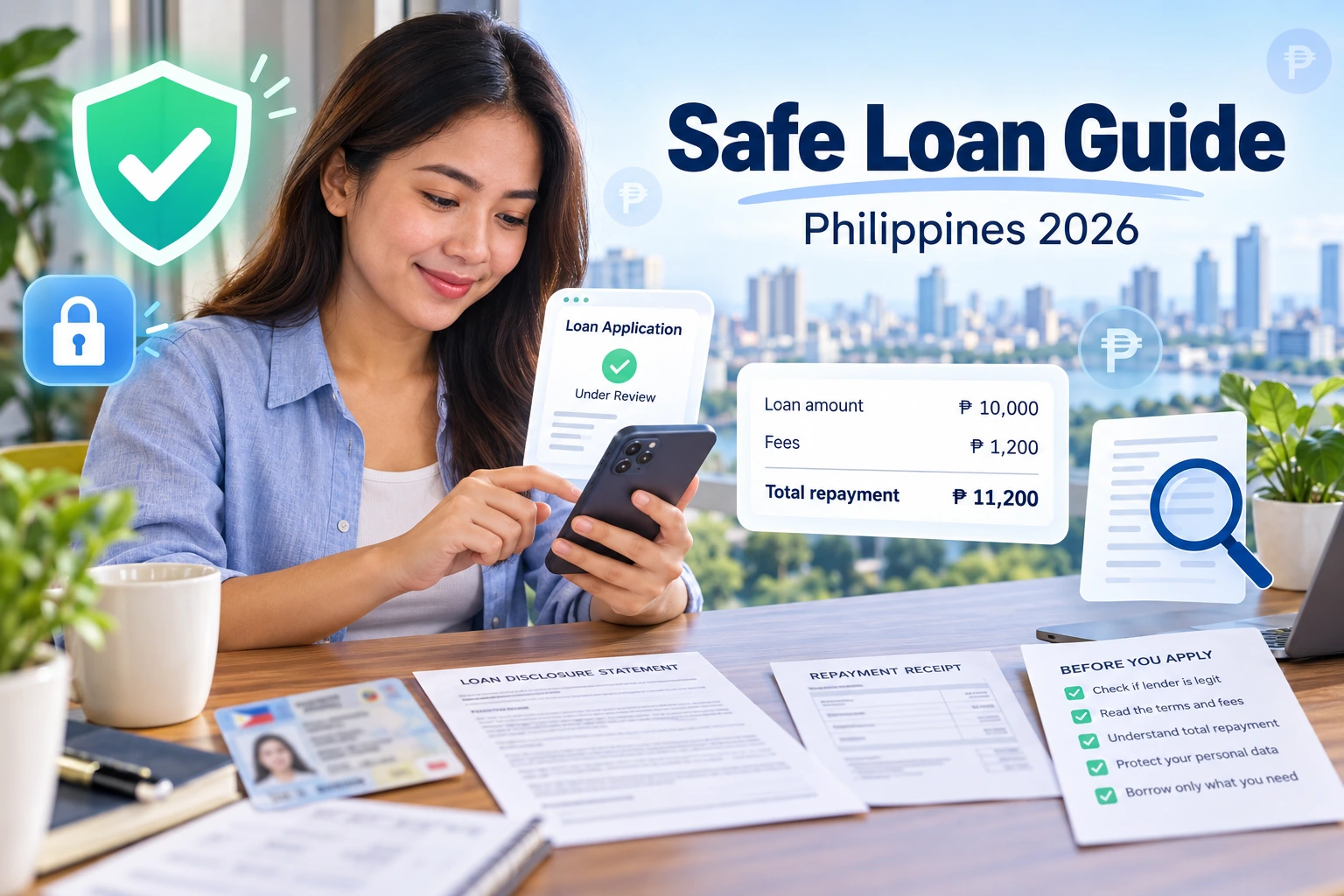
Do not compare loans using the advertised interest rate alone. Compare the amount approved, deductions, cash actually received, repayment amount, due dates, fees, late charges and total peso cost. The difference between approved principal and net proceeds can materially change the real cost.
The Truth in Lending Act requires disclosure of the cost of credit and identifies finance charges broadly enough to include interest, fees, service charges and other charges incident to extending credit. It requires specified information to be disclosed before the transaction is consummated.
For certain loans made by financing and lending companies, an important 2026 rule also applies.
SEC Memorandum Circular No. 14, Series of 2025 took effect for covered loans entered into, restructured or renewed beginning April 1, 2026. It applies to unsecured, general-purpose loans not exceeding ₱10,000 with a tenor of up to four months. For those covered loans, the limits include a nominal interest ceiling of 6% per month, an effective interest rate ceiling of 12% per month, a late/non-payment penalty ceiling of 5% per month on the outstanding scheduled amount due, and a 100% total-cost cap covering interest, other fees and penalties.
These figures should not be described as a universal Philippine loan-rate ceiling. A ₱50,000 loan, a longer-term product, a secured loan, or a loan from another type of institution may fall outside that specific scope.
Why the amount received matters more than the headline rate
Consider a purely hypothetical 30-day offer:
| Item | Hypothetical amount |
|---|---|
| Approved principal | ₱10,000 |
| Processing/service fee deducted before release | ₱500 |
| Cash actually received | ₱9,500 |
| Interest charged | ₱600 |
| Amount due | ₱10,600 |
| Difference between cash received and repayment | ₱1,100 |
The advertisement might focus on “6% interest,” because ₱600 is 6% of ₱10,000.
But the borrower received only ₱9,500 and must return ₱10,600. The ₱1,100 difference equals about 11.58% of the cash actually received.
That 11.58% figure is a simple borrower cash-cost comparison, not a substitute for the lender’s legally calculated and disclosed effective interest rate. Its purpose is to show why deductions matter.
Ask one simple question before accepting any offer: “How many pesos will enter my account, and how many pesos in total must leave my account to fully settle this loan?”
What documents are normal, and what requests should concern you?
Identity verification can legitimately involve personal information, but the request should be related to a clear lending purpose. A government ID, selfie verification and financial or contact information can form part of KYC or underwriting; unlimited access to unrelated phone data is a different matter.
The exact application requirements vary by lender. Depending on the product and underwriting process, a borrower may be asked for identification, a selfie, contact and address information, employment or income details, or an account or e-wallet for disbursement.
Those requests do not prove that a lender is legitimate. The submission channel matters too.
Sending a photograph of your ID to an unknown Facebook account, Telegram agent, personal email address or unverified messaging number exposes you to a different level of risk than submitting it through a verified lender’s official system.
Never disclose a banking password, e-wallet MPIN, card PIN or authentication OTP simply because somebody claims the information is needed to “verify” or “release” a loan.
The SEC’s borrower advisory also flags advance-fee scams and advises borrowers to verify the lending or financing company and online lending platform before transacting.
A request to send ₱500, ₱1,000 or another amount to a personal bank or e-wallet account before funds can be “released” should therefore stop the application until the lender and request have been independently verified.
How should you protect your contacts, photos and other phone data?
A loan application does not give a lender unlimited rights over your phone. Philippine privacy rules prohibit unnecessary or excessive processing, and current government guidance specifically restricts the use of contact lists and third-party contacts for debt collection.
In March 2026, the DICT, National Privacy Commission and SEC jointly reiterated rules for online lending platforms after reports involving harassment, intimidation, public shaming and unlawful use of personal data.
The advisory states that unnecessary permissions and unauthorized, excessive or disproportionate processing are prohibited. It also states that, for debt collection, people in a borrower’s contact list other than declared guarantors should not be contacted.
NPC rules also distinguish a character reference from a guarantor. Providing somebody as a character reference does not automatically make that person responsible for repaying your debt. The amended NPC rules require separate consent for a guarantor and restrict debt-collection contact to guarantors rather than unrestricted phone contacts.
The NPC has also said that where an app permission is no longer needed for its lawful purpose, borrowers should be prompted to disable or revoke it.
A privacy notice should therefore tell you what information is being collected, why it is needed, how it will be used and who may receive it. A request for broad access with no understandable explanation deserves scrutiny before you continue.
How do you apply for a loan safely, step by step?
The safest workflow delays disclosure of sensitive information until after the lender has been verified. Only then should you compare the contract, calculate the cash cost, review permissions and proceed through the provider’s official application channel.
- Define the amount you actually need. Borrowing the maximum offered simply because it is available increases both repayment pressure and potential charges. Decide the minimum useful amount and identify the income that will repay it.
- Identify the legal creditor. Find the company name behind the app, website, e-wallet feature or advertisement. Do not assume the consumer-facing brand and legal lender are the same entity.
- Verify the regulator and authority. Check SEC information for lending and financing companies and their OLPs. Use the BSP Verifier where the provider claims to be a BSP-regulated financial institution.
- Match the digital channel to the company. Check the official website, app developer/publisher, company contact details and regulatory disclosures. Be cautious when somebody moves the transaction from an official application to a private chat account.
- Read the offer before accepting it. Record the principal, deductions, net proceeds, interest, every service or processing fee, repayment schedule, total repayment and late-payment provisions.
- Calculate the cash difference yourself. Start with the amount that will actually reach you, not only the approved limit. Compare it with the total pesos needed to settle the loan.
- Review privacy permissions before granting them. Ask whether camera, location, photo or other permissions are genuinely connected with KYC, fraud prevention or another disclosed purpose. Avoid unnecessary access to contacts and unrelated device data.
- Submit documents only through verified channels. Keep copies of what you submit. Do not hand over PINs, passwords or OTPs, and do not send an “advance release fee” to an unknown personal account.
- Save the evidence before the money arrives. Keep the disclosure statement, loan agreement, screenshots of the accepted offer, repayment schedule, official lender details and customer-service channels. This becomes important if the app later displays different information.
- Keep proof until the account is fully closed. Save payment confirmations and request or retain evidence of full settlement. The SEC’s borrower guidance specifically advises borrowers to ensure they receive a copy of the loan agreement and a receipt upon full payment.
What happens if you cannot pay on time?
A legitimate debt does not disappear because collection conduct is abusive, but lenders and their agents do not have unlimited collection rights. Philippine rules prohibit practices such as threats, abusive language, deceptive collection methods, public disclosure of borrower information and improper third-party contact.
SEC Memorandum Circular No. 18, Series of 2019 governs unfair debt-collection practices by financing and lending companies and their service providers. The rules cover conduct including threats of violence or unlawful action, abusive or profane language, improper disclosure of borrower information and deceptive collection methods.
The 2026 joint NPC-DICT-SEC advisory also reiterates that processing personal information in ways that cause harassment or unfair collection is prohibited and that collection contact should not be extended across a borrower’s general phone contact list.
Republic Act No. 11765 further prohibits abusive debt-recovery practices by covered financial service providers and makes providers accountable for certain acts of their authorized representatives and third-party service providers.
That does not mean a borrower should simply ignore an unpaid obligation. If repayment becomes difficult, contact the lender through its official channel as early as possible and ask what restructuring, payment arrangement or other documented option is available. Do not assume that refinancing one short-term loan with another will solve the underlying cash-flow problem.
Where can you complain about a loan provider?
Start with the lender’s own formal consumer-assistance channel and preserve the reference number. If the issue remains unresolved, the appropriate regulator depends on the provider: SEC for lending/financing companies, BSP for BSP-supervised institutions, and the NPC for personal-data concerns.
The Financial Products and Services Consumer Protection Act requires covered providers to maintain mechanisms for handling consumer complaints, inquiries and requests. Consumers who remain dissatisfied can elevate concerns to the financial regulator with jurisdiction over the provider.
For a bank or another BSP-supervised institution, BSP guidance says the consumer should first raise the issue with the institution and may then escalate an unresolved complaint through the BSP Online Buddy (BOB) or other BSP Consumer Assistance Mechanism channels.
For lending and financing companies, the SEC maintains dedicated lending/financing resources, advisories, complaints information, recorded OLP information and revoked/suspended company information.
Where the problem involves contact harvesting, unauthorized disclosure, excessive permissions, debt shaming or other personal-data processing, the National Privacy Commission is the relevant privacy regulator.
Screenshots, timestamps, phone numbers, email addresses, payment receipts, the contract, disclosure statement and complaint reference numbers can all help establish what actually happened.
Who should be especially cautious about taking an online loan?
A loan deserves extra scrutiny when repayment depends on uncertain income, another loan, or money that is already committed to essential expenses. The ability to qualify for credit is not the same as the ability to repay it without financial hardship.
A short-term loan may be workable where the repayment source is specific, predictable and arrives before the due date.
The risk changes sharply when the borrower is already planning to take another loan to repay the first one. In that situation, even a relatively small finance charge can compound into repeated borrowing costs.
Timing matters as much as income. A borrower paid on the 30th may struggle with a loan due on the 25th even if the monthly income appears sufficient on paper.
The same caution applies when a loan offer shows a large approved amount but deducts substantial fees before disbursement. What matters to the household budget is the amount that can actually be used today versus the amount that must be found on the repayment date.
What rights should borrowers know before accepting?
Philippine law gives financial consumers rights to fair treatment, transparent disclosure, data protection and complaint redress. It also addresses affordability, early repayment and cooling-off arrangements, although cooling-off rights depend on the applicable regulatory rules and product rather than operating as one identical rule for every loan.
Republic Act No. 11765 provides that a borrower may prepay a loan or other credit transaction before maturity, subject to applicable disclosed costs or fees. It also establishes a framework for cooling-off policies where required by law or the relevant financial regulator.
Do not therefore assume either that every loan can be cancelled without cost or that cancellation is never available. Check the specific agreement, the lender’s regulator and the applicable rules before relying on a cooling-off period.
For BSP-supervised institutions, BSP consumer-protection regulations include more detailed cooling-off requirements for covered retail financial products, but the rules and exclusions depend on the product.
FAQ
Is an SEC-registered company automatically a safe lender?
No. SEC corporate registration and authority to conduct lending activities are different concepts. A borrower should check the company’s relevant authority and, for an online lending platform, whether the digital platform is properly associated with the regulated operator.
Regulatory status also does not establish that a particular loan is affordable.
Is a loan app legitimate because it is available on Google Play or the App Store?
No. App-store availability should not replace regulatory verification. Philippine regulators have taken action against online lending applications over the years, and the SEC continued issuing advisories concerning unauthorized platforms in 2026.
Can a loan app contact everyone in my phone if I am late?
Current Philippine privacy guidance does not give online lenders unrestricted authority to use an entire contact list for collection. The 2026 joint government advisory states that, for debt collection, persons in the contact list other than the borrower’s guarantors should not be contacted.
Is a character reference responsible for my loan?
Not automatically. NPC guidance distinguishes a character reference used for verification from a guarantor who expressly assumes an obligation if the borrower defaults. Separate rules apply to guarantor consent.
Can I repay a loan early?
Republic Act No. 11765 provides that borrowers may prepay loans or other credit accommodations before the agreed maturity date, while any applicable prepayment costs or fees should be disclosed. The exact contractual consequences should be checked before payment.
A final borrower check before accepting
A good loan decision cannot be reduced to “approved” or “rejected.”
Before accepting, you should be able to answer seven questions without guessing: Who is legally lending the money? Is that entity properly authorized? How much cash will actually reach me? What is the total amount I must repay? When exactly is every payment due? What happens financially if I am late? What personal information and phone permissions am I giving away?
If any of those answers is hidden until after you accept the loan, that is a reason to stop and investigate before continuing.
For a borrower under financial pressure, speed can feel like the most important feature. In practice, a few minutes spent verifying the lender, reading the disclosure statement and calculating net proceeds can prevent a much more expensive problem later.
References
- SEC Memorandum Circular No. 20, Series of 2026
Organization: Securities and Exchange Commission Philippines
Resource: Guidelines Prescribing Prudential, Disclosure, and Market Conduct Requirements for Financing and Lending Companies and Lifting the Moratorium on Online Lending Platforms
URL: SEC MC No. 20, Series of 2026 - SEC Memorandum Circular No. 14, Series of 2025
Organization: Securities and Exchange Commission Philippines
Resource: Recalibrated Ceilings on Interest Rates and Other Fees Charged by Financing Companies and Lending Companies
URL: SEC MC No. 14, Series of 2025 - Advisory for Online Lending Platform Borrowers
Organization: Securities and Exchange Commission Philippines
Resource: Advisory (For Online Lending Platforms Borrowers)
URL: SEC borrower advisory - Public Advisory on Online Lending Platforms
Organization: Department of Information and Communications Technology, National Privacy Commission and Securities and Exchange Commission
Resource: Advisory on Online Lending Platforms
URL: 2026 Joint OLP Advisory - NPC Circular Amendment Guidance
Organization: National Privacy Commission
Resource: NPC Amends Circular on the Processing of Personal Data for Loan-Related Transactions
URL: NPC loan-related data guidance - Republic Act No. 11765
Organization: Republic of the Philippines / Lawphil
Resource: Financial Products and Services Consumer Protection Act
URL: Republic Act No. 11765 - Republic Act No. 3765
Organization: Republic of the Philippines / Lawphil
Resource: Truth in Lending Act
URL: Republic Act No. 3765 - SEC Memorandum Circular No. 18, Series of 2019
Organization: Securities and Exchange Commission Philippines
Resource: Prohibition on Unfair Debt Collection Practices of Financing Companies and Lending Companies
URL: SEC MC No. 18, Series of 2019 - BSP Verifier
Organization: Bangko Sentral ng Pilipinas
Resource: BSP Verifier – Verify a BSP-Regulated Financial Institution
URL: BSP Verifier - BSP Consumer Assistance Channels
Organization: Bangko Sentral ng Pilipinas
Resource: Consumer Assistance Channels and BSP Online Buddy
URL: BSP Consumer Assistance