Last Updated on 08/10/2026 by Nicole Alba
When emergency expenses arise, many Filipino workers immediately search for private online lending apps, often overlooking a much safer credit line they already fund: the Social Security System (SSS) Salary Loan. While private fintech platforms heavily market their instant approvals, they frequently charge effective interest rates exceeding 100% annually. The SSS online salary loan operates differently. Because the application process has transitioned entirely to the My.SSS web portal and mobile app, borrowing from the state fund now closely resembles a digital micro-loan experience, though with distinct bureaucratic requirements and significantly lower financial risks.
This review analyzes the 2026 application process, actual borrowing costs, disbursement friction, and the specific delays borrowers face when accessing their SSS benefits.
Summary:
The SSS Salary Loan is a government-backed credit facility available to actively paying members in the Philippines. Operating strictly under state guidelines, it provides a one-month or two-month salary credit at a regulated 10% annual interest rate, calculated on a diminishing balance. This makes it far cheaper than commercial fintech alternatives. However, the system requires strict eligibility checks, including a minimum of 36 posted monthly contributions and mandatory online certification from your employer. While borrowing costs are extremely low and predatory collection practices do not exist, approval delays often occur due to employer inaction or bank routing cut-offs. Before applying, borrowers must ensure they have a registered bank account in the Disbursement Account Enrollment Module (DAEM).
| Borrower question | Current finding | Why it matters |
| Who is the lender? | Social Security System (Philippine Government) | It guarantees strict compliance with state regulations and eliminates illegal third-party harassment. |
| How much can you borrow? | One or two months of your average salary credit. | Your limit is tied strictly to your contribution history, not a proprietary AI credit score. |
| What is the interest rate? | 10% per annum (diminishing principal balance). | It is vastly cheaper than private apps that often charge 15% to 20% per month. |
| How long does approval take? | Typically 3 to 5 banking days after employer certification. | Processing speed depends heavily on your HR department, not just the SSS system. |
| What happens if you pay late? | 1% monthly penalty on overdue principal and interest. | Unpaid balances will eventually be deducted directly from your retirement or maternity benefits. |
| Is an in-person visit required? | No. Applications are processed via the My.SSS portal. | Walk-in applications are no longer accepted, making DAEM registration mandatory. |
Is the SSS online loan a legitimate alternative to private fintech apps?
Yes. The Social Security System is a Philippine government agency operating under Republic Act No. 11199. Unlike private lending platforms, it is state-mandated and strictly regulated, offering some of the lowest borrowing costs available to Filipino workers without the risk of predatory collection.
The SSS is not a fintech company; it is a state-run social insurance program. However, its shift toward digital disbursement via the PESONet system and the My.SSS portal effectively makes it the largest provider of low-interest digital micro-loans in the country. Because the lending entity is the government, borrowers are shielded from unauthorized access to their phone contacts, aggressive debt-shaming, and hidden service fees that plague the unregulated segments of the online lending market.
How much can you actually borrow from SSS in 2026?
You can borrow either a one-month or two-month salary credit, depending on your total posted contributions. SSS deducts a 1% service fee and the first year’s interest upfront, meaning your actual net proceeds will be slightly lower than the approved principal.
To access a one-month salary loan, a borrower must have at least 36 posted monthly contributions, with six of those posted within the last 12 months prior to the application month. To qualify for a two-month salary loan, the requirement increases to 72 posted contributions.
The “salary credit” does not necessarily equal a borrower’s actual gross monthly income. It is capped by the maximum Monthly Salary Credit (MSC) ceiling set by the SSS. Therefore, highly compensated employees will not receive a loan equivalent to their full private-sector paycheck, but rather a multiple of the highest MSC bracket they fall under.
Borrowers should expect deductions before disbursement. SSS automatically deducts a 1% service fee and the prorated interest for the current year. For example, if a borrower is approved for a ₱20,000 loan, the net amount credited to their bank account will be reduced by the ₱200 service fee and the applicable initial interest, resulting in actual cash proceeds closer to ₱19,000 to ₱19,500 depending on the exact approval date.
What does an SSS micro loan really cost?
An SSS Salary Loan charges 10% per annum based on a diminishing principal balance, making it highly affordable. Payments are spread over 24 months, keeping the effective borrowing cost dramatically lower than commercial online cash loans.
Understanding the peso cost of an SSS loan requires looking at the amortization schedule. Private cash apps frequently advertise “1% per day” or “15% per month” flat rates. SSS uses a diminishing balance calculation, meaning the interest is computed only on the remaining unpaid principal, not the original borrowed amount.
Because the loan term is standardized at 24 months (two years), the monthly amortization is designed to be affordable. For employed members, this payment is automatically deducted from their payroll. Voluntary and self-employed members must pay manually via authorized payment channels (such as GCash, PayMaya, or partner banks) using a Payment Reference Number (PRN).
There are no hidden “technology fees,” “processing escalations,” or mandatory insurance add-ons. The cost structure remains identical for all borrowers regardless of their credit history.
How do you apply for an SSS loan online?
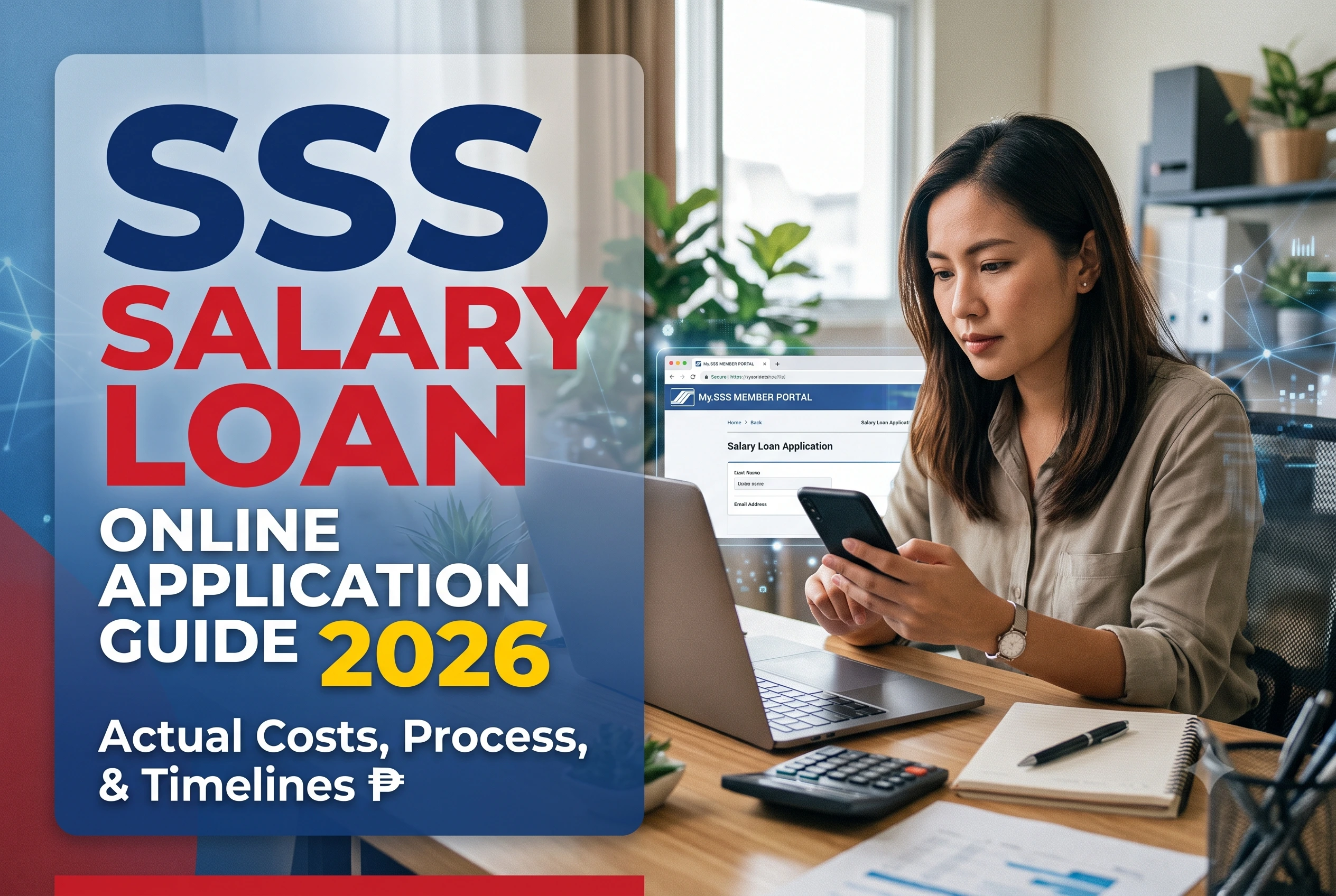
You must apply through the My.SSS web portal or the official mobile app. Walk-in applications are generally prohibited. The process requires an active account, up-to-date contact information, and an enrolled bank account in the DAEM system.
The operational friction in the SSS loan process differs significantly from private apps. Private apps often require a selfie and a government ID upload. SSS requires an established contribution history and digital portal enrollment.
The application sequence involves:
- Logging into the My.SSS portal.
- Navigating to the E-Services tab and selecting “Apply for Salary Loan.”
- Reviewing the available loan amount, net proceeds, and monthly amortization.
- Agreeing to the terms and conditions.
- Selecting the enrolled bank account where funds will be deposited.
The most critical bottleneck for employed members is employer certification. Once the borrower clicks “Submit,” the application is routed to the employer’s My.SSS account. The loan will not proceed until the authorized HR or payroll representative logs in and approves it.
How fast is SSS loan approval and disbursement?
Disbursement typically takes 3 to 5 banking days after your employer certifies the loan online. Funds are routed via PESONet, meaning weekend applications or bank cut-off times will delay the actual crediting of your money.
Many borrowers mistakenly believe that SSS approvals take weeks. Reviewing system processes indicates that the SSS infrastructure itself processes certified applications within 24 hours. The actual delays stem from two external factors:
First, employer negligence. If an HR department only checks their SSS portal once a week, the loan application sits idle. SSS automatically cancels applications that remain uncertified by the employer after a specific period (usually a few days).
Second, PESONet clearing schedules. SSS disburses funds in batches through standard banking channels. If an application is finalized on a Friday afternoon, the PESONet transfer will not clear until the following Monday or Tuesday. E-wallet disbursements (like GCash or Maya enrolled via DAEM) follow similar banking day rules.
What happens if you pay your SSS loan late?
Late payments incur a penalty of 1% per month on the overdue principal and interest. If the loan remains unpaid, the balance continues to accrue and will be forcibly deducted from future final benefits, such as retirement or death claims.
Unlike private lending apps, the SSS does not employ third-party collection agencies. Borrowers will not receive threatening text messages, nor will their Facebook friends be contacted.
However, non-payment carries severe long-term consequences. The 1% monthly penalty compounds over time. Because SSS tracks members for life, a neglected salary loan will eventually consume a member’s final benefits. When a member files for retirement, maternity, or total disability benefits, the SSS automatically deducts the outstanding loan balance-including years of accumulated penalties-before releasing the remaining funds.
Employed members face a different dynamic. Employers are legally mandated to deduct the monthly amortization from the employee’s salary and remit it to SSS. If the employer deducts the amount but fails to remit it, the employer faces severe legal penalties, though the borrower must report the discrepancy to have their record corrected.
What are borrowers saying about the My.SSS application process?
Recent borrower feedback frequently highlights frustration with portal downtime and employer certification delays. However, members consistently report high satisfaction with the low interest rates and the reliability of funds once credited.
Anecdotal reports from social media forums and application reviews reveal a clear pattern. The primary complaint is technical accessibility; the My.SSS portal occasionally experiences maintenance windows or slow loading times during peak submission periods (often at the end of the month).
Another recurring theme is confusion over DAEM enrollment. Borrowers frequently report delays because they attempted to use a bank account with a name that did not perfectly match their SSS registered name, triggering a disbursement failure.
Conversely, positive feedback focuses almost entirely on the financial safety of the product. Borrowers who successfully navigate the portal appreciate that the net proceeds match the disclosed breakdown perfectly, with zero surprise deductions.
What are the main advantages and disadvantages of an SSS Salary Loan?
An objective review of the SSS credit facility reveals clear trade-offs compared to commercial alternatives.
Advantages:
- Lowest market rates: 10% annual interest on a diminishing balance is unbeatable in the unsecured online lending space.
- No collection harassment: SSS adheres strictly to data privacy laws and uses no third-party debt collectors.
- Transparent terms: Every deduction is explicitly codified in Republic Act No. 11199.
- Manageable repayment: The 24-month term prevents borrowers from facing massive lump-sum payments.
Disadvantages:
- Strict eligibility: Freelancers or new employees without 36 months of contributions cannot access the facility.
- Employer dependency: Employed members cannot bypass their HR department for approval.
- Disbursement speed: It cannot match the “5-minute cash” promises of private apps due to standard banking clearing times.
- System availability: Government web infrastructure can be prone to maintenance disruptions.
Who may find the SSS Loan relevant, and who should be especially cautious?
This facility is highly suitable for actively paying members who need funds for non-urgent emergency expenses (such as tuition fees, home repairs, or planned medical procedures) where waiting 3 to 5 days is acceptable. It is particularly beneficial for borrowers who want to consolidate or pay off high-interest debt from private loan apps.
A borrower should be cautious if they plan to resign from their job shortly after receiving the loan. Upon resignation, the employer will deduct the entire remaining balance of the SSS loan from the employee’s final pay. If the final pay cannot cover the balance, the member becomes responsible for paying the remaining amortizations manually as a voluntary member. Failure to transition to manual payments will trigger the 1% monthly penalty.
What should you check before accepting an SSS loan?
Before finalizing the application on the My.SSS portal, complete these practical checks:
- Verify your DAEM status: Ensure your enrolled bank account is active and the account name perfectly matches your SSS records. A mismatched name will result in a bounced disbursement that takes weeks to correct.
- Confirm HR availability: Speak to your company’s payroll officer before applying to ensure they are available to log in and certify your application immediately.
- Review the disclosure statement: Look at the net proceeds displayed on the final screen. Make sure the cash you will actually receive covers your financial emergency.
- Check your PRN generation: If you are a voluntary or self-employed member, understand how to generate a Payment Reference Number (PRN) for loans, as this is required for manual monthly repayments.
Frequently Asked Questions (FAQ)
Can I pay off my SSS loan early?
Yes. Borrowers can pay the remaining principal balance in full before the 24-month term ends. Because interest is based on a diminishing balance, early full repayment reduces the total interest cost.
What happens to my loan if I change jobs?
Your loan remains active. You must notify your new employer of your existing SSS loan and provide them with a copy of your statement of account so they can resume the monthly payroll deductions.
Is an SSS Salary Loan different from a Calamity Loan?
Yes. A Calamity Loan is a separate facility activated only for members living in areas declared under a State of Calamity by the government. The Calamity Loan typically features a lower interest rate and can be availed even if you have an existing Salary Loan, provided you meet the specific contribution requirements.
Why was my loan application rejected after submission?
The most common reasons for rejection are a lack of employer certification within the required timeframe, an inactive DAEM bank account, or having overlapping, unsettled previous short-term loans that violate the renewal guidelines.
Conclusion
The SSS online Salary Loan remains the safest and most affordable micro-lending option for Filipino workers in 2026. While the application process lacks the instant gratification heavily marketed by private fintech apps, the financial protections are unparalleled. Borrowers exchange the convenience of 10-minute approvals for an interest rate that is a fraction of commercial costs, alongside absolute protection against illegal debt collection practices.
Your decision to use the SSS portal should depend heavily on your timeline. If you require funds within the hour, standard banking clearing times make the SSS loan unsuitable. However, if you can accommodate a 3 to 5-day wait and coordinate with your employer, accepting an SSS loan is a financially sound decision. Before clicking submit, verify that your bank account is properly enrolled in DAEM and confirm that your HR department is prepared to certify the request, ensuring the fastest possible routing to your account.
References
- Social Security System (SSS)Organization: Philippine Government
Resource: Member Loans Guidelines
URL: https://www.sss.gov.ph/sss/appmanager/pages.jsp?page=memberloans
- Official Gazette of the Republic of the PhilippinesOrganization: Philippine Government
Resource: Republic Act No. 11199 (Social Security Act of 2018)
URL: https://www.officialgazette.gov.ph/2019/02/07/republic-act-no-11199/
- Social Security System (SSS)Organization: Philippine Government
Resource: Enrollment of Disbursement Account via DAEM
URL: https://crms.sss.gov.ph/enrollment-of-disbursement-account