Last Updated on 27/10/2026 by Nicole Alba
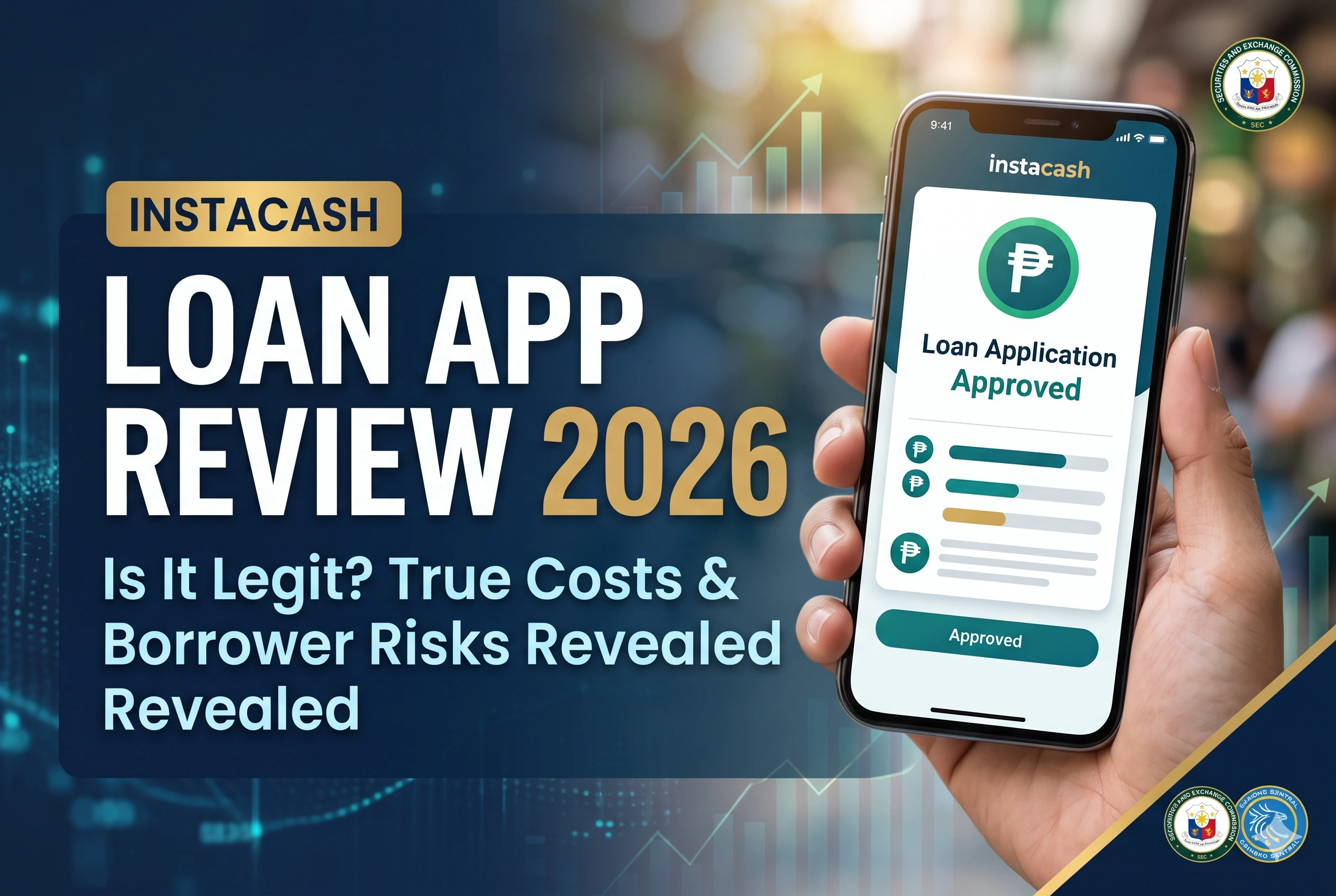
Borrowers searching for emergency funds often encounter digital lending platforms advertising high limits and instant approval. The appeal of getting money on the same day without physical paperwork is strong, especially when unexpected expenses arise. However, the gap between what an application promises and what a borrower actually receives can be substantial. When evaluating the Instacash loan app in the Philippines, applicants need to look past the marketing material to understand the exact payment schedule, the legal entity issuing the debt, and the consequences of a missed due date.
This review investigates the Instacash application based on its published terms, regulatory records, and recent borrower feedback to clarify how the service actually operates.
Instacash is a digital lending application available in the Philippines that provides short-term, unsecured cash loans. While the app is published by a registered corporate entity, prospective borrowers should carefully check the exact Certificate of Authority number against the current Securities and Exchange Commission (SEC) database before applying. The most significant risk for new users is the difference between the advertised loan limit and the actual net proceeds, as upfront processing fees are routinely deducted. Borrowers should expect lower initial limits and shorter repayment tenors than the maximums advertised. Always calculate the total peso cost before digitally signing the contract.
| Borrower question | Current finding | Why it matters |
| Who is the legal operator? | The app operates under an SEC-registered corporate entity (typically Instacash Lending Corp.). | A valid Certificate of Authority (CA) means the lender is subject to Philippine regulatory oversight. |
| How much will I receive? | Advertised limits reach up to ₱20,000, but first-time borrowers usually receive significantly less. | Upfront processing fees reduce the actual cash disbursed, meaning you receive less than your principal debt. |
| How long is the term? | While marketing claims suggest up to 180 days, entry-level loans often default to shorter cycles (e.g., 7 to 14 days). | Short terms can force a borrower into default if their next salary date does not align with the due date. |
| Are there late penalties? | Yes, late payments trigger daily penalty fees on top of the standard interest rate. | Delinquency costs compound quickly, making short-term debt difficult to clear if left unpaid. |
Is Instacash legitimate and SEC-registered in the Philippines?
Yes, the application is associated with a registered entity in the Philippines, but borrowers must verify the active Certificate of Authority (CA) on the SEC website. SEC registration confirms legal existence and authorization to lend; it does not mean the regulatory body endorses the product’s pricing.
Who legally operates the app?
Online lending platforms in the Philippines are required to operate under a specific lending or financing company. The Google Play Store listing for Instacash typically associates the app with “Instacash Lending Corp.” Borrowers should look for the SEC Registration Number and the CA Number displayed either on the app’s splash screen or in the disclosure statement. Operating without an active CA is a violation of the Lending Company Regulation Act.
Does registration guarantee safety?
A common misconception is that an SEC-registered app is automatically a low-risk option. The SEC enforces registration, transparency, and fair debt collection practices, but it does not cap interest rates beyond the limits set by the Bangko Sentral ng Pilipinas (BSP). An authorized lender can still legally offer high-cost credit, provided they disclose the terms clearly in the required Disclosure Statement on Loan/Credit Transaction.
How much can you actually borrow from Instacash?
Public listings advertise limits up to ₱20,000, but evidence from borrower feedback indicates that first-time applicants are typically approved for amounts between ₱2,000 and ₱3,500. Limits may increase only after successful repayment histories.
What limits are advertised?
Like many digital lenders, the maximum credit limit is prominently featured in promotional materials. These top-tier limits are generally reserved for repeat borrowers with established internal credit scores. New users should not plan their emergency budgets around the maximum advertised amount.
Why might a first-time borrower receive less?
Risk mitigation drives digital underwriting. Because these loans are unsecured and do not require traditional collateral, the lender limits initial exposure. Furthermore, the approved principal is rarely the amount disbursed. If an applicant is approved for a ₱3,000 loan, upfront service and processing fees are normally deducted prior to disbursement, meaning the net cash sent to the borrower’s e-wallet or bank account will be lower than the debt they owe.
What does an Instacash loan really cost?
The true cost is a combination of the nominal interest rate and the upfront processing deductions. While the BSP caps nominal interest on certain short-term loans at 15% per month, service fees can push the effective cost of borrowing significantly higher.
What interest and fees are disclosed?
Under BSP Circular No. 1133, small-value, short-term, unsecured loans offered by lending companies face specific rate ceilings. However, a complete cost analysis requires looking at the total deductions. For example, a lender might charge a compliant daily interest rate while simultaneously applying a 10% to 20% service fee taken directly from the principal.
How much would a sample loan cost in pesos?
If an applicant accepts a ₱4,000 loan with a 15% service fee deduction, they receive only ₱3,400. If the repayment amount is ₱4,000 plus interest upon maturity in 14 days, the borrower is paying for the privilege of accessing ₱3,400, not ₱4,000. Borrowers must review the mandatory Disclosure Statement before clicking “Accept,” as it is legally required to show the exact net proceeds, total deductions, and the final repayment amount in Philippine Pesos.
How fast is the approval and disbursement process?
The app’s automated system can evaluate applications within minutes, but actual fund disbursement depends on the chosen payout channel. E-wallet transfers (like GCash or Maya) are typically near-instant, while bank transfers may face clearing delays.
What can slow approval?
Friction in the underwriting process usually stems from identity verification failures. The system relies on optical character recognition (OCR) and facial recognition to match a submitted government ID with a live selfie. Glare, blurred images, or using an unsupported ID type will trigger a manual review or outright rejection.
When can settlement delay the money?
If the borrower opts for a traditional bank transfer late in the afternoon, on a weekend, or during a holiday, the InstaPay or PESONet batching schedules may delay the arrival of funds until the next banking day. E-wallets generally bypass this friction, which is why they remain the preferred disbursement method for digital loans.
What happens if you pay late?
Missing a due date results in immediate penalty fees applied daily. Continued non-payment will lead to contact from internal or third-party collection agencies and may negatively impact the borrower’s credit standing.
What charges may apply?
The loan agreement specifies a late payment penalty, often calculated as a percentage of the outstanding principal per day. Because short-term loans have tight maturity dates, these penalties accumulate rapidly. A debt can inflate substantially within just 30 days of delinquency.
Can delinquency affect your credit record?
Yes. Philippine lending companies are mandated to submit credit data to the Credit Information Corporation (CIC). A defaulted online loan will appear on a borrower’s CIC credit report, which can complicate future attempts to secure credit cards, car loans, or mortgages from traditional banks. Note that unpaid digital loans are civil liabilities; borrowers cannot be imprisoned merely for failing to pay a debt, though fraudulent application activities (like using fake IDs) can carry criminal liability.
How does the app handle your personal data?
The application requires access to specific device data to assess creditworthiness and facilitate collections. Borrowers must consent to the privacy policy, which allows the lender to process personal information in accordance with the Data Privacy Act of 2012.
What data does the application collect?
To underwrite the loan, digital lenders typically require access to the device’s camera (for identity verification), location (for fraud prevention), and sometimes device identifiers. The specific permissions can be verified in the Google Play Store under the “Data safety” section before downloading.
Can the lender contact people in your phone?
The National Privacy Commission (NPC) strictly prohibits lending apps from indiscriminately harvesting a borrower’s entire contact list to harass third parties for unpaid debts. Lenders are restricted to contacting only the specific reference persons voluntarily provided by the borrower during the application process, and solely for the purpose of locating the borrower.
What are borrowers saying in 2026?
Recent reviews present a mixed picture: many users praise the platform for fast, paperless emergency funding, while negative feedback heavily concentrates on short repayment tenors and aggressive collection reminders.
What positive patterns appear?
Users who require immediate liquidity often highlight the lack of manual paperwork and the convenience of direct e-wallet disbursement. Borrowers with stable incomes who repay on time report a frictionless experience and gradual limit increases.
What complaints appear repeatedly?
The most consistent friction points in public reviews involve the misalignment of expectations. Users frequently express frustration when approved for a 7-day or 14-day term instead of the advertised months-long installment plan. Other recurring reports involve automated collection reminders initiating a day or two before the actual due date, which some borrowers find intrusive.
Who may find the app relevant, and who should be cautious?
Short-term digital credit serves a specific, narrow purpose. The product is most relevant for a borrower who:
- Faces an immediate, non-discretionary emergency (such as a medical expense).
- Knows exactly when their next paycheck will arrive.
- Has calculated the final repayment amount and confirmed their incoming salary easily covers the debt.
A borrower should exercise extreme caution or seek alternatives if:
- They intend to use the loan for non-essential consumer spending.
- They are already struggling to pay other digital lending apps.
- The short repayment tenor falls before their expected salary date.
- They are surprised by the upfront deductions listed in the disclosure statement.
What should you check before accepting a loan offer?
Never accept an offer purely based on the approved limit. Before electronically signing, read the mandated Disclosure Statement and identify three numbers:
- Net Proceeds: The exact peso amount that will enter your account.
- Total Repayment: The exact peso amount you must return.
- Due Date: The exact calendar day the payment is expected. If the gap between the net proceeds and total repayment is uncomfortably high, or if the due date is unrealistic, cancel the application.
Frequently Asked Questions
Can I pay off the loan before the due date? Yes. Borrowers can generally settle their balances early through the app’s designated payment channels. Check the terms to see if early repayment reduces the total interest owed, as some lenders charge a fixed fee regardless of when the loan is cleared.
What happens if the disbursement fails but the app shows an active loan? If a technical error prevents the funds from reaching your e-wallet but the app registers the loan as active, immediately contact customer support with screenshots of your e-wallet transaction history. Do not wait until the due date to report the failure.
Does uninstalling the app cancel my debt? No. Uninstalling the application removes the interface from your phone, but your electronic contract and legal obligation to the lending company remain active on their servers.
References
- Securities and Exchange Commission (SEC) Philippines Organization: Republic of the Philippines Securities and Exchange Commission Resource: List of Registered Lending Companies. URL: https://www.sec.gov.ph/lending-companies-and-financing-companies-2/list-of-lending-companies/
- Bangko Sentral ng Pilipinas (BSP) Organization: Bangko Sentral ng Pilipinas Resource: Circular No. 1133 – Ceilings on Interest Rates and Other Fees Charged by Lending Companies. URL: https://www.bsp.gov.ph/Regulations/Issuances/2021/c1133.pdf
- National Privacy Commission (NPC) Organization: National Privacy Commission Resource: NPC Circular on Data Privacy Guidelines for Online Lending Applications. URL: https://www.privacy.gov.ph/lending-apps/