Last Updated on 25/05/2026 by Nicole Alba
The Social Security System offers emergency and calamity-related loan programs during officially declared disasters or special government-approved emergency periods. These loans are designed to help qualified members recover financially after floods, typhoons, earthquakes, volcanic eruptions, and similar disruptive events.
Unlike regular salary loans, emergency loan programs often activate only after specific calamity declarations and may include unique eligibility conditions, repayment adjustments, or temporary relief measures. Members frequently encounter confusion about contribution thresholds, disbursement enrollment, existing loan balances, and whether inactive or unemployed individuals can still qualify.
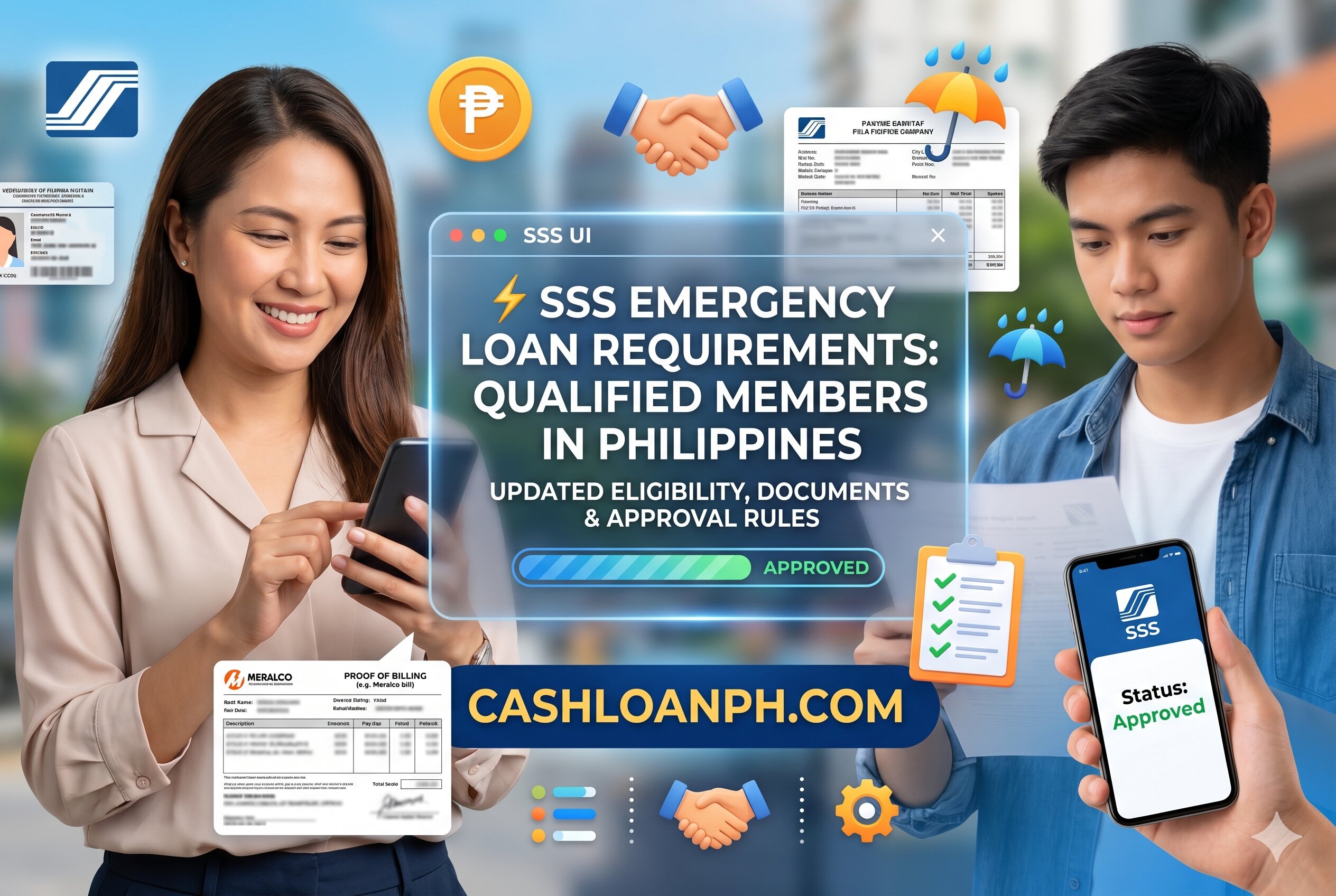
The primary sss emergency loan requirements typically include active membership status, sufficient posted contributions, residence or work location within a government-declared calamity area, and an approved disbursement account enrolled through the Disbursement Account Enrollment Module (DAEM). Applicants usually need updated My.SSS access, verified identity records, and no final benefit claims such as permanent total disability or retirement closure. Existing salary loan balances may still allow qualification depending on repayment standing and current SSS emergency program rules. Verification commonly includes contribution validation, member account authentication, employer certification for employed members, and approved digital bank or e-wallet disbursement enrollment.
Why SSS Emergency Loans Exist During Calamities and Disaster Periods 🌧️
The Philippine government activates emergency financial assistance programs when major disasters affect communities and economic activity. Through the Social Security System, qualified members may receive temporary financial relief intended to support:
- Home repair expenses
- Food and medicine purchases
- Temporary relocation costs
- Recovery from flood or typhoon damage
- Transportation replacement
- Livelihood interruption support
Emergency loan programs differ from standard lending products because eligibility depends heavily on:
- Disaster declarations
- Affected area classifications
- Active member verification
- Contribution history
- Current loan standing
- Digital disbursement readiness
In recent years, SSS has increasingly shifted toward digital-first processing through the My.SSS portal and electronic disbursement systems such as Disbursement Account Enrollment Module (DAEM).
This modernization reduced physical branch congestion but also introduced stricter account verification checks and anti-fraud validation processes.
Quick Qualification Checklist for SSS Emergency Loans ✔️
Most emergency loan programs require the following baseline conditions:
| Requirement | Typical Expectation |
|---|---|
| Active SSS membership | Required |
| Minimum posted contributions | Program-dependent |
| Residence/work in calamity area | Usually required |
| Approved disbursement account | Mandatory |
| Updated My.SSS account | Required |
| No fraudulent records | Required |
| Existing loans in good standing | Often evaluated |
| Government-issued ID | Usually required |
Many borrowers searching for sss emergency loan eligibility misunderstand one important detail: qualification rules may change depending on the specific calamity package released by SSS.
Some emergency loan windows are open only for a limited filing period after the disaster declaration.
Minimum Contributions Required for Emergency Loan Approval
One of the most searched concerns involves the minimum contributions for emergency loan access.
How Contribution Thresholds Usually Work
SSS commonly checks:
- Number of posted monthly contributions
- Recency of contributions
- Whether contributions are valid and non-overlapping
- Employment classification consistency
For many emergency-related lending programs, members are expected to have a minimum number of posted contributions before filing.
The exact threshold depends on:
- The official emergency circular
- The type of assistance program
- Whether the member already has an existing loan
- Current SSS repayment standing
Posted Contributions vs Paid Contributions
A frequent borrower mistake involves assuming employer deductions automatically count as valid posted contributions.
In practice:
- Payroll deduction does not always mean posted remittance
- Employer remittance delays can affect qualification
- Self-employed and voluntary members must verify actual posting dates
This becomes critical during disaster periods because emergency filing windows may close before delayed contributions appear in the system.
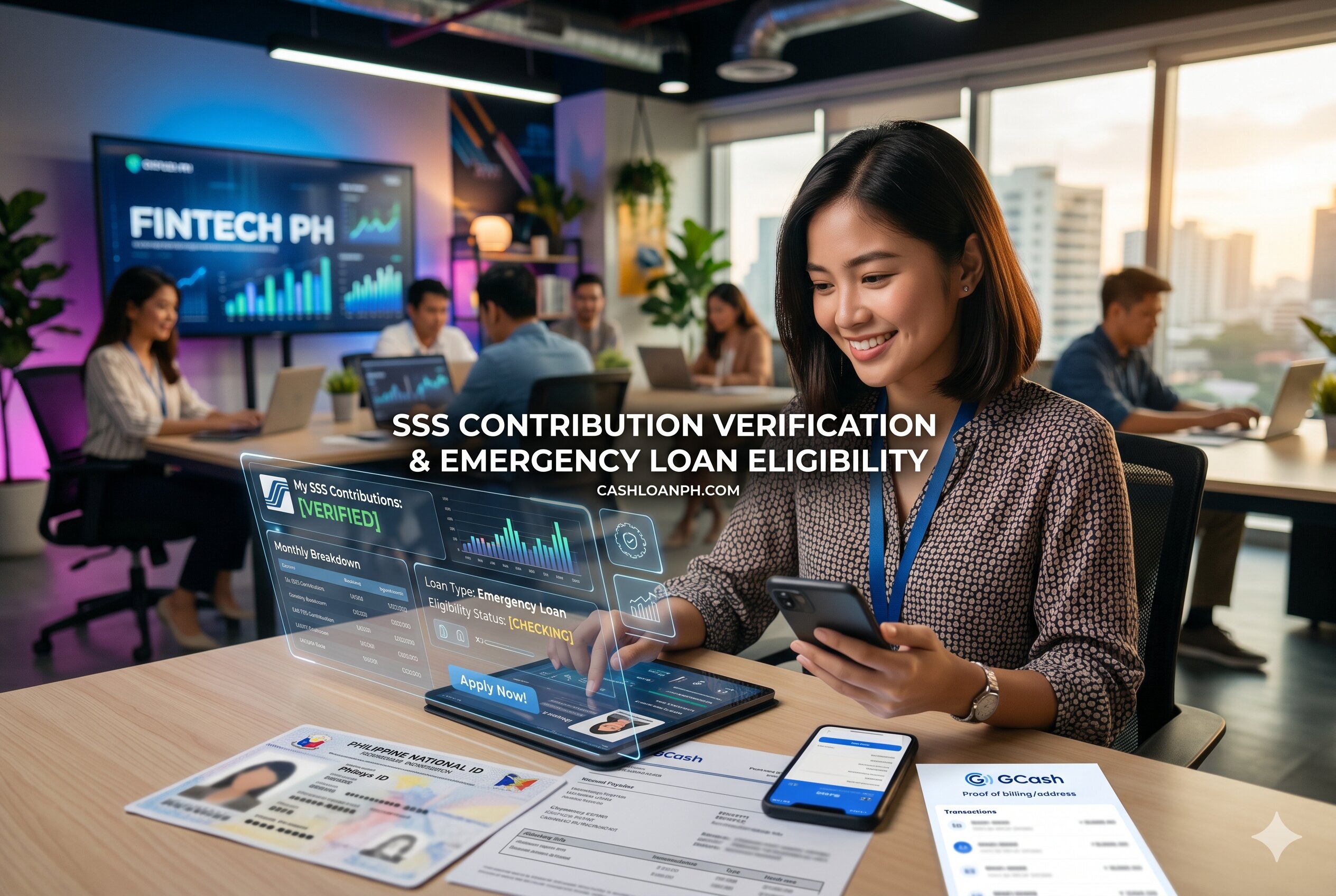
SSS Contribution Verification and Emergency Loan Eligibility Dashboard
(SSS emergency loan contribution verification process showing posted contributions and member eligibility checks)
Common Contribution-Related Rejection Causes
Applications may face delays or rejection because of:
- Incomplete contribution posting
- Duplicate member records
- Incorrect employer reporting
- Inactive membership status
- Recently shifted employment classifications
- Unreconciled voluntary payment records
Borrowers who recently transitioned from employed to freelance or gig-economy work should review their contribution continuity carefully before filing.
Is a Calamity Declaration Always Required?
National vs Local Disaster Declarations
Emergency loan access is usually linked to:
- National disaster declarations
- Local government calamity declarations
- Special emergency programs approved by authorities
Affected locations are validated using official announcements from:
- Local government units
- National Disaster Risk Reduction and Management Council
- Presidential declarations
- Other authorized agencies
This means not every flood or weather disturbance automatically activates emergency loan availability.
Residence and Workplace Validation
SSS may evaluate:
- Member residential address
- Employer business location
- Area classification during filing period
Members sometimes assume they qualify because neighboring cities were declared under a state of calamity. However, actual eligibility may depend on whether the specific municipality or province appears in the approved coverage list.
Required Documents for SSS Emergency Loan Filing 📄
Many members search for documents needed for sss emergency loan because requirements vary depending on employment status and filing method.
Core Documents Frequently Requested
Typical requirements include:
- Valid government-issued ID
- Active My.SSS account
- Approved disbursement account
- Updated membership records
- Employer certification (if applicable)
- Proof of residence in affected area (sometimes requested)
Accepted Identity Verification Documents
SSS commonly accepts:
- UMID card
- Passport
- Driver’s license
- PhilSys ID
- PRC ID
- Postal ID
The UMID card remains one of the strongest identity verification documents because it integrates directly with member records.
Employer-Certified Applications
For employed members:
- Employers may need to certify applications
- Contribution remittance status may be checked
- Employment separation issues may trigger verification delays
Self-employed and voluntary members usually bypass employer certification but face stricter direct contribution validation.
The Role of My.SSS and Digital Verification Systems
The My.SSS portal has become central to emergency loan processing.
What Members Can Do Inside My.SSS
Members typically use the portal to:
- Check contributions
- Monitor loan balances
- File applications
- Track approval status
- Update contact information
- Verify disbursement enrollment
Why Accurate Digital Records Matter
SSS increasingly relies on automated verification systems.
The platform may automatically flag:
- Mismatched birthdates
- Duplicate accounts
- Invalid mobile numbers
- Unverified email addresses
- Suspicious bank account ownership
- Inconsistent employer records
This fraud-prevention approach reflects broader BSP-aligned digital finance compliance trends across Philippine fintech and government disbursement systems.
Borrowers using recycled or shared email accounts often encounter additional verification friction.
Disbursement Account Enrollment Module (DAEM) Requirements 💳
The Disbursement Account Enrollment Module (DAEM) is one of the most important parts of modern SSS emergency lending.
Without an approved DAEM enrollment, loan proceeds cannot usually be released.
Accepted Disbursement Channels
SSS commonly supports:
- Bank accounts
- E-wallets
- PESONet-enabled accounts
- Selected remittance partners
The rise of PESONet significantly accelerated digital loan disbursement timelines.
Common DAEM Verification Problems
Applications frequently stall because:
- Bank account names do not match SSS records
- Uploaded screenshots are unclear
- E-wallet accounts are unverified
- Joint accounts are submitted
- Account numbers contain formatting errors
Many borrowers searching for sss emergency loan disbursement account setup are actually dealing with DAEM approval failures rather than loan qualification problems.
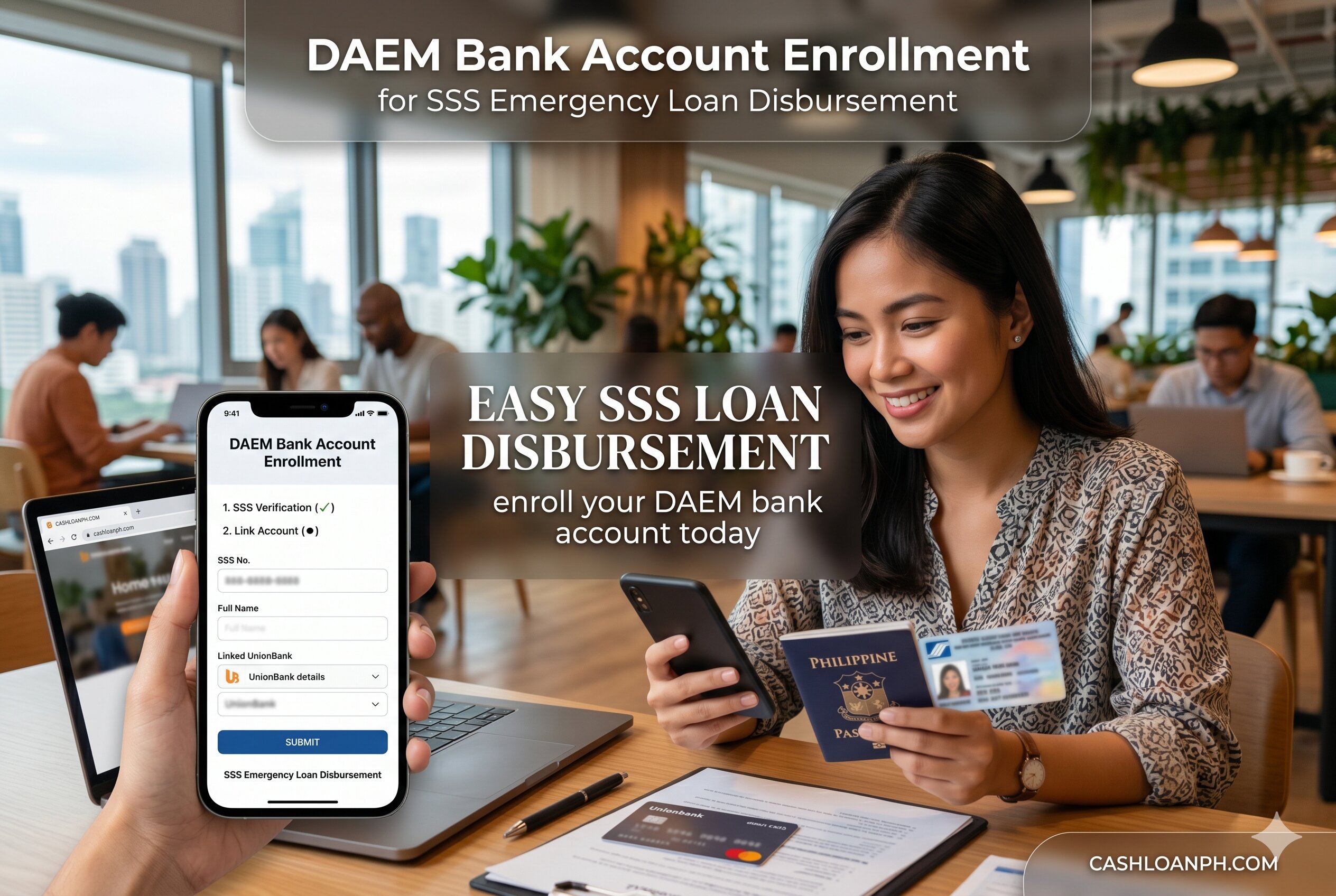
DAEM Bank Account Enrollment for SSS Emergency Loan Disbursement
(Member enrolling bank account in SSS DAEM system for emergency loan proceeds)
How Long DAEM Verification Usually Takes
Verification speed depends on:
- Document clarity
- Bank validation response
- Matching account ownership
- System traffic during disasters
Large-scale calamity periods often produce unusually high filing volumes, which can extend review timelines.
Can Members With Existing Loans Still Qualify?
A common concern involves can members with existing loans still qualify during emergency periods.
Existing Salary Loans Do Not Automatically Disqualify Members
Many SSS emergency programs still allow filing if:
- Existing loans are current
- No fraudulent activity exists
- Repayment records remain acceptable
However, delinquent or defaulted balances may affect:
- Loan amount
- Approval probability
- Net proceeds released
Loan Balance Offsets and Deductions
SSS may apply:
- Outstanding balance offsets
- Advance interest deductions
- Penalty adjustments
- Service fee deductions
Borrowers are sometimes surprised when the actual released amount becomes lower than the approved gross loan value.
Why Repayment Standing Matters
SSS uses repayment behavior as part of risk assessment logic.
Members with:
- Chronic late payments
- Employer remittance inconsistencies
- Multiple unpaid obligations
may receive additional verification scrutiny.
This reflects operational lending behavior commonly seen across both government and private digital finance systems.
Can Unemployed Members Apply?
Employment Status Alone Is Not Always the Main Factor
Some members assume unemployment automatically prevents qualification.
In reality, SSS often focuses more heavily on:
- Contribution history
- Active records
- Membership status
- Program eligibility rules
A previously employed member who maintained voluntary contributions may still qualify under certain emergency programs.
Voluntary and OFW Members
Overseas Filipino Workers and voluntary contributors often face separate verification patterns.
An OFW temporarily back in the Philippines during emergency filing periods may still apply if:
- Contribution records remain active
- My.SSS access is functional
- DAEM enrollment is approved
- Covered area requirements are satisfied
However, overseas mobile number verification issues can sometimes delay OTP authentication.
How Long Emergency Loan Verification and Approval Usually Takes ⏳
Many applicants search for how long sss emergency loan approval takes because processing timelines vary significantly during disasters.
Factors Affecting Processing Speed
Approval timing depends on:
- Filing volume
- Disaster scale
- System traffic
- Contribution verification
- DAEM approval
- Employer certification delays
Typical Workflow Sequence
Most applications move through:
- Submission
- Identity validation
- Contribution verification
- Employer certification (if required)
- DAEM confirmation
- Loan approval
- Disbursement release
Applications with clean records and approved bank enrollment generally move faster.
Why Some Members Experience Delays
Common delay triggers include:
- Incorrect uploaded documents
- Unposted contributions
- Employer non-certification
- Duplicate member records
- DAEM mismatches
- Invalid banking information
Members searching why sss emergency loan applications get rejected are often encountering verification conflicts rather than outright permanent denial.
Real Borrower Situations That Frequently Affect Qualification
Flood-Affected Members With Contribution Gaps
A member may live in a declared calamity area but still fail qualification because:
- Recent contributions were not posted
- Employer remittance was delayed
- Voluntary payments were incorrectly encoded
This is one of the most common emergency filing frustrations.
Rejected Bank Enrollment Despite Correct Account Ownership
Some applicants repeatedly upload:
- Cropped screenshots
- Blurry bank certificates
- Accounts with nickname variations
Even small mismatches between SSS records and bank details can trigger rejection.
Members With Existing Salary Loan Balances
Having an active salary loan does not always block emergency loan access.
However:
- Net proceeds may be reduced
- Additional repayment checks may occur
- Existing penalties may affect evaluation
OFWs Filing During Temporary Return to the Philippines
OFWs occasionally experience:
- OTP delivery failures
- Inactive Philippine mobile numbers
- DAEM incompatibility issues
- Passport verification mismatches
Maintaining updated My.SSS credentials before emergencies becomes extremely important for overseas members.
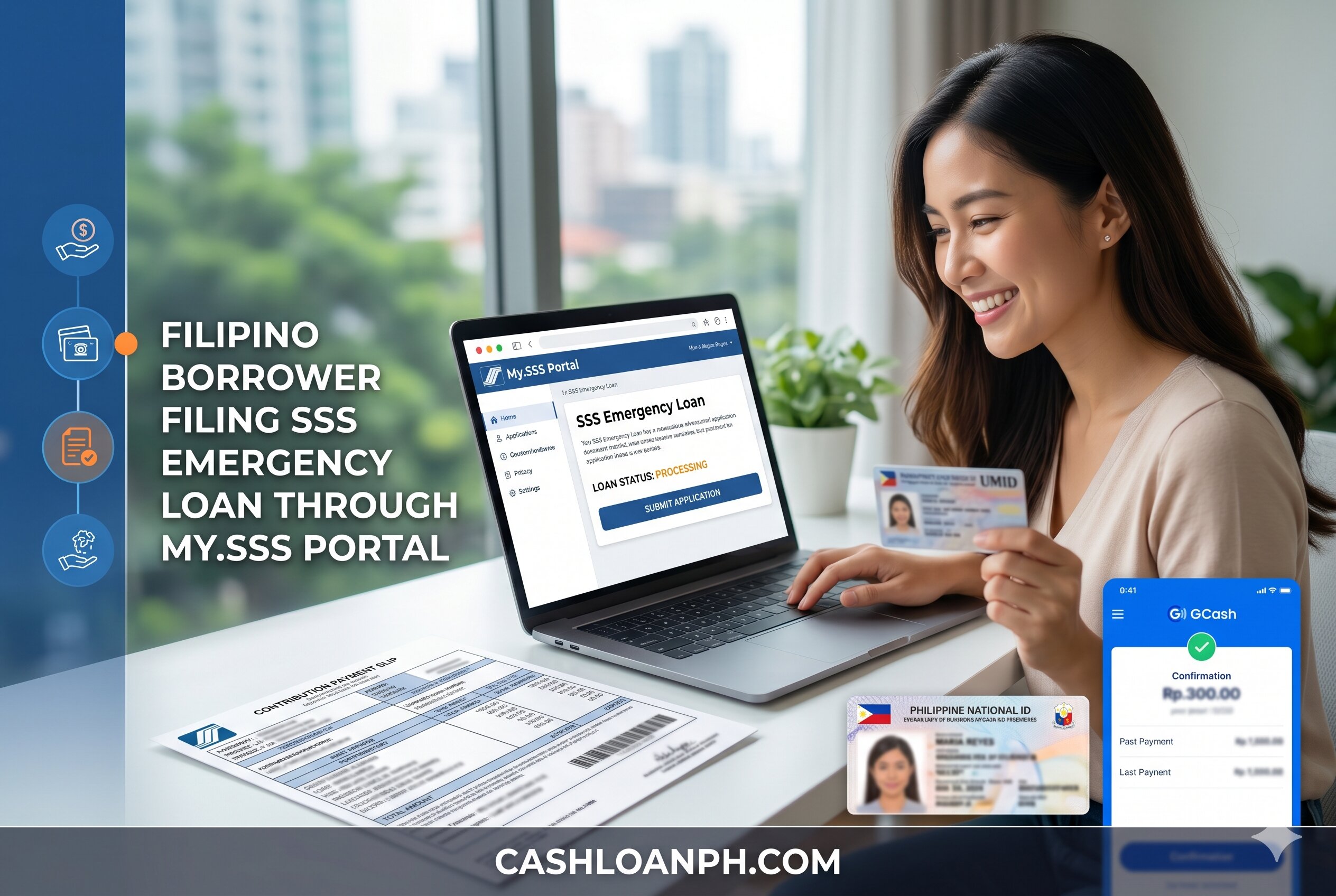
Filipino Borrower Filing SSS Emergency Loan Through My.SSS Portal
(Filipino SSS member applying for emergency loan online using My.SSS portal during calamity period)
Practical Preparation Steps Before Filing 📌
Check Contribution Posting Early
Do not wait for calamity announcements before checking:
- Contribution records
- Employer remittance posting
- Membership classification
Update Contact Information
Members should maintain:
- Active email access
- Updated mobile numbers
- Accurate residential address
- Consistent banking details
Prepare Clean Verification Documents
Poor-quality uploads are a major source of delay.
Use:
- Clear screenshots
- Full-page captures
- Updated IDs
- Properly visible account names
Review Existing Loan Standing
Borrowers with unpaid balances should verify:
- Outstanding loan amounts
- Penalty status
- Repayment schedules
This helps reduce surprises during emergency filing periods.
Frequently Asked Questions About SSS Emergency Loan Requirements
What are the minimum contributions required for an SSS emergency loan?
The required number of posted contributions depends on the active SSS emergency program. Contribution history, posting accuracy, and membership status are usually evaluated together.
Can unemployed members apply?
Possibly. Members who maintain valid contribution records through voluntary payments may still qualify depending on current SSS rules.
Is a calamity declaration always required?
Most emergency loan programs activate only after official disaster or calamity declarations from authorized government authorities.
Can pensioners qualify?
Retired members receiving final benefits are often excluded from regular member loan programs, though policies may vary depending on special emergency measures.
How long does verification take?
Processing times depend on filing volume, contribution verification, employer certification, and DAEM approval status.
Important Borrower Protection Reminders 🔒
Emergency lending periods often attract scams and fake assistance offers.
Members should:
- Use only official SSS platforms
- Avoid fixers offering guaranteed approvals
- Never share OTPs
- Verify SMS and email authenticity
- Double-check DAEM enrollment details
Fraud attempts frequently increase during major disasters when borrowers urgently seek financial relief.
Conclusion
SSS emergency loan programs play a critical role in helping Filipino workers recover during disasters and government-declared emergency periods. However, approval depends on more than simply living in an affected area.
Contribution history, My.SSS account accuracy, DAEM enrollment approval, identity consistency, and repayment standing all influence qualification outcomes. Members who prepare their records early, monitor contribution posting regularly, and maintain accurate banking information usually experience fewer filing problems during emergency periods.
Responsible borrowing also matters. Emergency loans should support recovery needs without creating unmanageable repayment pressure later. Reviewing loan obligations carefully and relying only on verified SSS channels can help members avoid delays, scams, and unnecessary financial strain.