Last Updated on 25/05/2026 by Nicole Alba
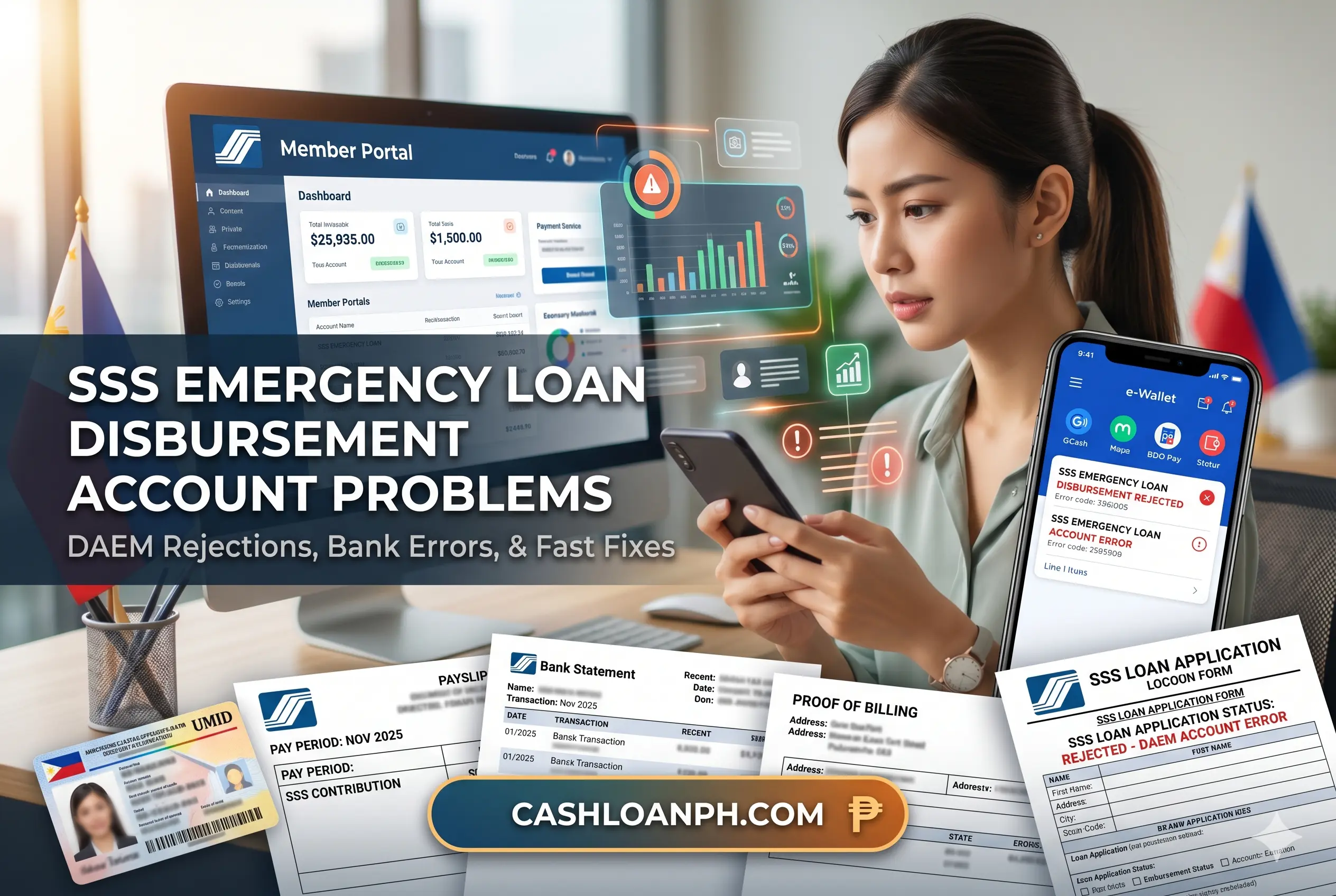
Many rejected or delayed SSS emergency loan releases are not caused by loan eligibility issues. The problem usually happens during DAEM enrollment, bank validation, or payout routing verification inside the My.SSS portal. Borrowers often encounter rejected bank accounts, e-wallet mismatches, invalid account numbers, unsupported PESONet banks, or account ownership discrepancies that stop disbursement even after loan approval.
This article explains how the SSS disbursement system actually works, why DAEM submissions fail, how long approval usually takes, which banks and e-wallets are commonly accepted, and what borrowers can do to avoid payout delays. It also covers real operational behaviors observed in Philippine digital banking verification systems, including nickname mismatches, joint account issues, and inactive account problems.
The sss emergency loan disbursement account process depends heavily on successful DAEM validation through the My.SSS portal. SSS verifies account ownership, PESONet compatibility, uploaded proof quality, and identity matching before loan proceeds are released. Common failures include unsupported banks, blurry uploads, closed accounts, nickname discrepancies, and non-personal accounts. Most approved DAEM enrollments take several banking days, but rejected submissions require correction and resubmission before payout can proceed. Borrowers can reduce delays by using active PESONet-compatible accounts under their exact legal name, uploading clear account proof, and checking whether their chosen e-wallet or bank supports SSS disbursement routing.
Why the SSS DAEM Process Causes So Many Loan Delays
The Disbursement Account Enrollment Module (DAEM) was introduced to reduce fraud, prevent payout diversion, and modernize loan releases into digital channels. Instead of releasing funds manually, SSS now routes emergency loan proceeds directly into validated financial accounts.
The problem is that DAEM verification behaves more like fintech KYC onboarding than a simple banking form.
SSS checks:
- Exact account ownership
- Valid account status
- PESONet compatibility
- Account type eligibility
- Uploaded proof authenticity
- Name consistency with SSS records
- Digital routing compatibility
A borrower may already qualify under the sss emergency loan requirements but still fail the disbursement stage because the receiving account cannot pass validation.
This distinction matters because many users mistakenly think their emergency loan itself was rejected.
In reality:
| Loan Status | DAEM Status | Result |
|---|---|---|
| Approved | Pending | No payout yet |
| Approved | Rejected | Funds cannot be released |
| Approved | Validated | Ready for disbursement |
| Pending | Validated | Waiting for loan approval |
| Approved | Failed routing | Release delayed or reversed |
How the DAEM Verification System Actually Works
My.SSS Portal Submission Phase
Inside the My.SSS portal, members upload:
- Bank account details
- ATM card screenshots
- Passbook pages
- E-wallet account proof
- Supporting identity details
The system then performs automated and manual checks.
Some validations happen instantly. Others go through human review, especially if:
- Image quality is poor
- The bank is less commonly used
- Account ownership appears inconsistent
- OCR extraction cannot read the uploaded document
Bank Validation and Routing Checks
SSS relies on banking rails connected to PESONet and partner financial institutions.
If the account cannot receive PESONet transfers properly, the enrollment may fail even if the account itself is active.
This is one reason many digital-only accounts get delayed.
Some e-wallet providers support inbound government-related transfers better than others.
Borrowers often assume all e-wallets behave the same way. They do not.
Common Reasons Why DAEM Applications Get Rejected ❌
Name Mismatch Between SSS and Bank Records
This is one of the most common failures.
SSS expects the account holder name to substantially match the member’s registered legal identity.
Problems include:
- Using nicknames
- Missing middle names
- Married vs maiden surname conflicts
- Typographical errors
- Different suffix formats
- Inconsistent capitalization in older banking systems
For example:
| SSS Record | Bank Record | Risk Level |
|---|---|---|
| Maria Cristina Santos | Maria C. Santos | Usually acceptable |
| Jonathan Reyes Cruz | Jon Cruz | High rejection risk |
| Anna Lopez Dela Cruz | Anna Cruz | Possible mismatch |
| Mark Anthony Reyes Jr. | Mark Reyes | Manual review likely |
Some digital banks use shortened display names internally, which can also trigger verification review.
Joint Accounts Often Fail Validation
SSS generally prefers individually owned accounts.
Joint accounts may fail because:
- Ownership matching becomes ambiguous
- Secondary names appear first
- Banking systems cannot isolate primary ownership clearly
Many users only realize this after waiting several days for approval.
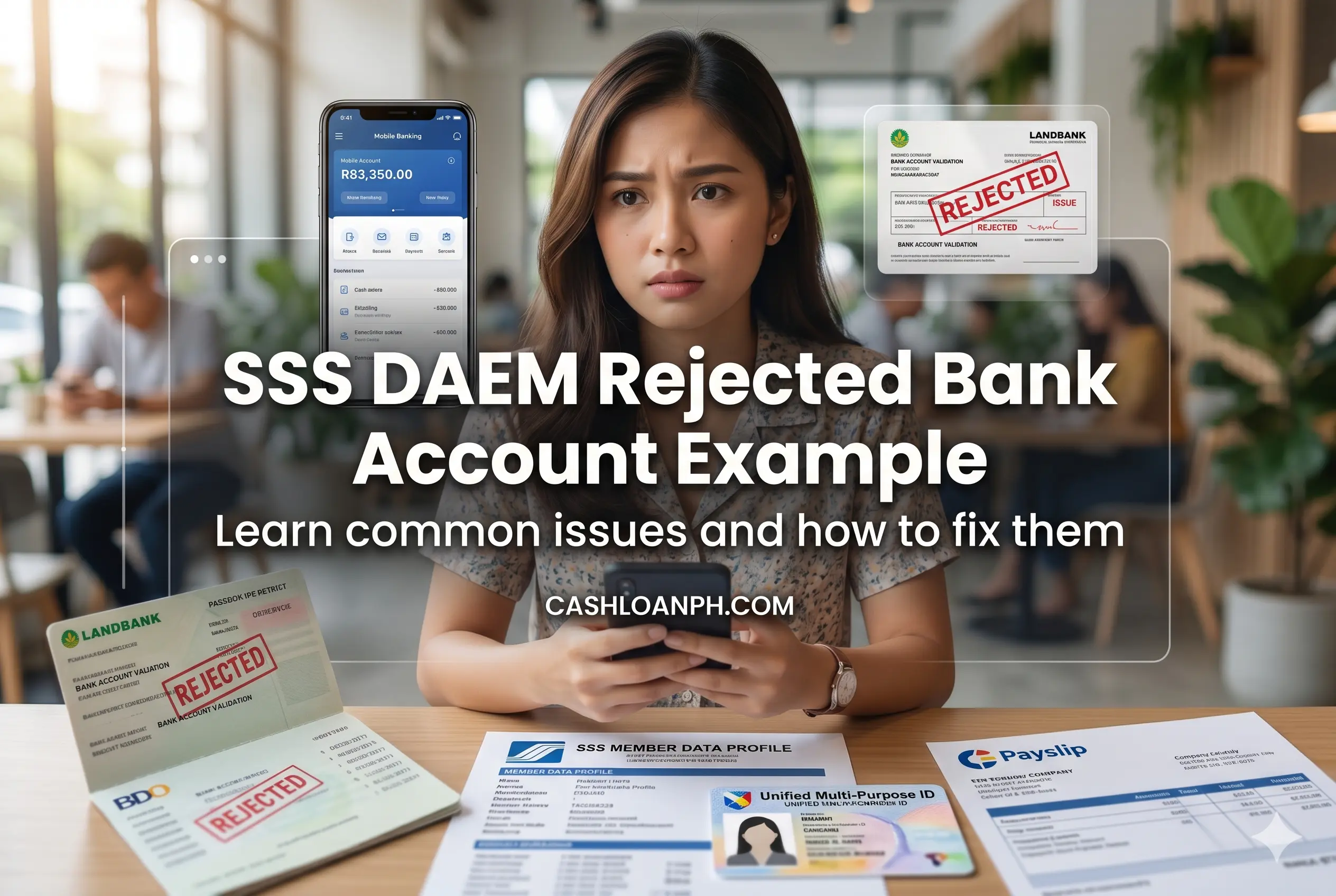
Closed or Dormant Accounts
A surprisingly common issue involves inactive bank accounts.
Borrowers sometimes upload:
- Old payroll accounts
- Closed savings accounts
- Dormant ATM accounts
- Expired e-wallet registrations
Even if the account number still exists physically, inbound transfers may fail during payout routing.
This creates a disbursement error after loan approval.
Which Banks Are Usually Accepted for SSS Emergency Loan Disbursement?
PESONet-Compatible Traditional Banks
Most large Philippine banks connected to PESONet are commonly accepted if the account is active and under the member’s legal name.
Examples include:
- BDO Unibank
- Bank of the Philippine Islands
- Metrobank
- Land Bank of the Philippines
- UnionBank
Approval rates are usually higher when:
- The account is savings or payroll-enabled
- The account has recent transaction history
- The uploaded proof clearly shows ownership
Digital Banks and E-Wallet Providers
Some digital banking channels work smoothly while others experience inconsistent verification outcomes depending on routing support and account structure.
Frequently used options include:
- GCash
- Maya
- GoTyme Bank
- SeaBank
However, approval behavior changes over time because onboarding systems, partner banks, and routing integrations evolve.
A bank accepted last year may require additional checks today.
This is why borrowers should always verify current SSS-supported disbursement methods directly through the official SSS website.
Can GCash Be Used for SSS Emergency Loan Releases?
Yes, many members successfully use GCash for SSS-related disbursement enrollment, but there are important limitations.
Approval success usually depends on:
- Fully verified wallet status
- Exact name matching
- Active mobile number
- Correct account details
- Current routing compatibility
Problems occur when:
- The GCash account is under another person’s identity
- The wallet has incomplete KYC verification
- The member recently changed SIM ownership
- The submitted proof is cropped or blurry
Borrowers using e-wallets should avoid screenshots that hide:
- Full name
- Mobile number
- Wallet status indicators
SSS reviewers often reject partially obscured screenshots because ownership cannot be confirmed reliably.
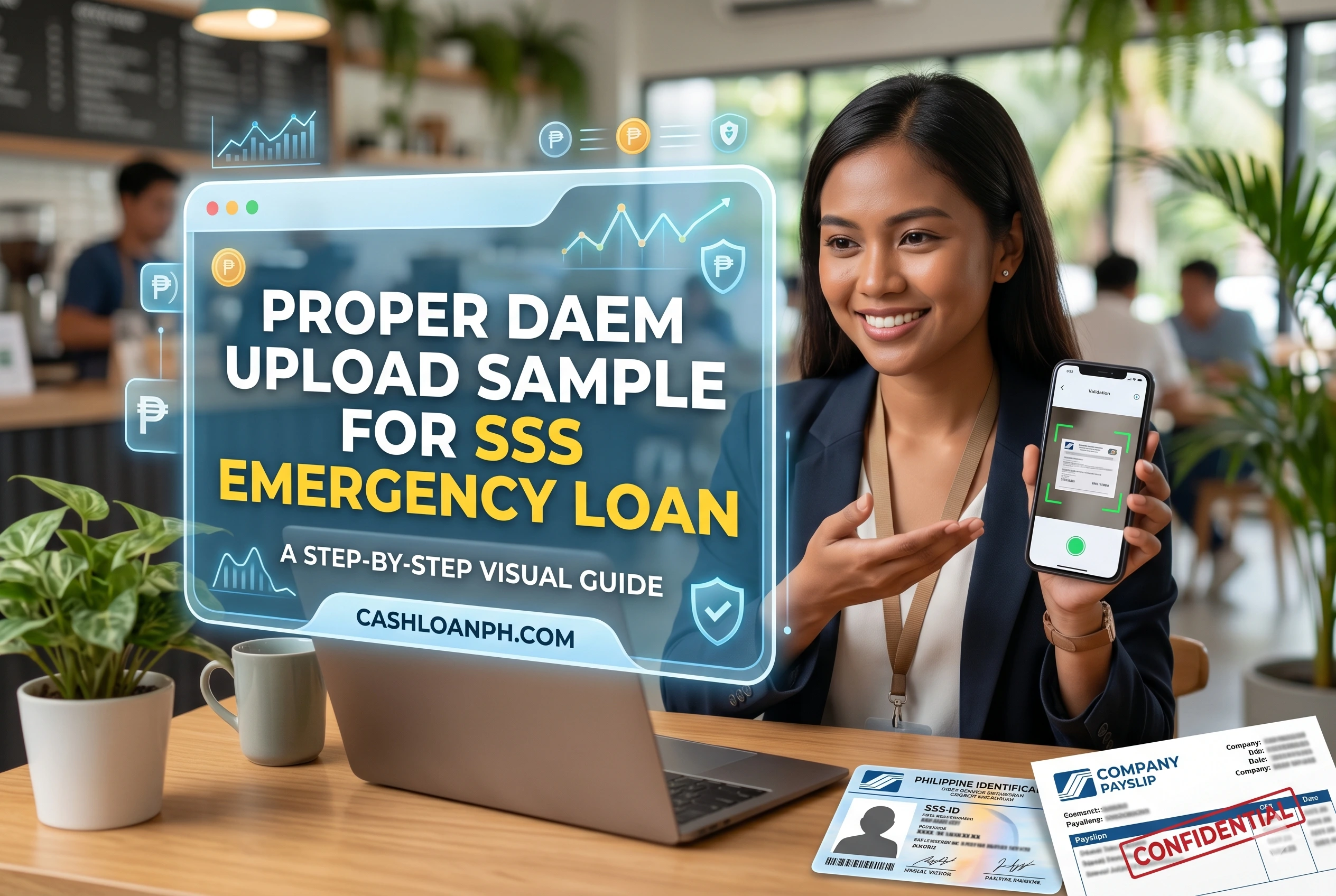
Correct Upload Formats Matter More Than Most Borrowers Expect 📄
Many DAEM rejections happen because uploaded proof fails visual verification.
Common Upload Mistakes
Borrowers frequently upload:
- Cropped screenshots
- Blurry ATM photos
- Dark images
- Edited screenshots
- Password-protected PDFs
- Incomplete passbook pages
The system may interpret edited images as fraud-risk submissions.
Best Practices for Faster Approval
Use:
- Original screenshots
- Clear daylight photos
- Full account name visibility
- Visible account number
- File formats commonly accepted by the portal
Avoid compression apps that reduce image readability.
A practical detail rarely discussed online: some smartphone camera filters automatically sharpen or beautify images. This occasionally affects OCR recognition during verification.
Why Approved Loans Sometimes Still Do Not Get Released
Payout Routing Failures
A loan can already be approved while the release itself fails later during transfer execution.
This usually happens because:
- The account became inactive after DAEM approval
- Transfer rails temporarily fail
- Bank maintenance interrupts routing
- The account cannot receive PESONet transfers
- Name reconciliation fails during payout execution
This is different from initial DAEM rejection.
The transfer itself fails after processing.
Returned Transfers and Revalidation
If funds bounce back:
- SSS may place the transaction under review
- Borrowers may need to re-enroll another account
- The release cycle restarts
This is why borrowers should avoid changing bank accounts while waiting for release.
If your account details recently changed, updating DAEM immediately may delay disbursement further because the old validation becomes invalid.
How Long Does DAEM Approval Usually Take?
Processing timelines vary depending on:
- Upload quality
- Bank type
- Volume of applications
- Manual verification queues
- Public calamity filing periods
Typical observed patterns:
| Verification Type | Estimated Timeline |
|---|---|
| Straightforward bank validation | 1–3 banking days |
| E-wallet verification | 2–5 banking days |
| Manual review cases | 5–10 banking days |
| Rejected resubmissions | Additional review cycle |
Large-scale calamity declarations often create major backlogs.
Borrowers checking the sss emergency loan approval timeline should remember that loan approval and DAEM approval are separate processes.
Real Borrower Problems That Frequently Cause Delays
Freelancers and Gig Workers Using Shared Accounts
Some freelancers use family-owned accounts for convenience.
This creates ownership conflicts because SSS expects direct account ownership under the member’s own identity.
Even if the family relationship is legitimate, validation can still fail.
Payroll Accounts That Cannot Accept External Transfers
Certain payroll accounts only allow employer-originated transactions.
Borrowers may not realize this until the SSS transfer fails.
This issue became more visible as digital payroll systems expanded in the Philippines.
Recently Opened Digital Bank Accounts
Newly opened accounts sometimes enter enhanced monitoring periods under anti-fraud systems.
During this phase:
- Incoming government transfers may face delays
- Large transfers trigger additional review
- Identity synchronization may not yet be complete
Borrowers opening fresh accounts specifically for emergency loans should activate and use the account first before DAEM enrollment.
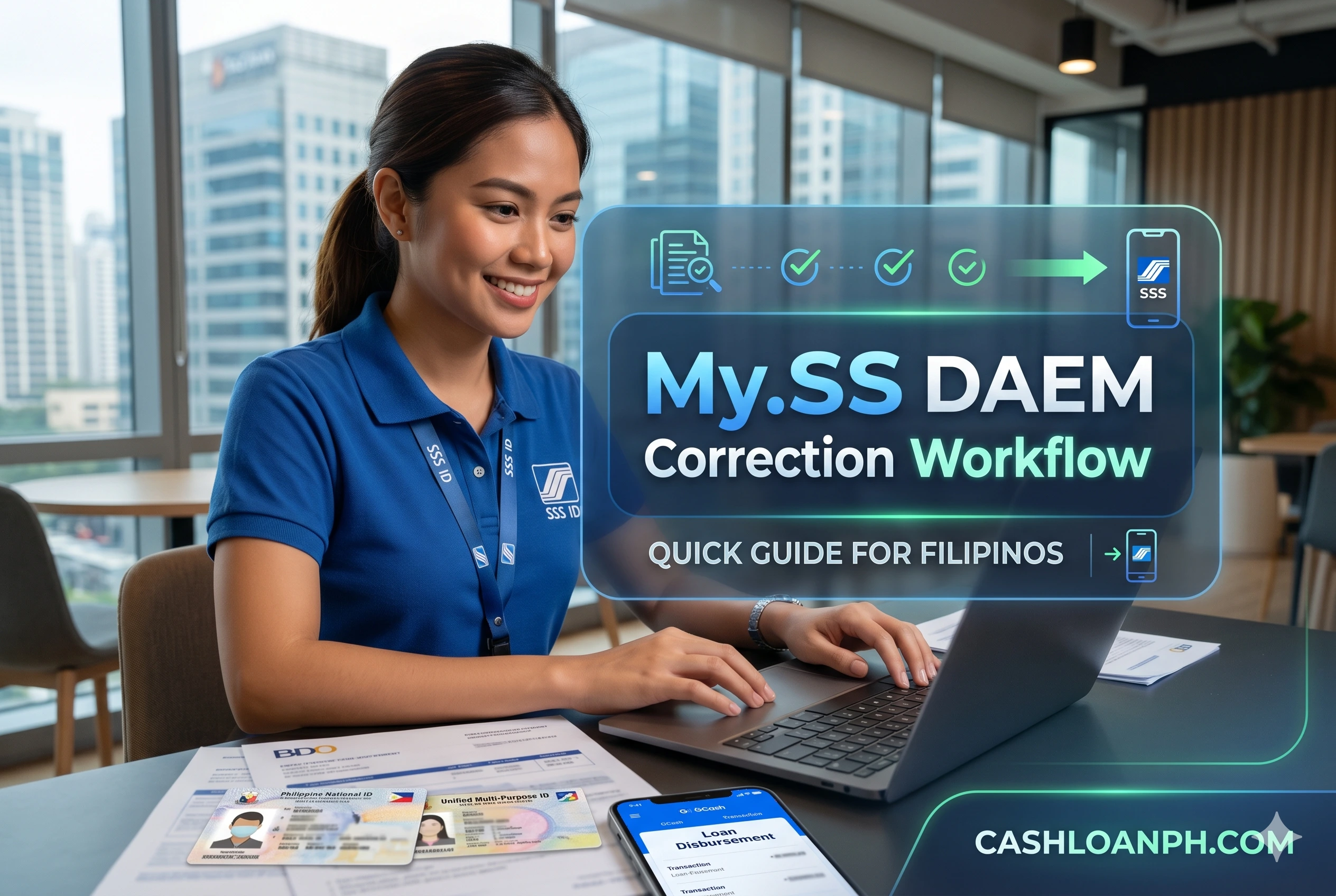
Step-by-Step Fix for Rejected DAEM Enrollment 🔧
Step 1: Identify the Exact Rejection Pattern
Review:
- Email notices
- Portal messages
- DAEM status updates
Look for clues like:
- Invalid account
- Unsupported bank
- Name mismatch
- Unclear upload
- Account ownership discrepancy
Step 2: Compare Legal Identity Details
Check whether your:
- SSS profile
- Bank profile
- E-wallet profile
- Uploaded proof
all display matching information.
Even small inconsistencies matter.
Step 3: Replace Weak Documentation
Upload:
- Cleaner screenshots
- Updated bank certificates
- Better ATM images
- Full passbook pages
If needed, prepare additional documents needed for verification before resubmitting.
Step 4: Use a Different Account if Necessary
If repeated failures occur:
- Switch to a mainstream PESONet-compatible bank
- Avoid joint accounts
- Use a fully verified personal account
This often resolves persistent routing problems faster than repeatedly resubmitting the same rejected account.
Borrower Protection and Verification Logic
The strictness of DAEM validation is partly tied to fraud prevention.
Government-linked disbursement systems increasingly monitor:
- Identity spoofing
- Mule accounts
- Synthetic identities
- Account takeovers
- Unauthorized rerouting
Philippine financial institutions also operate within compliance expectations connected to:
- Anti-money laundering controls
- Digital KYC requirements
- Consumer verification standards
You can learn more through official institutions such as the Bangko Sentral ng Pilipinas and the National Privacy Commission.
This explains why seemingly small discrepancies can trigger manual review.
Quick Troubleshooting Checklist ✅
Before submitting or resubmitting your DAEM enrollment:
- Confirm your bank supports PESONet transfers
- Use an account under your exact legal name
- Avoid joint accounts
- Ensure your account is active
- Upload uncropped proof
- Verify mobile wallet KYC completion
- Double-check account numbers
- Avoid edited screenshots
- Match SSS and bank identity details
- Use updated documents only
Completing these steps significantly reduces payout delays.
Frequently Asked Questions
Why was my DAEM rejected even if my loan was approved?
Your loan eligibility and disbursement validation are separate processes. SSS may approve the emergency loan itself while rejecting the payout account due to ownership mismatch, invalid routing, unsupported banks, or verification problems.
Which banks are safest to use for SSS emergency loan disbursement?
Large PESONet-compatible Philippine banks with active personal savings accounts generally experience fewer validation problems than shared or inactive accounts.
Can I change my disbursement account after submission?
Yes, but doing so during active processing may reset verification and extend payout timelines.
What happens if the transfer fails after approval?
The funds may return to SSS for review. Members are usually asked to correct or replace the enrolled account before payout can continue.
Is an ATM card enough for DAEM verification?
Sometimes, but only if the uploaded image clearly shows the account holder name and account number. Some cases require additional proof.
Why do blurry uploads cause rejection?
SSS reviewers and automated systems need readable ownership information. Poor image quality prevents proper validation and increases fraud-risk flags.
Conclusion
Fixing an sss emergency loan disbursement account problem often requires more than simply resubmitting the same details. Most delays happen because of identity mismatches, unsupported routing channels, inactive accounts, or unclear proof uploads rather than loan qualification itself.
Borrowers who use active PESONet-compatible accounts under their exact legal identity usually experience smoother payouts and fewer verification problems. Careful preparation also matters during high-volume calamity filing periods when manual review queues become slower.
Before submitting DAEM enrollment, review your account ownership details carefully, avoid shared accounts when possible, and upload clean, readable proof documents. These small preparation steps can prevent long release delays and reduce the stress of repeated rejections during emergency financial situations.