Last Updated on 27/03/2026 by Nicole Alba
In today’s hyper-connected Philippines, your personal data is more valuable than ever. Whether you’re applying for a loan, signing up for an app, or simply browsing online, your information is constantly being collected, processed, and shared. But here’s the critical question: do you actually know your rights?
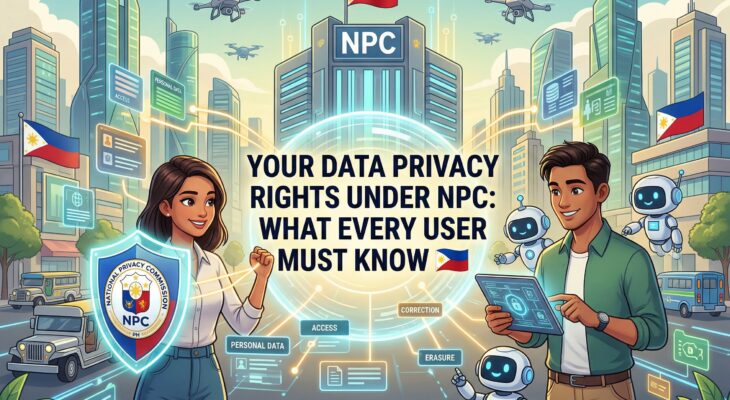
Under the rules enforced by the National Privacy Commission (NPC), every Filipino user is protected by a powerful set of data privacy rights. Yet many people remain unaware of how to use them-especially in fast-growing sectors like digital lending.
This deep dive breaks down everything you need to know in 2026, from your legal protections to practical actions you can take when your data is misused.
⚡ Quick Snapshot: Your NPC Data Privacy Rights
If you only remember one section, make it this:
- ✅ You have the right to know how your data is used
- ✅ You can access and request a copy of your data
- ✅ You can correct inaccurate information
- ✅ You can object to certain types of processing
- ✅ You can request deletion or blocking
- ✅ You can claim damages if your data is misused
- ✅ You can file a privacy complaint if companies violate your rights
These rights are guaranteed under the Data Privacy Act and enforced by the NPC.
📊 Why Data Privacy Matters More in 2026
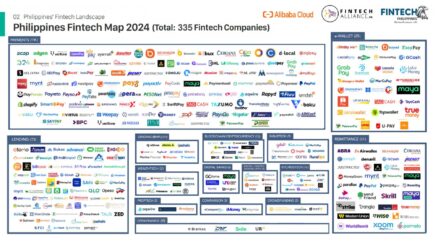
The Philippine fintech space-especially digital lending-has exploded. Millions now rely on mobile apps for quick loans, often without payslips or traditional requirements.
But with convenience comes risk.
Real-world concerns:
- Loan apps accessing your contacts and messages
- Aggressive collection practices using personal data
- Unauthorized sharing of sensitive information
- Identity theft and fraud
Understanding your rights is no longer optional-it’s essential.
🧠 How Companies Collect and Use Your Data
Before exercising your rights, you need to understand what’s happening behind the scenes.
Many users underestimate the extent of data collection. In reality, apps gather far more than just your name and phone number.
Common types of collected data:
- Personal details (name, address, ID numbers)
- Device data (IP address, phone model, location)
- Financial behavior (loan history, repayment patterns)
- Social connections (contacts, sometimes even call logs)
🛡️ Your Core Rights Under the NPC (Explained Simply)
Let’s break these rights down into actionable terms you can actually use.
1. Right to Be Informed 📢
You must be told:
- What data is being collected
- Why it’s being collected
- How long it will be stored
- Who it will be shared with
If a loan app doesn’t clearly explain this-that’s already a red flag.
2. Right to Access 📂
You can request:
- A copy of your personal data
- Details of how it’s being processed
This is especially useful if you suspect misuse or hidden data collection.
3. Right to Correct ✏️
If your data is:
- Wrong
- Outdated
- Misleading
You can demand corrections-and companies must comply.
4. Right to Object 🚫
You can refuse:
- Direct marketing
- Automated decision-making
- Certain data processing activities
Example: If a lending app uses your data for aggressive marketing, you can opt out.
5. Right to Erasure or Blocking 🗑️
Also known as the “right to be forgotten.”
You can request deletion if:
- Data is no longer needed
- You withdraw consent
- Processing is unlawful
6. Right to Damages 💰
If your data is misused and causes harm, you may claim compensation.
This is critical in cases involving:
- Harassment from loan collectors
- Data leaks
- Identity theft
7. Right to Data Portability 🔄
You can transfer your data from one provider to another.
Useful when switching platforms or services.
📱 Data Privacy in Loan Apps: What You Must Watch Out For
Digital lending apps are among the biggest data collectors today.
⚠️ Common risky practices:
- Asking for unnecessary permissions (contacts, photos, SMS)
- Using your contacts for debt collection pressure
- Storing data longer than necessary
- Sharing data with third-party collectors
💡 Smart Tip:
Before installing any app, always review the npc privacy guidelines overview to understand what’s legally allowed.
🧾 Step-by-Step: How to Exercise Your Data Privacy Rights
Here’s how you can take control of your data today:
Step 1: Review Privacy Policies
- Look for transparency
- Avoid vague or overly complex terms
Step 2: Limit Permissions
- Deny access to contacts, camera, or location unless necessary
Step 3: Request Your Data
- Email or contact the company
- Ask for a full data report
Step 4: Report Violations
- If ignored or denied, escalate to the NPC
🚨 How to File a Privacy Complaint in the Philippines
If your rights are violated, you are not powerless.
You can file a privacy complaint directly with the NPC.
📌 Basic process:
- Gather evidence (screenshots, messages, app details)
- Contact the company first (attempt resolution)
- Submit a complaint to the NPC
- Wait for investigation and resolution
🧠 Pro Tip:
The stronger your documentation, the faster your case moves.
📊 Comparison: Responsible vs Risky Data Practices
| Feature | Responsible App ✅ | Risky App ❌ |
|---|---|---|
| Privacy Policy | Clear & transparent | Vague or hidden |
| Permissions | Minimal & relevant | Excessive access |
| Data Sharing | Limited & disclosed | Unclear or hidden |
| User Rights | Easy to exercise | Ignored or denied |
| Complaint Handling | Responsive | Unreachable |
🔍 High-Impact Keywords You Should Know
To stay informed and search smarter, here are key phrases dominating Philippine search trends:
- Data Privacy Act Philippines
- NPC complaints process
- Online loan privacy risks
- Digital lending data protection
- Borrower rights Philippines
- App permission risks
Using these terms can help you verify platforms before trusting them.
❓ Frequently Asked Questions
Is every loan app required to follow NPC rules?
Yes. Any company processing personal data in the Philippines must comply with NPC regulations.
Can a loan app access my contacts legally?
Only if:
- You give explicit consent
- It is necessary for their service
Otherwise, it may be a violation.
What if I already gave permission?
You can withdraw consent at any time and request deletion of your data.
How long does complaint resolution take?
It varies, but well-documented cases are processed faster.
🧠 Final Thoughts: Take Control of Your Digital Identity
Your personal data is not just information-it’s power.
In a country where digital lending is growing rapidly, knowing your rights under the NPC can protect you from abuse, scams, and financial harm.
✔️ Remember:
- Always question app permissions
- Read privacy policies carefully
- Act immediately if something feels wrong
Most importantly, don’t hesitate to speak up. The system is designed to protect you-but only if you use it.
💡 Responsible Borrowing & Smart Financial Habits
Before taking any loan:
- Borrow only what you can repay
- Choose apps with transparent data practices
- Avoid platforms that pressure or threaten users
- Protect your identity like you protect your money
Because in 2026, financial safety and data privacy go hand in hand.