Last Updated on 30/03/2026 by Nicole Alba
Fake debt collectors are rapidly becoming one of the most dangerous financial scams in the Philippines. With the rise of digital lending apps and aggressive recovery practices, many scammers are exploiting fear and urgency to trick people into paying debts they don’t owe.
If you’ve ever received a suspicious call, message, or email demanding payment, this article will help you spot fraud tactics instantly, verify legitimacy, and protect your money.
⚠️ Quick Answer: How Do You Identify Fake Debt Collectors?
You may be dealing with fake debt collectors if they:
- Refuse to provide written proof of the debt
- Pressure you to pay immediately using unusual methods (GCash, crypto, gift cards)
- Threaten arrest, public shaming, or legal action without documentation
- Contact your friends or family aggressively
- Use unofficial emails or personal phone numbers
- Cannot be verified through official regulators
👉 If any of these apply, pause immediately and verify before paying anything.
📊 Why Fake Debt Collection Scams Are Increasing in the Philippines
The growth of online lending platforms has created opportunities for both legitimate agencies and fraudsters. Many scammers now impersonate licensed collectors or even government bodies.
Recent financial safety reports across Southeast Asia show:
- Thousands of complaints annually related to harassment and fake collections
- A significant rise in phishing attacks disguised as loan recovery notices
- Victims losing anywhere from ₱2,000 to over ₱100,000 per incident
Fraudsters rely on one thing: panic-driven decisions.
🧠 How Fake Debt Collectors Operate (Common Fraud Tactics)
Understanding how these scams work is your first line of defense.
1. Impersonation of Legitimate Agencies
Scammers pretend to represent known banks, lending apps, or law firms. They often use official-sounding names to gain trust.
2. Phishing Through Messages and Emails
They send links asking you to “verify your debt” or “settle immediately.” These links often steal your personal data.
3. Psychological Pressure
You might hear threats like:
- “You will be arrested within 24 hours”
- “We will contact your employer”
- “Your name will be posted online”
These are intimidation tactics-not legal actions.
4. Fake Documentation
Some even send fabricated contracts or statements to make the debt look real.
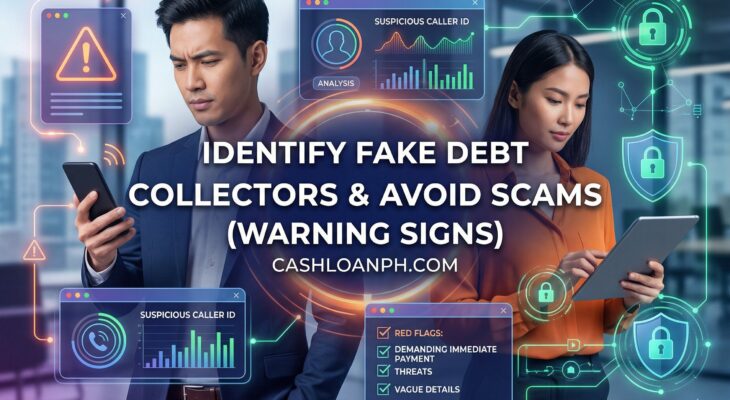
🚩 Warning Signs Checklist: Spot Fake Debt Collectors Instantly
Use this checklist before engaging with any collector:
🔍 Identity Verification Red Flags
- No company website or verifiable office address
- Refusal to provide license or registration details
- Generic email domains (e.g., Gmail, Yahoo)
💸 Payment Red Flags
- Requests for payment via personal accounts
- Urgent deadlines with no formal notice
- No official receipt or acknowledgment
📞 Communication Red Flags
- Calls at odd hours (late night, early morning)
- Harassment or abusive language
- Contacting unrelated third parties
📄 Documentation Red Flags
- No written validation notice
- Incorrect personal details
- Vague or inconsistent debt information
🛡️ How to Verify a Debt Collector in the Philippines
Before taking any action, follow these steps:
Step 1: Ask for a Debt Validation Letter
Legitimate collectors must provide written proof including:
- Creditor name
- Amount owed
- Breakdown of charges
Step 2: Check with Official Regulators
In the Philippines, you can verify companies through:
- Securities and Exchange Commission (SEC)
- Bangko Sentral ng Pilipinas (BSP)
These regulators maintain records of licensed lenders and collection agencies.
Step 3: Contact the Original Creditor
Reach out directly to the bank or lending app to confirm whether the debt has been assigned to a collector.
Step 4: Search Online for Complaints
Look for patterns of fraud reports or scam alerts linked to the agency.
📱 What To Do If You Receive a Suspicious Collection Call
When you get a call that feels off, follow this response framework:
✔️ Stay Calm and Do Not Admit Anything
Avoid confirming personal or financial details.
✔️ Ask Key Questions
- What is your company name?
- Can you send written proof?
- What is your license number?
✔️ End the Call If Necessary
You are not obligated to continue a conversation with an unverified caller.
👉 For real scripts, refer to what to say to unknown collectors-this helps you stay professional without exposing yourself.
🔒 How to Protect Yourself from Debt Collection Scams
1. Never Rush Payments
Scammers rely on urgency. Take your time to verify everything.
2. Avoid Clicking Suspicious Links
Most phishing attacks begin with a simple click.
3. Keep Personal Data Private
Never share:
- OTPs
- Bank details
- ID numbers
4. Use Official Communication Channels Only
Deal directly with verified websites or customer service lines.
5. Learn Safe Communication Strategies
Understanding dealing with collection agencies safely can prevent costly mistakes.
⚖️ Know Your Legal Rights Against Harassment
Even legitimate collectors must follow strict rules. You are protected from:
- Threats of imprisonment without court order
- Public humiliation or social media exposure
- Repeated harassment calls
Knowing your rights gives you leverage. If unsure, take time to know your legal rights before responding.
📉 What Happens If You Pay a Fake Debt Collector?
Paying a scammer doesn’t resolve anything-it often makes things worse:
- You lose your money permanently
- Your information may be reused for future scams
- You could be targeted again by the same group
Some victims report receiving multiple fake collection attempts after initial payment.
🔕 How to Stop Scam Collection Calls
If harassment continues:
✔️ Block Numbers and Report Them
Use your phone’s blocking feature and report to telecom providers.
✔️ File Complaints with Authorities
Submit complaints to:
- National Privacy Commission
- SEC or BSP
✔️ Document Everything
Keep screenshots, call logs, and messages as evidence.
👉 You can also explore ways to stop scam collection calls effectively without escalating the situation.
❓ FAQs About Fake Debt Collectors
How can I verify if a debt is real?
Request a written validation notice and confirm directly with the original creditor or official regulators.
Can a collector threaten me with arrest?
No. Debt is a civil matter in the Philippines. Threats of arrest are a major red flag.
What if the debt is real but the collector seems suspicious?
Contact the original lender and request reassignment verification before making any payment.
Should I ignore suspicious collectors?
Do not engage financially, but don’t ignore completely. Document and verify properly.
Can scammers access my contacts?
If you’ve used unsecured lending apps, some may have accessed your phone data. Be cautious with app permissions.
💡 Real-Life Example: How People Get Trapped
A borrower who settled a small online loan months ago suddenly receives a call demanding ₱15,000. The caller claims penalties have accumulated and threatens to message the borrower’s entire contact list.
Panicked, the borrower pays via GCash.
Days later, another caller appears-this time demanding a “final clearance fee.”
This cycle continues because the victim has been marked as responsive and vulnerable.
🧭 Smart Financial Behavior Moving Forward
Staying safe isn’t just about avoiding scams-it’s about building financial awareness:
- Always keep records of your loans and payments
- Avoid borrowing from unverified lending apps
- Review terms before accepting any credit
- Build emergency savings to reduce reliance on high-risk loans
When in doubt, slow down. A legitimate collector will always allow time for verification.
🔚 Final Thoughts: Stay Alert, Stay Protected
Fake debt collectors thrive on fear, confusion, and urgency. Once you understand their tactics, you remove their power.
Always verify before paying, stay calm under pressure, and prioritize your financial safety over quick decisions.
Your best defense is awareness-and now you have it.